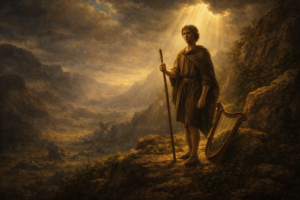

Psalm 42 opens a completely new chapter in the Psalter.
Book I ended with integrity.
Book II begins with longing.
This transition is deeply significant.
The final Psalms of Book I focused on:
- healing
- perspective
- breakthrough
- integrity
Psalm 42 introduces a different challenge.
Not:
How do I survive adversity?
But:
What do I do when something inside me longs for more?
This question sits at the center of the Psalm.
It is one of the most emotionally honest texts in the entire Psalter.
The Psalm openly acknowledges:
- sadness
- longing
- emotional fatigue
- spiritual dryness
- inner struggle
Yet it never abandons hope.
This balance is what makes Psalm 42 extraordinary.
Its deepest lesson is:
longing is not always evidence that something is wrong. Sometimes it is evidence that something important is missing.
This is the hidden heart of Psalm 42.
Why Psalm 42 Begins Book II
The placement of Psalm 42 is not accidental.
Book I concludes with character.
Book II begins with desire.
This progression is psychologically elegant.
A person may develop:
- wisdom
- resilience
- integrity
and still experience longing.
Growth does not eliminate longing.
In many cases it deepens it.
Why?
Because maturity often creates awareness.
The more clearly a person understands life, the more clearly they recognize what truly nourishes them.
Psalm 42 begins precisely at this point.
The progression becomes:
Psalm 41:
Preserve your integrity.
Psalm 42:
Nourish your soul.
This transition introduces the central concern of Book II.
Not merely survival.
Not merely character.
But connection.
The Psychology of Longing
Longing is one of the most misunderstood human experiences.
Many people immediately interpret longing as:
- weakness
- dissatisfaction
- deficiency
Psalm 42 presents a different perspective.
Longing often indicates:
- growth
- awareness
- readiness
- transformation
The individual begins recognizing that something deeper is needed.
This realization can feel uncomfortable.
Especially in a culture that encourages constant distraction.
Yet Psalm 42 repeatedly suggests that longing serves a purpose.
The Psalm teaches:
longing often reveals where renewal is needed.
This insight forms the foundation of the entire Psalm.
Why Longing Is Not the Same as Emptiness
A critical distinction must be made.
Longing and emptiness are not identical.
Emptiness is merely absence.
Longing contains direction.
Longing points toward something.
The thirsty person seeks water.
The hungry person seeks food.
The lonely person seeks connection.
The exhausted person seeks renewal.
Psalm 42 repeatedly frames longing in this way.
Not as a dead end.
But as a signal.
A guide.
An indicator of what nourishment may be missing.
This is one of the Psalm’s most important psychological lessons.
“As the Deer Pants for Water”
The Symbolism of the Deer
The opening image of Psalm 42 is one of the most famous in all of Scripture.
The deer searching for water.
The image is simple.
Its symbolism is profound.
Within the V3+ framework, the deer represents:
- authentic need
- vulnerability
- instinctive wisdom
- pursuit of nourishment
The deer is not searching for luxury.
The deer is searching for survival.
This distinction matters.
Because Psalm 42 is not describing a superficial desire.
It is describing something essential.
Something fundamental.
Something necessary.
The Psalm teaches:
some needs are too important to ignore.
This becomes one of the defining themes of the entire article.
Why the Deer Does Not Ignore Its Thirst
Animals possess a simple wisdom.
When thirsty, they seek water.
They do not debate whether thirst exists.
They respond.
Human beings often behave differently.
People frequently ignore:
- exhaustion
- grief
- loneliness
- emotional depletion
- spiritual hunger
Instead they distract themselves.
They postpone.
They suppress.
They avoid.
Psalm 42 challenges this pattern.
The deer becomes a symbol of honest recognition.
A symbol of responding appropriately to genuine need.
The Psalm teaches:
renewal begins when need is acknowledged rather than denied.
The Symbolism of Water
The deer is only half of the image.
The other half is water.
Throughout the Psalms, water repeatedly symbolizes:
- life
- restoration
- renewal
- nourishment
- connection
Within the V3+ framework, water becomes a symbol for whatever genuinely sustains a person.
This may include:
- meaning
- purpose
- faith
- inspiration
- truth
- connection
- creativity
The exact form varies.
The underlying principle remains the same.
Water represents nourishment.
The thing that restores vitality.
The thing that allows growth.
The thing that transforms survival into flourishing.
Why Water Appears Throughout Spiritual Literature
There is a reason water appears repeatedly in spiritual traditions.
Without water, life weakens.
Without nourishment, vitality declines.
Psalm 42 applies this principle psychologically and spiritually.
People can survive for long periods while emotionally depleted.
But eventually depletion creates symptoms.
Such as:
- fatigue
- discouragement
- numbness
- loss of motivation
The Psalm repeatedly suggests that these symptoms deserve attention.
Not condemnation.
Attention.
This is one of the most compassionate aspects of Psalm 42.
Spiritual Thirst and Emotional Thirst
One of the most important modern interpretations of Psalm 42 involves the distinction between:
- emotional thirst
and
- spiritual thirst
These experiences often overlap.
Yet they are not always identical.
Emotional thirst may involve:
- loneliness
- exhaustion
- lack of support
- burnout
Spiritual thirst may involve:
- lack of meaning
- lack of purpose
- disconnection from values
- loss of inspiration
The symptoms often appear similar.
This is why many people struggle to identify the true source of discomfort.
Psalm 42 encourages deeper reflection.
The Psalm asks:
What am I actually thirsty for?
This question becomes transformative.
Why People Misdiagnose Their Longing
Many people attempt to satisfy deep needs using shallow solutions.
Examples include:
- distraction instead of meaning
- entertainment instead of purpose
- consumption instead of connection
- busyness instead of fulfillment
The result is predictable.
The thirst remains.
Because the solution does not match the need.
Psalm 42 repeatedly points toward discernment.
The ability to recognize:
- what is missing
before attempting to replace it.
The Psalm teaches:
lasting renewal requires accurate nourishment.
Why Success Does Not Always Remove Longing
One of the most surprising lessons hidden inside Psalm 42 is that success does not automatically eliminate longing.
People often assume:
- achievement
- wealth
- recognition
- accomplishment
will create lasting fulfillment.
Sometimes they help.
Sometimes they do not.
A person may possess:
- success
and still feel:
- disconnected
- uninspired
- emotionally depleted
Psalm 42 repeatedly acknowledges this reality.
The Psalm suggests that fulfillment and achievement are not identical.
This distinction is increasingly important in modern life.
Especially for people who have achieved goals only to discover that something deeper remains unresolved.
The Deeper Question of Psalm 42
Ultimately Psalm 42 is asking a question many people avoid.
Not:
What do I want?
But:
What truly nourishes me?
These questions are not always the same.
Wanting often focuses on immediate desire.
Nourishment focuses on lasting vitality.
The deer seeks water because water sustains life.
Psalm 42 repeatedly invites readers to identify the equivalent sources of nourishment within their own lives.
This becomes the beginning of renewal.
The Power of Inner Dialogue
One of the most extraordinary features of Psalm 42 is something many readers overlook.
The Psalm contains a conversation.
Not with another person.
Not with an enemy.
Not even directly with God.
The conversation occurs within the self.
This makes Psalm 42 remarkably modern.
Long before contemporary psychology discussed:
- self-talk
- inner narrative
- emotional regulation
- cognitive reframing
Psalm 42 was already modeling these processes.
The Psalm repeatedly asks:
Why art thou cast down, O my soul?
This question is profound.
Because it demonstrates awareness.
The speaker notices their emotional state.
Instead of being completely controlled by emotion, they become curious about it.
This distinction is critical.
The Psalm teaches:
awareness creates the possibility of transformation.
“Why Art Thou Cast Down, O My Soul?”
This famous line appears more than once.
That repetition matters.
The Psalm is showing an internal process.
A person notices:
- sadness
- discouragement
- heaviness
Then responds.
Not with denial.
Not with suppression.
But with inquiry.
This is emotionally intelligent behavior.
Many people either:
- ignore emotions
or
- become overwhelmed by them
Psalm 42 introduces a third option.
Reflection.
Observation.
Dialogue.
The Psalm asks:
What is happening inside me?
Why am I feeling this way?
What do I need?
These questions often become the beginning of healing.
Why Self-Awareness Matters
Self-awareness is one of the foundations of emotional resilience.
Without awareness:
- patterns repeat
- needs remain hidden
- problems become chronic
With awareness:
- understanding develops
- choices improve
- renewal becomes possible
Psalm 42 repeatedly demonstrates this principle.
The speaker is not merely experiencing emotion.
The speaker is examining emotion.
This distinction is one of the reasons Psalm 42 feels so psychologically sophisticated.
The Difference Between Reflection and Rumination
A crucial distinction must be made.
Psalm 42 encourages reflection.
It does not encourage rumination.
These experiences can appear similar.
Yet they are fundamentally different.
Reflection seeks understanding.
Rumination endlessly repeats distress.
Reflection moves toward insight.
Rumination circles the same pain.
Psalm 42 consistently moves toward hope.
Even while acknowledging sadness.
This is what separates healthy reflection from unhealthy fixation.
The Psalm teaches:
awareness should lead toward renewal, not permanent self-absorption.
Hope During Emotional Dryness
One of the most powerful lessons of Psalm 42 is that hope and sadness can coexist.
Many people assume hope only appears after circumstances improve.
Psalm 42 suggests the opposite.
Hope often appears before improvement becomes visible.
This is one of the Psalm’s greatest insights.
The speaker experiences:
- longing
- discouragement
- emotional fatigue
Yet hope remains present.
Not because conditions have changed.
Because perspective has not been surrendered.
The Psalm teaches:
hope is not the absence of struggle. Hope is the refusal to believe struggle is the final chapter.
Why Emotional Dryness Is Not Failure
Many people interpret emotional dryness as evidence that something is wrong.
Psalm 42 presents a different perspective.
Periods of dryness often occur during:
- growth
- transition
- recovery
- reevaluation
The absence of inspiration does not necessarily mean the absence of progress.
Sometimes the soul is reorganizing itself.
Sometimes priorities are shifting.
Sometimes deeper questions are emerging.
Psalm 42 repeatedly suggests:
dryness may be a season, not a destination.
This lesson becomes incredibly important during difficult periods.
Renewal and Reconnection
As the Psalm unfolds, the movement gradually shifts.
Not from sadness to instant joy.
But from isolation toward reconnection.
This distinction matters.
The goal of Psalm 42 is not emotional perfection.
The goal is renewed connection.
Connection with:
- purpose
- meaning
- hope
- values
- inspiration
Within the V3+ framework, renewal occurs when people reconnect with what genuinely nourishes them.
The Psalm repeatedly points toward this process.
Why Reconnection Often Begins Slowly
Modern culture often expects dramatic transformations.
Psalm 42 presents a more realistic model.
Renewal usually begins quietly.
The first signs may include:
- renewed interest
- renewed curiosity
- renewed energy
- renewed engagement
These changes often appear before major emotional shifts occur.
The Psalm teaches:
restoration often begins as a small return of vitality.
This is one of its most encouraging lessons.
Traditional Uses of Psalm 42
Traditionally, Psalm 42 has been associated with:
- consolation
- emotional comfort
- spiritual renewal
- overcoming sadness
- strengthening hope
- restoring inspiration
- perseverance during hardship
- reconnecting with faith
- emotional recovery
- inner resilience
In many Psalm traditions it has been used during periods of:
- grief
- loneliness
- discouragement
- uncertainty
The common thread behind these uses is:
renewal through reconnection.
Not escape.
Not avoidance.
Renewal.
The Core Psalm 42 Ritual
A Practical Method for Renewal and Reconnection
Psalm 42 works best when approached:
- slowly
- honestly
- reflectively
Its atmosphere should feel:
- calm
- restorative
- nourishing
rather than:
- forceful
- urgent
- demanding
What You Need
Required
- Psalm 42
- journal
- quiet space
Recommended
- white candle
- blue candle
- bowl of clean water
Optional:
- lavender
- chamomile
- frankincense
These correspond well to themes of:
- peace
- renewal
- clarity
- emotional restoration
STEP 1 — Identify Your Thirst
Ask:
What am I longing for?
What feels missing?
Where do I feel depleted?
What genuinely nourishes me?
Write honestly.
Psalm 42 becomes powerful when longing is named clearly.
STEP 2 — Identify False Sources of Nourishment
Create two columns.
Temporary Relief
Genuine Renewal
Many people discover they have confused distraction with nourishment.
This realization can be transformative.
STEP 3 — Read Psalm 42 Slowly
Pause especially at:
- “As the deer pants for water”
- “Why art thou cast down, O my soul?”
- references to hope
- references to remembrance
- references to longing
Notice the progression:
- thirst
- awareness
- reflection
- hope
- renewal
This sequence forms the operational structure of Psalm 42.
STEP 4 — Reconnect With One Source of Nourishment
Ask:
What genuinely restores me?
Examples:
- prayer
- reflection
- creativity
- meaningful conversation
- nature
- study
- service
Choose one.
Then engage with it intentionally.
Psalm 42 develops renewal through reconnection.
Not through avoidance.
Psalm 42 for Burnout
One of its strongest modern applications.
Burnout often creates:
- emotional numbness
- exhaustion
- loss of motivation
Psalm 42 helps restore:
- awareness
- perspective
- emotional renewal
by encouraging people to identify what truly nourishes them.
Psalm 42 for Grief
Grief naturally creates longing.
Longing for:
- people
- experiences
- possibilities
Psalm 42 does not deny grief.
Instead it introduces hope alongside grief.
This balance makes it especially valuable during periods of loss.
Psalm 42 for Loss of Inspiration
Creative and spiritual fatigue are common modern experiences.
Psalm 42 repeatedly supports:
- reconnection
- reflection
- renewed inspiration
rather than forcing productivity.
This makes it highly relevant for creators, writers, artists, and spiritual practitioners.
Repetition Cycles and Emotional Renewal
Psalm 42 is not a forceful Psalm.
It does not attempt to overwhelm difficulty.
Instead it gradually restores connection.
For this reason, repeated recitation works especially well.
Each reading reinforces:
- self-awareness
- emotional honesty
- hope
- perspective
- resilience
The Psalm functions less like a battle cry and more like a returning spring.
Its strength comes from consistency.
Not intensity.
7-Day Renewal Cycle
Best for:
- temporary discouragement
- emotional fatigue
- loss of motivation
- stressful periods
Read Psalm 42 once daily.
After each reading, answer one question:
What am I truly thirsty for today?
This simple practice often produces surprising insights.
21-Day Reconnection Cycle
Best for:
- burnout
- grief
- emotional exhaustion
- spiritual dryness
Read Psalm 42 daily.
Keep a journal.
Track:
- energy levels
- emotional patterns
- sources of inspiration
- recurring needs
The goal is not merely reading.
The goal is awareness.
40-Day Deep Renewal Cycle
Best for:
- major transitions
- existential searching
- prolonged discouragement
- loss of purpose
During this cycle, focus especially on:
- inner dialogue
- hope statements
- meaningful activities
- reconnection practices
Repeated engagement gradually strengthens:
- emotional endurance
- optimism
- clarity
- resilience
Why Repetition Works
The power of Psalm 42 comes from repeated exposure to a healthier internal conversation.
Many people unknowingly repeat messages such as:
- nothing will improve
- I have failed
- nothing matters
- I am stuck
Psalm 42 introduces a different pattern.
The speaker acknowledges pain.
Then reintroduces hope.
Again.
And again.
And again.
This repetition gradually reshapes perspective.
The Psalm teaches:
emotional resilience is often built through repeated encounters with hope.
What Weakens Psalm 42 Work
Several common patterns reduce the effectiveness of Psalm 42 practice.
Emotional Avoidance
Many people avoid examining their inner life.
They distract themselves instead.
The problem is simple.
Ignored thirst remains thirst.
Psalm 42 strengthens:
- awareness
not:
- avoidance.
Chronic Distraction
Constant stimulation often prevents reflection.
Examples include:
- endless scrolling
- excessive entertainment
- compulsive busyness
These activities may temporarily reduce discomfort.
They rarely create renewal.
Psalm 42 strengthens:
- reconnection
not:
- distraction.
Isolation
Periods of solitude can be valuable.
Chronic isolation often is not.
Human beings typically require:
- connection
- support
- meaningful relationships
Psalm 42 repeatedly moves toward reconnection.
Not withdrawal.
Refusal to Reflect
Some people experience discomfort but never examine it.
The Psalm repeatedly models:
- questioning
- reflection
- curiosity
Without reflection, growth becomes difficult.
Expecting Instant Transformation
Perhaps the most common obstacle.
Renewal usually develops gradually.
Psalm 42 teaches patience.
The deer does not discover water by demanding immediate results.
The deer continues seeking.
Signs of Renewed Connection
One of the most encouraging aspects of Psalm 42 is that renewal often becomes visible before major external changes occur.
The first signs are usually subtle.
Examples include:
- increased curiosity
- improved concentration
- renewed inspiration
- greater emotional stability
- clearer priorities
- improved motivation
- deeper reflection
- stronger hope
Notice that most of these are internal.
This is important.
Psalm 42 repeatedly suggests:
renewal begins within before it becomes visible without.
The First Major Sign
Many readers expect dramatic breakthroughs.
Psalm 42 suggests a different indicator.
The first major sign is often:
realizing that hope feels believable again.
Nothing external may have changed yet.
But possibility has returned.
And possibility is often where renewal begins.
Final Insight
Thirst Reveals What Matters
Psalm 42 contains one of the deepest lessons in the entire Psalter.
Most people view longing as a problem.
The Psalm presents a different perspective.
Longing is information.
Thirst is information.
The deer’s thirst reveals the importance of water.
Human longing often reveals the importance of:
- meaning
- purpose
- connection
- inspiration
- truth
- renewal
The goal is not to eliminate longing immediately.
The goal is to understand it.
Because understood longing becomes guidance.
The Psalm teaches:
what you thirst for reveals what truly nourishes you.
This is why Psalm 42 remains so powerful.
It does not promise instant relief.
It offers something deeper.
A path back to connection.
A path back to meaning.
A path back to hope.
And as Book I ended with integrity, Book II begins with a new challenge:
learning how to listen to the deeper needs of the soul and allowing those needs to guide the journey toward renewal.
That is the true gift of Psalm 42.
Frequently Asked Questions:
Psalm 42 is traditionally used for:
- spiritual renewal
- emotional recovery
- overcoming discouragement
- restoring hope
- burnout recovery
- grief support
- emotional resilience
- reconnecting with purpose
- overcoming spiritual dryness
- renewing inspiration
It is especially associated with:
- finding hope during emotionally difficult periods.
The central lesson is:
longing can become a path to renewal.
The Psalm teaches that emotional or spiritual thirst is not necessarily a problem.
Sometimes it is a signal pointing toward a deeper need.
Within the V3+ framework, the deer symbolizes:
- authentic need
- vulnerability
- instinctive wisdom
- pursuit of nourishment
The deer seeks what is necessary for life.
The image teaches:
genuine needs should be acknowledged rather than ignored.
Water symbolizes:
- renewal
- life
- nourishment
- restoration
- connection
Psychologically and spiritually, it can represent:
- meaning
- purpose
- faith
- inspiration
- truth
- emotional nourishment
Not exclusively.
Many people experiencing sadness or emotional fatigue resonate strongly with Psalm 42.
However, the Psalm is broader.
It addresses:
- longing
- spiritual thirst
- loss of inspiration
- emotional dryness
- hope during difficulty
The focus is renewal rather than despair.
This famous line demonstrates self-reflection.
The speaker notices emotional distress and begins a dialogue with themselves.
Within the V3+ framework it symbolizes:
- self-awareness
- emotional honesty
- reflective thinking
The Psalm models healthy inner dialogue.
Because the Psalm repeatedly shows the speaker examining emotions rather than being controlled by them.
Its lesson is:
awareness creates the possibility of transformation.
This makes Psalm 42 surprisingly modern from a psychological perspective.
Emotional thirst may involve:
- loneliness
- exhaustion
- lack of support
- burnout
Spiritual thirst may involve:
- lack of meaning
- lack of purpose
- loss of inspiration
- disconnection from values
The two often overlap.
Psalm 42 encourages readers to explore both.
Very effectively.
One of its strongest modern applications.
The Psalm helps readers:
- identify sources of depletion
- reconnect with meaningful nourishment
- restore perspective
- rebuild hope
These qualities support burnout recovery.
Yes.
The Psalm acknowledges:
- sadness
- longing
- emotional struggle
while maintaining hope.
This balance makes it particularly valuable during periods of grief.
Absolutely.
The Psalm repeatedly supports:
- reconnection
- reflection
- renewal
Many readers find it useful during periods of:
- creative exhaustion
- spiritual dryness
- motivational decline
Because longing reveals need.
Need reveals direction.
Direction creates the possibility of renewal.
The Psalm teaches:
understanding your thirst helps you discover your nourishment.
Recommended cycles include:
7 Days
For:
- temporary discouragement
- emotional fatigue
21 Days
For:
- burnout
- grief
- spiritual dryness
40 Days
For:
- major life transitions
- prolonged searching
- deep renewal work
Common obstacles include:
- emotional avoidance
- chronic distraction
- isolation
- refusal to reflect
- impatience
Psalm 42 strengthens:
- awareness
- connection
- reflection
- hope
not:
- escapism.
Usually:
- renewed hope
- increased inspiration
- emotional stability
- clearer priorities
- stronger motivation
- deeper self-awareness
- improved resilience
The first major sign is often:
believing renewal is possible again.
Because it opens Book II.
Book I concludes with:
Integrity
Psalm 41
Book II begins with:
Longing
Psalm 42
The transition is profound.
It reminds readers that even after growth and maturity, the human soul continues searching for deeper nourishment.