
Managing money wisely is about far more than increasing your income. While earning more certainly creates opportunities, long-term financial stability often depends on the decisions made after the money arrives. Every purchase, every financial priority, and every moment of self-restraint contributes to building a healthier relationship with prosperity.
Many practitioners turn to Solomonic pentacles not only to attract abundance but also to cultivate the wisdom needed to preserve it. Rather than encouraging fear of spending or excessive frugality, responsible-spending pentacle work seeks to strengthen discipline, discernment, emotional balance, and gratitude. The goal is not to avoid spending altogether, but to make financial choices that support long-term well-being.
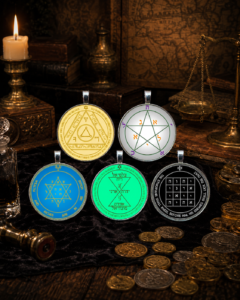
The combination presented here brings together five pentacles traditionally associated with discipline, wisdom, planning, emotional balance, and healthy appreciation of material comfort.
What Responsible Spending Actually Requires
Responsible spending is often misunderstood as simply spending less. In reality, it is about making intentional decisions that align with your priorities and long-term goals.
Financial wisdom usually develops through a combination of practical skills and personal habits, including careful planning, patience, emotional stability, and the ability to distinguish between genuine needs and temporary impulses. These qualities help create sustainable prosperity rather than cycles of unnecessary spending followed by financial stress.
Healthy responsible-spending work should encourage confidence rather than anxiety. It is not about denying yourself every comfort or living in constant fear of making a mistake. Instead, it promotes thoughtful stewardship of your resources while allowing room for enjoyment, generosity, and meaningful experiences.
Financial freedom is often built through consistent decisions rather than occasional sacrifices.
The Best Pentacles for Responsible Spending
A balanced responsible-spending combination should strengthen several complementary qualities rather than focusing on a single aspect of financial management.
The Third Pentacle of Saturn supports discipline, responsibility, and consistency.
The Second Pentacle of Jupiter reinforces wisdom, prosperity, and long-term thinking.
The First Pentacle of Mercury encourages careful planning, practical analysis, and sound decision-making.
The First Pentacle of Venus promotes appreciation, balance, and a healthy relationship with material comfort.
The First Pentacle of the Moon supports emotional awareness and adaptability, helping practitioners avoid impulsive financial choices driven by temporary emotions.
Together, these pentacles create a balanced symbolic framework that encourages financial responsibility without promoting fear, guilt, or excessive restriction.
This combination supports both financial discipline and a healthy relationship with prosperity.
1. The Third Pentacle of Saturn and Financial Discipline
Among the five pentacles, the Third Pentacle of Saturn serves as the foundation of this combination because responsible spending begins with consistency.
Saturn has long been associated with discipline, structure, patience, responsibility, and long-term achievement. Applied to personal finances, these qualities encourage habits that gradually strengthen financial stability over time.
Responsible spending is rarely the result of one major decision. More often, it reflects hundreds of small choices made consistently over months and years.
This pentacle symbolically supports developing routines that encourage budgeting, saving, reducing unnecessary expenses, and remaining committed to financial goals even when immediate gratification is tempting.
Small financial habits often shape long-term prosperity more than occasional major decisions.
2. The Second Pentacle of Jupiter and Financial Wisdom
Prosperity is often associated with Jupiter, but genuine abundance includes wisdom as well as growth.
The Second Pentacle of Jupiter reminds practitioners that wealth is not measured solely by income. Lasting prosperity also depends on judgment, generosity, fairness, and understanding how resources can best serve meaningful purposes.
Rather than encouraging reckless optimism or constant expansion, this pentacle supports thoughtful financial decisions that contribute to sustainable success.
Its symbolism encourages practitioners to recognize when an opportunity deserves investment and when patience may be the wiser choice.
True abundance includes knowing when to spend and when to wait.
3. The First Pentacle of Mercury and Practical Decision-Making
Financial choices often improve when they are guided by clear thinking rather than impulse.
The First Pentacle of Mercury is traditionally associated with communication, intelligence, analysis, planning, and discernment. Within responsible-spending work, these qualities help practitioners evaluate purchases more carefully before committing their resources.
Mercury encourages asking practical questions:
Is this purchase necessary?
Will it provide lasting value?
Does it support my long-term priorities?
Would waiting improve the decision?
Developing these habits can significantly reduce impulsive spending while encouraging greater confidence in financial planning.
Wise financial decisions usually begin before money is ever spent.
4. The First Pentacle of Venus and Healthy Enjoyment
Responsible spending should never become a philosophy of deprivation.
The First Pentacle of Venus reminds practitioners that prosperity also includes beauty, comfort, appreciation, generosity, and healthy enjoyment of life’s blessings.
A balanced financial life allows room for experiences that genuinely enrich personal well-being while avoiding unnecessary excess.
Rather than encouraging constant restriction, Venus supports learning to enjoy resources responsibly and with gratitude.
Healthy prosperity does not reject pleasure; it simply places pleasure within the context of balance and wise stewardship.
Responsible spending is not about denying enjoyment but about choosing it wisely.
5. The First Pentacle of the Moon and Emotional Spending
Many financial decisions are influenced more by emotion than by logic.
Stress, boredom, disappointment, excitement, or social pressure can all contribute to impulsive purchases that offer only temporary satisfaction.
The First Pentacle of the Moon symbolically supports emotional awareness, adaptability, and greater self-understanding. These qualities encourage practitioners to recognize emotional triggers before acting on them.
With greater emotional balance comes greater freedom to make purchasing decisions that genuinely support long-term goals instead of temporary moods.
Many financial decisions become wiser when emotions no longer control purchases.
How to Work With This Combination
Responsible-spending pentacle work is most effective when paired with practical financial habits.
Many practitioners combine these pentacles with budgeting, tracking expenses, setting savings goals, reducing unnecessary debt, and reviewing monthly financial priorities. Petition work, reflective journaling, and appropriate Psalms may also be incorporated into a broader spiritual practice focused on wisdom, gratitude, and responsible stewardship.
Rather than attempting to eliminate every unnecessary expense, the objective is to develop greater clarity about where financial resources create the greatest long-term value.
The healthiest financial rituals reinforce discipline, gratitude, planning, and responsible stewardship.
The Biggest Mistake People Make
One of the most common misconceptions is assuming that prosperity simply means spending freely whenever money becomes available.
In reality, lasting financial security often depends less on occasional windfalls than on consistent habits of thoughtful decision-making.
Overspending can undermine even substantial incomes, while disciplined financial management can gradually strengthen stability regardless of current circumstances.
Responsible spending is therefore not an obstacle to prosperity but one of its foundations.
Prosperity is measured not only by income but also by how wisely resources are managed.
The One Rule
The strongest responsible-spending pentacle combinations support financial wisdom when combined with realistic budgeting, thoughtful planning, disciplined habits, gratitude, and consistent decision-making. Symbolic practice works best when it reinforces responsible action rather than replacing it.
Conclusion
Building lasting prosperity requires more than attracting opportunities. It also requires developing the discipline to protect, manage, and use those opportunities wisely.
The Third Pentacle of Saturn, the Second Pentacle of Jupiter, the First Pentacle of Mercury, the First Pentacle of Venus, and the First Pentacle of the Moon together create a balanced symbolic framework for strengthening financial responsibility, emotional balance, practical judgment, and healthy appreciation of material resources.
The strongest responsible-spending pentacle combinations are often the ones that quietly strengthen discipline, discernment, financial wisdom, emotional balance, and long-term prosperity through consistent daily choices.
Frequently Asked Questions:
Many practitioners use Solomonic pentacles symbolically to reinforce financial discipline, thoughtful decision-making, emotional balance, and the habits that support responsible money management over time.
No. Pentacles should not be viewed as replacing personal responsibility or self-control. Instead, many practitioners use them to strengthen awareness, discipline, and the ability to pause before making unnecessary purchases.
The Third Pentacle of Saturn is traditionally associated with discipline, responsibility, consistency, and long-term commitment, making it especially suitable for developing healthier financial habits and responsible spending patterns.
The Second Pentacle of Jupiter is commonly associated with prosperity, good judgment, fairness, and long-term thinking. Many practitioners use it to encourage decisions that support lasting financial stability rather than short-term gratification.
The First Pentacle of Mercury is often associated with planning, analysis, discernment, and practical thinking. Within responsible-spending work, it symbolically supports evaluating purchases carefully before committing financial resources.
The First Pentacle of Venus reminds practitioners that financial responsibility does not require rejecting comfort or enjoyment. Instead, it encourages balance, gratitude, and making thoughtful choices about how resources are used.
The First Pentacle of the Moon is traditionally associated with emotional awareness, adaptability, and self-reflection. Many practitioners use it to become more conscious of emotional triggers that may influence unnecessary purchases.
Yes. Responsible-spending pentacle work is generally most effective when combined with practical habits such as budgeting, tracking expenses, setting savings goals, reducing debt, and reviewing financial priorities regularly.
No. Responsible spending is not about eliminating enjoyment or living with constant financial anxiety. It focuses on making intentional decisions that support long-term stability while still allowing room for meaningful experiences and personal comfort.
One of the most common mistakes is focusing entirely on increasing income while neglecting the daily financial habits that ultimately determine long-term stability and prosperity.
Healthy responsible-spending practice seeks to strengthen discipline, gratitude, emotional balance, and practical wisdom so that financial decisions consistently support long-term prosperity rather than temporary impulses.




I think it would be highly beneficial to all of us you this website added a section what corresponds with each planet best.. what color candle, what incense, what crystals and what direction to face.. this would be great! I l’ve looked all over the internet for this and many people just say whatever they want and it’s all to confusing.. I do possess some of the books from Israel regardie and Mathers, Crowley, J. Peterson, Dr Stephan Skinner, Sarah M. and the all the greats of the past.. and sometimes it take trial and error to discover.. but a lot of those books are in languages that many don’t speak and I website that offers this information would be a great help to not only my practice, but many others.. thank you..
Hi and thank you for your comment! I’m already working on a major article/video about correspondences; I’ll keep your suggestion in mind.