Healing work is one of the areas where people become the most emotionally vulnerable.
When someone is:
- exhausted
- frightened
- in pain
- emotionally overwhelmed
- caring for another person
- recovering from illness or crisis
…the mind naturally searches for:
- relief
- stability
- reassurance
- structure
- hope
This is one reason Psalms have historically been used in healing contexts across multiple traditions. Not only as prayers for miraculous intervention, but as:
- stabilizing rhythms
- recovery support systems
- emotional anchors during suffering
- spiritual reinforcement during weakness
That distinction matters.
Because practical Psalm work for healing is not about pretending fear does not exist.
It is about:
- reducing fragmentation
- restoring inner order
- supporting recovery conditions
- creating psychological and spiritual steadiness during difficult periods
The strongest healing work is often quieter than people expect.
Not explosive.
Not theatrical.
Not emotionally frantic.
Instead:
- rhythmic
- repetitive
- stabilizing
- restorative
Like rebuilding strength slowly after collapse.
What Healing Psalms Actually Do
One of the biggest mistakes people make is expecting Psalms to function like instant magical commands.
That expectation creates:
- disappointment
- emotional desperation
- compulsive ritual behavior
- fear spirals
Healing Psalms work differently.
In practical traditions, they are used to support:
- endurance
- calmness
- emotional resilience
- recovery atmosphere
- spiritual strength
- internal stabilization
This matters because healing is affected heavily by:
- stress
- fear
- emotional exhaustion
- sleep disruption
- nervous system overload
When a person becomes psychologically fragmented, recovery becomes harder.
Psalm work helps create:
- rhythm
- focus
- emotional structure
- spiritual grounding
In many cases, this alone changes the entire recovery experience.
The Difference Between Healing and Recovery
This distinction is extremely important.
Most people think only in terms of:
“Am I healed yet?”
But practical healing work is often more connected to:
“Am I recovering more steadily?”
Healing is usually imagined as:
- final
- dramatic
- complete
Recovery is:
- gradual
- rhythmic
- layered
- cumulative
This is where Psalms become especially powerful.
Because Psalm repetition supports:
- consistency
- nervous system calming
- emotional pacing
- psychological resilience
- spiritual endurance
Recovery work often succeeds through:
small stabilizations repeated consistently.
Examples:
- sleeping slightly better
- feeling less afraid
- emotional heaviness reducing
- panic becoming less dominant
- clearer thinking returning
- daily functioning improving
These shifts matter.
They create the conditions where deeper restoration becomes possible.
Why Calmness Matters in Healing Work
Fear destabilizes recovery more than many people realize.
When the nervous system remains trapped in:
- panic
- hypervigilance
- obsessive symptom monitoring
- emotional collapse
…the body and mind remain under constant strain.
This is why healing traditions across cultures emphasize:
- rhythm
- prayer
- repetition
- breathing
- calm environments
- structured routines
Psalm work supports healing partly because repetition creates:
- predictability
- emotional containment
- focused attention
The mind stops scattering in ten directions simultaneously.
This is one reason evening Psalm work is often extremely effective.
Nighttime amplifies:
- fear
- uncertainty
- isolation
- emotional spiraling
A repeated healing Psalm before sleep can interrupt those cycles and gradually retrain the emotional atmosphere around recovery.
The Best Psalms for Healing, Strength, and Restoration
Not every healing Psalm works the same way.
Some focus more on:
- suffering
- emotional endurance
- relief during hardship
Others emphasize:
- restoration
- strength
- rebuilding
- peace
Understanding these differences creates much stronger practical results.
Psalm 6 — Assistance During Suffering and Weakness
Psalm 6 has long been associated with:
- distress
- exhaustion
- weakness
- emotional suffering
- seeking mercy during difficult periods
Operationally, this Psalm works well when someone feels:
- emotionally depleted
- overwhelmed
- mentally exhausted
- spiritually discouraged
This is not an aggressive healing Psalm.
It is:
- vulnerable
- honest
- stabilizing
And that honesty matters.
Because many people in recovery become emotionally fragmented from trying to appear “strong” constantly.
Psalm 6 allows emotional release without collapsing into hopelessness.
Psalm 29 — Restoration and Strengthening
Psalm 29 is traditionally associated with:
- restoring health
- removing oppressive conditions
- renewing strength
This makes it useful during:
- long recovery periods
- emotional heaviness
- fatigue
- slow rebuilding phases
Its energy feels more:
- activating
- strengthening
- clearing
than purely comforting.
This is often useful when recovery has become stagnant.
Psalm 41 — Recovery Support and Compassion
Psalm 41 has strong traditional associations with:
- care during illness
- support during weakness
- compassionate restoration
This Psalm works especially well when:
- someone feels isolated
- recovery has become emotionally draining
- discouragement is increasing
One important aspect of healing work is reducing:
- emotional loneliness
Psalm 41 helps reinforce the feeling that:
support still exists.
That matters more than many people realize.
Psalm 147 — Rebuilding and Restoration
Psalm 147 is deeply connected with:
- healing
- rebuilding
- restoration after damage
- gathering what has been scattered
This is one of the strongest Psalms for:
long-term recovery work.
Especially after:
- emotional collapse
- burnout
- grief
- illness
- traumatic periods
- prolonged exhaustion
Its atmosphere is less about emergency relief and more about:
reconstruction.
That distinction is important.
Some healing work is not about “surviving tonight.”
It is about:
learning how to rebuild gradually afterward.
Psalm 23 — Stabilization and Emotional Safety
Psalm 23 is one of the most versatile Psalms in practical work because it stabilizes:
- fear
- emotional chaos
- nervous system overload
- uncertainty
People often underestimate how important emotional safety is during healing.
Without emotional stabilization:
- sleep worsens
- anxiety rises
- recovery becomes inconsistent
Psalm 23 creates:
- calmness
- steadiness
- internal reassurance
- psychological grounding
This makes it one of the best “support structure” Psalms for almost any healing cycle.
Why Repetition Matters More Than Intensity
Many people assume stronger emotion creates stronger results.
Usually the opposite happens.
Emotional overload often creates:
- exhaustion
- instability
- compulsive behavior
- disappointment spirals
Healing Psalm work benefits more from:
- consistency
- repetition
- rhythm
- calm pacing
This is why traditional systems repeatedly emphasize:
- daily cycles
- repeated recitation
- structured timing
A calm practice repeated steadily is usually far more powerful than:
one dramatic emotional ritual followed by collapse.
Healing becomes sustainable when the nervous system begins trusting:
- rhythm
- structure
- continuity
That trust itself becomes part of the recovery process.
Morning vs Evening Healing Work
Different times support different aspects of recovery.
Morning
Morning work supports:
- rebuilding
- activation
- strengthening
- emotional orientation for the day
Best for:
- Psalm 29
- Psalm 147
Evening
Evening work supports:
- calming
- emotional decompression
- fear reduction
- sleep stabilization
Best for:
- Psalm 23
- Psalm 6
- Psalm 41
This dual structure works extremely well because recovery often requires both:
- rebuilding
and - calming.
The Healing Environment Most People Ignore
Healing work is affected heavily by environment.
This includes:
- noise
- overstimulation
- emotional conflict
- sleep disruption
- chaotic routines
- constant stress exposure
Many people attempt recovery work while remaining trapped in:
- emotional chaos
- constant doom-scrolling
- overstimulation
- panic-driven information consumption
This fragments the nervous system continuously.
Psalm work becomes much stronger when combined with:
- reduced overstimulation
- quieter environments
- emotional pacing
- sleep consistency
- calmer routines
The goal is not perfection.
The goal is:
creating conditions where restoration becomes easier.
The Core Healing Method
A Practical Daily Recovery Practice Using Psalms
The purpose of this method is not to create emotional intensity.
It is to create:
- steadiness
- rhythm
- support
- emotional regulation
- recovery structure
This is why the method is intentionally simple.
When people are overwhelmed, exhausted, or recovering, complicated ritual systems often create more stress instead of less.
A healing practice should feel:
- sustainable
- calming
- repeatable
—not emotionally draining.
What You Need
Keep the setup minimal.
Required
- quiet space
- focused attention
- chosen Psalms
Recommended
- glass of water
- soft lighting
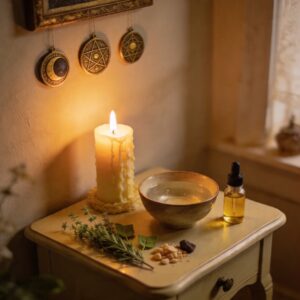
- blue or white candle
- consistent daily timing
Why blue?
In practical candle traditions, blue is associated with:
- calmness
- healing
- emotional restoration
- peace
White can also be used for:
- purification
- clarity
- spiritual support
The candle is not mandatory.
Its main function is:
- emotional anchoring
- slowing the mind
- reinforcing atmosphere
STEP 1 — Establish a Calm Recovery Space
Before reading any Psalm, reduce stimulation.
This matters more than most people realize.
Turn off:
- loud media
- aggressive lighting
- unnecessary distractions
If possible:
- sit comfortably
- slow your breathing
- allow the nervous system to settle slightly
Healing work becomes much stronger when the body stops expecting constant threat.
Say quietly:
“May this space support healing, calmness, and restoration.”
Simple is better.
STEP 2 — Choose the Correct Healing Focus
Not all recovery work is identical.
Different situations require different emphasis.
Examples:
For emotional exhaustion
Use:
- Psalm 6
- Psalm 23
For rebuilding strength
Use:
- Psalm 29
- Psalm 147
For illness recovery support
Use:
- Psalm 41
- Psalm 23
For fear during recovery
Use:
- Psalm 23
- Psalm 6
Being specific improves coherence.
The goal is not random repetition.
The goal is:
directed restoration.
STEP 3 — Read the Psalms Slowly and Rhythmically
This is critical.
Do not:
- rush
- skim
- multitask
- mechanically repeat
Healing work responds strongly to:
- pacing
- rhythm
- emotional steadiness
Read slowly enough that:
the nervous system can actually follow the words.
Recommended structure:
Opening Stabilization
Psalm 23
Main Healing Psalm
Choose:
- Psalm 6
- Psalm 29
- Psalm 41
- Psalm 147
depending on need.
Closing Reinforcement
Repeat Psalm 23 or a calming verse.
This creates:
- opening
- strengthening
- stabilization
A complete cycle.
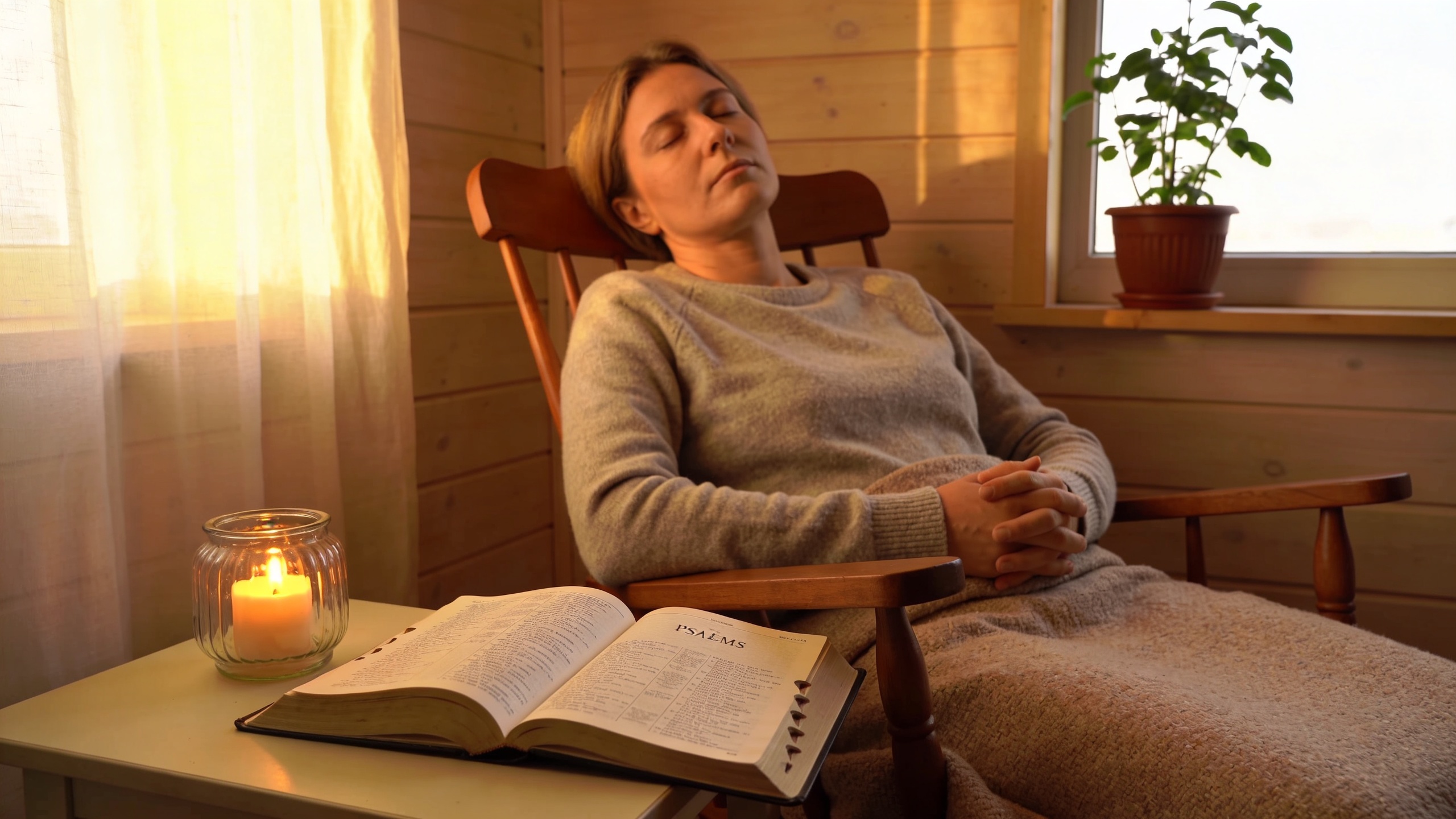
STEP 4 — Stillness and Recovery Integration
After reading:
sit quietly for several minutes.
No phone.
No symptom-checking.
No spiraling thoughts.
This phase matters because many people never allow the nervous system to experience:
- uninterrupted calmness
The mind instantly returns to:
- worry
- stimulation
- compulsive monitoring
Stillness helps the work integrate emotionally.
Even two or three minutes daily can gradually retrain the atmosphere surrounding recovery.
STEP 5 — Reinforce Recovery Through Action
Healing work should support recovery behavior—not replace it.
After the Psalm work:
- hydrate
- rest
- follow supportive routines
- maintain treatment plans
- reduce overstimulation
- protect sleep
This matters because Psalm work functions best when:
spiritual support and practical support move together.
The strongest systems reinforce reality.
They do not escape it.
The 7-Day Recovery Cycle
Consistency matters enormously in healing work.
One emotional session rarely creates deep stabilization.
Repeated cycles do.
Traditional Psalm systems emphasize:
- repetition
- continuity
- gradual strengthening
Recommended Structure
Days 1–2
Stabilization Phase
Focus:
- calming fear
- reducing emotional fragmentation
- creating rhythm
Main Psalms:
- Psalm 23
- Psalm 6
Days 3–5
Strengthening Phase
Focus:
- rebuilding
- emotional endurance
- recovery support
Main Psalms:
- Psalm 29
- Psalm 41
Days 6–7
Restoration Phase
Focus:
- steadiness
- emotional grounding
- reinforcing recovery atmosphere
Main Psalms:
- Psalm 147
- Psalm 23
Why This Structure Works
Because healing rarely progresses linearly.
People fluctuate between:
- fear
- hope
- exhaustion
- improvement
- discouragement
A structured cycle prevents emotional chaos from dominating the process.
The repetition itself becomes stabilizing.
The Bedside Healing Protocol
This is one of the most useful practical methods in the article.
Especially for:
- chronic stress
- illness recovery
- fear before sleep
- emotional exhaustion
Simple Bedside Structure
Before sleep:
- Dim lighting
- Slow breathing
- Read Psalm 23
- Read one healing Psalm
- Say:
“May rest restore what exhaustion has weakened.”
Then:
sleep immediately.
Do not:
- scroll endlessly
- consume distressing content
- restart anxiety loops
Night recovery is sacred in healing work.
Protect it.
Advanced Recovery Layering (Optional)
Advanced work should remain calm—not overloaded.
Healing systems collapse when people add:
- too many rituals
- emotional desperation
- excessive complexity
Layer gently.
Layer 1 — Psalm Water
Simple method:
- pray Psalm 23 or Psalm 147 over water
- drink slowly or wash hands lightly
This creates continuity between:
- prayer
and - physical experience
Layer 2 — Morning and Evening Split
Morning:
- rebuilding Psalms
- strengthening focus
Evening:
- calming Psalms
- sleep support
This dual structure works extremely well for long-term recovery.
Layer 3 — Environment Protection
If the recovery environment feels emotionally heavy:
- use Psalm 23 in the room
- reduce conflict exposure
- stabilize routines
Sometimes healing improves dramatically when:
the atmosphere becomes calmer.
What Slows Healing Work
This section is critical.
Many people unknowingly sabotage recovery support systems.
1. Panic Monitoring
Constantly checking:
- symptoms
- sensations
- signs
- “am I healed yet?”
keeps the nervous system activated.
Healing support requires:
periods of psychological rest.
2. Ritual Overload
Too many:
- Psalms
- candles
- oils
- methods
- systems
create emotional fragmentation.
Simple consistent work is usually stronger.
3. Emotional Isolation
Recovery becomes harder when people feel:
- abandoned
- unsupported
- emotionally trapped
This is one reason Psalms focused on comfort and support matter so much.
4. Sleep Destruction
Sleep disruption destabilizes:
- emotional regulation
- healing rhythm
- nervous system recovery
This is why evening Psalm work is often so effective.
Signs the Healing Work Is Supporting Recovery
The first signs are usually subtle.
Not:
- dramatic miracles
But:
- calmer sleep
- reduced fear
- emotional steadiness
- improved resilience
- more hope
- better pacing
- reduced panic spirals
Sometimes the first sign is simply:
feeling less internally fragmented.
That matters deeply.
Final Insight
Healing Is Often Rhythmic, Not Instant
One of the hardest parts of recovery is accepting that healing often unfolds gradually.
People want:
- certainty
- immediate relief
- instant transformation
But real restoration is usually built through:
- repetition
- patience
- stabilization
- support
- rhythm
This is why Psalm work fits healing so well.
Because Psalms create:
- continuity
- structure
- emotional grounding
- recovery atmosphere
The strongest healing work is not always dramatic.
Often:
it is the quiet rebuilding of strength day after day until stability returns again.
Frequently Asked Questions:
There is no single healing Psalm for every situation.
Different Psalms support different aspects of recovery.
Most useful examples:
- Psalm 23 → emotional stabilization and peace
- Psalm 6 → support during suffering and exhaustion
- Psalm 29 → strength and restoration
- Psalm 41 → recovery support and comfort
- Psalm 147 → rebuilding and long-term restoration
The strongest healing work usually combines:
- calming
- strengthening
- stabilization
—not only “asking for healing.”
Yes—and daily repetition is often more effective than occasional intense rituals.
Healing Psalm work responds strongly to:
- consistency
- rhythm
- emotional steadiness
- gradual reinforcement
Many traditional systems emphasize:
- repeated daily cycles
- structured repetition
- cumulative strengthening
Recommended structure:
- 3 days → emotional stabilization
- 7 days → recovery support cycle
- 21 days → deeper reinforcement and rhythm-building
Longer cycles often work better because healing usually unfolds gradually rather than instantly.
Absolutely.
Many healing Psalms are deeply connected with:
- fear reduction
- emotional endurance
- calming the nervous system
- reducing hopelessness
- restoring inner stability
This is one reason Psalm work has traditionally been used during:
- grief
- exhaustion
- emotional collapse
- difficult recovery periods
Psalm 23 is one of the strongest options because it supports:
- emotional safety
- calmness
- reassurance
- steadiness
Psalm 6 is also very useful during:
- emotional overwhelm
- discouragement
- fear-based exhaustion
Yes—but functional combinations work better than random stacking.
Examples:
Emotional Stabilization
- Psalm 23 + Psalm 6
Strength and Recovery
- Psalm 29 + Psalm 147
Illness Support
- Psalm 41 + Psalm 23
Recovery from Exhaustion
- Psalm 6 + Psalm 147
The goal is coherence—not overload.
Different times support different goals.
Morning
Best for:
- rebuilding
- strength
- activation
- emotional orientation
Evening
Best for:
- calming
- sleep support
- emotional decompression
- reducing fear
Evening Psalm work is especially helpful when:
- anxiety increases at night
- sleep becomes unstable
- emotional spiraling intensifies
Blue is traditionally associated with:
- healing
- calmness
- emotional restoration
White is also commonly used for:
- peace
- purification
- spiritual support
Candles are optional.
The Psalms themselves remain the core of the work.
Yes.
A simple method:
- pray Psalm 23 or Psalm 147 over clean water
- drink slowly or wash hands lightly
This creates a connection between:
- prayer
- physical routine
- emotional reinforcement
Simple methods often work best.
The most common disruptors are:
- panic spirals
- obsessive symptom-checking
- emotional overload
- inconsistent practice
- ritual complexity
- poor sleep
- constant overstimulation
Healing work benefits from:
- calm repetition
- emotional pacing
- supportive environments
Because repetition creates:
- nervous system rhythm
- emotional predictability
- mental stabilization
- recovery structure
Healing often improves through:
small consistent support repeated over time.
Healing Psalm work should be viewed as:
- spiritual support
- emotional support
- recovery reinforcement
—not as a replacement for appropriate medical treatment or professional care.
The strongest approach is integration:
- practical care
- emotional support
- spiritual stabilization
working together.
Usually:
- emotional stabilization
Examples:
- calmer sleep
- reduced fear
- clearer thinking
- less panic
- more emotional resilience
- steadier energy
The first improvement is often:
feeling less internally overwhelmed.
Because recovery itself is often subtle at first.
Healing support usually develops through:
- rhythm
- steadiness
- gradual strengthening
The strongest changes are often:
- sustainable
- stabilizing
- cumulative
—not dramatic emotional highs.