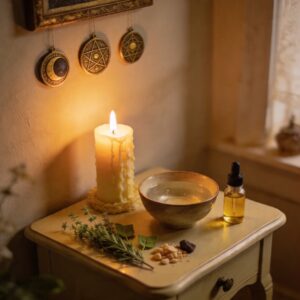

Psalm 45 is unlike any Psalm that precedes it in Book II.
After the longing of Psalm 42, the guidance of Psalm 43, and the collective perseverance of Psalm 44, the reader suddenly encounters a royal wedding.
At first glance, the change feels unexpected.
Yet the progression is remarkably coherent.
Every previous Psalm has been preparing the reader for a deeper truth.
Healthy relationships are not built by people who have never struggled.
They are built by people who have learned:
- self-awareness
- wisdom
- perseverance
- faithfulness
- resilience
Psalm 45 celebrates the moment when these qualities become the foundation of a lasting covenant.
Historically, the Psalm was composed as a royal wedding song celebrating the marriage of an Israelite king.
Spiritually and symbolically, however, it became much more.
Jewish tradition viewed it as a celebration of God’s covenant with His people.
Christian tradition often interpreted it as an image of Christ and the Church.
Mystical traditions saw it as the union of wisdom and righteousness.
Within the V3+ framework, these interpretations point toward a common principle.
Psalm 45 is ultimately about relationships that are worthy of trust.
Not because they are emotionally intense.
But because they are founded upon character.
This is the hidden heart of Psalm 45.
lasting partnerships are built through honor long before they are sustained by affection.
Why Psalm 45 Is Called the Royal Wedding Psalm
Psalm 45 has traditionally been known as the Royal Wedding Psalm because it celebrates the marriage of a king.
The imagery is rich.
Royal garments.
Jewels.
Music.
Processions.
Beauty.
Celebration.
Yet beneath these visible symbols lies a deeper message.
The wedding is not presented merely as a romantic event.
It represents the beginning of a covenant.
A public commitment.
A shared future.
A relationship carrying responsibility as well as joy.
This distinction is important.
Modern culture often views marriage primarily as the celebration of love.
Psalm 45 presents marriage as the beginning of a lifelong vocation.
The ceremony is not the destination.
It is the entrance into a covenant that must be renewed through daily choices.
The Psalm teaches:
the beauty of a relationship is measured less by its beginning than by its faithfulness over time.
The Psychology of Covenant
One of the greatest strengths of Psalm 45 is that it introduces a concept that has become increasingly unfamiliar in modern culture.
Covenant.
Many contemporary relationships are built primarily upon feelings.
Feelings are valuable.
They often initiate relationships.
But feelings naturally change.
Covenants exist precisely because emotions fluctuate.
A covenant is not simply an emotional attachment.
It is a conscious commitment to shared values, mutual responsibility, and enduring loyalty.
This does not eliminate affection.
Rather, it protects affection.
When two people know their relationship rests upon something deeper than temporary emotion, trust begins to grow.
Security develops.
Respect deepens.
The Psalm repeatedly points toward this reality.
It celebrates not merely love.
It celebrates commitment worthy of love.
The Psalm teaches:
emotions inspire commitment, but commitment allows love to mature.
Why Modern Relationships Often Struggle
Many relationships fail not because affection disappears overnight.
They struggle because the foundation was never clearly established.
People often ask:
Do we enjoy the same activities?
Do we have similar interests?
Are we attracted to one another?
These questions matter.
Psalm 45 introduces even deeper ones.
Do we honor one another?
Do we share the same values?
Can we trust each other’s character?
Will we remain faithful when circumstances become difficult?
These questions determine whether attraction becomes lasting partnership.
The Psalm reminds readers that compatibility is measured not only by chemistry but by integrity.
Character Before Attraction
Perhaps the most revolutionary lesson in Psalm 45 is its understanding of beauty.
The Psalm certainly celebrates beauty.
Yet it consistently places beauty within a larger moral framework.
The king is praised not simply because he possesses authority.
He is praised because he loves righteousness.
Because he values truth.
Because he governs with justice.
Likewise, the bride is celebrated not merely for outward appearance.
She is honored because she willingly enters a covenant built upon dignity and faithfulness.
This order matters.
Modern culture frequently reverses it.
External attraction becomes the starting point.
Character becomes a secondary consideration.
Psalm 45 presents the opposite sequence.
Character comes first.
Everything else follows.
The Psalm teaches:
attraction may open a relationship, but character determines whether it can endure.
Why Character Creates Trust
Trust cannot be demanded.
It must be earned.
Every promise fulfilled.
Every honest conversation.
Every act of loyalty.
Every moment of integrity.
These become the building blocks of confidence.
Psalm 45 quietly celebrates this process.
The royal imagery reminds readers that true nobility is not inherited solely through position.
It is demonstrated through conduct.
A trustworthy partner is someone whose actions consistently reflect their words.
This principle extends beyond marriage.
Business partnerships succeed when integrity is dependable.
Friendships deepen when honesty becomes habitual.
Families remain stable when commitments are honored.
The Psalm teaches:
lasting trust grows from repeated demonstrations of character rather than occasional displays of affection.
Why Honor Is the Foundation of Love
One of the most overlooked words in modern relationships is honor.
Love receives enormous attention.
Respect receives far less.
Psalm 45 restores the balance.
Honor means recognizing another person’s inherent worth.
It means treating them with dignity even during disagreement.
It means refusing to manipulate, belittle, or exploit.
Without honor, affection gradually becomes unstable.
Without respect, trust weakens.
Without dignity, intimacy eventually suffers.
This is why Psalm 45 repeatedly presents honor before romance.
Love becomes safer when respect already exists.
The Psalm teaches:
relationships flourish where admiration is strengthened by mutual honor rather than weakened by familiarity.
The Symbolism of the King
The king in Psalm 45 represents much more than political authority.
Within the V3+ framework, he symbolizes mature leadership.
His defining qualities are not dominance.
They are responsibility.
Justice.
Self-control.
Wisdom.
He leads because he serves something greater than himself.
This symbolism extends naturally into everyday life.
Every healthy relationship requires someone willing to take responsibility.
Every family benefits from mature leadership.
Every organization depends upon integrity at the top.
The Psalm reminds readers that genuine authority is never separated from moral responsibility.
Leadership without character eventually destroys trust.
Leadership guided by justice strengthens every relationship it touches.
The Symbolism of the Bride
The bride completes the covenant imagery.
She does not symbolize weakness or passive obedience.
Instead, she represents willing partnership.
Trust freely offered.
Grace joined with wisdom.
Her beauty is never presented as vanity.
It reflects harmony between inner virtue and outward expression.
Within the V3+ framework, the bride symbolizes the qualities that allow relationships to flourish:
- openness without naïveté
- loyalty without dependence
- dignity without pride
- love without losing identity
Together, the king and the bride reveal one of the Psalm’s deepest truths.
Healthy partnerships are not built upon domination.
They are built upon complementary strengths united by shared purpose.
That is why Psalm 45 continues to resonate far beyond its original royal setting.
It describes an ideal that remains timeless:
two people choosing, day after day, to build a covenant where honor protects love, character strengthens trust, and shared values become the foundation of a life together.
Sacred Partnership Beyond Marriage
Although Psalm 45 is traditionally associated with marriage, its principles extend far beyond romantic relationships.
At its core, the Psalm celebrates a covenant built upon mutual honor, shared purpose, and enduring trust.
These qualities are essential wherever two or more people commit themselves to a common mission.
For this reason, Psalm 45 speaks naturally to:
- lifelong friendships
- business partnerships
- family relationships
- mentorships
- leadership teams
- ministries
- charitable organizations
Every lasting partnership faces similar challenges.
Trust must be earned.
Communication must remain honest.
Conflicts must be resolved without destroying respect.
Commitments must be renewed through consistent action.
The Psalm reminds us that covenant is not limited to marriage.
It is a way of relating to others.
Whenever people choose loyalty over convenience, integrity over self-interest, and cooperation over competition, they begin to embody the spirit of Psalm 45.
The Psalm teaches:
every enduring partnership is strengthened when commitment becomes greater than convenience.
Why Shared Values Matter More Than Shared Interests
Many relationships begin because two people enjoy similar interests.
They enjoy the same hobbies.
The same music.
The same activities.
The same lifestyle.
These similarities can create a strong initial connection.
Yet they rarely sustain a relationship over decades.
Life changes.
Interests evolve.
Careers shift.
Children arrive.
Health changes.
Circumstances transform.
What remains constant are values.
Values determine how people respond to change.
How they resolve disagreements.
How they manage success.
How they endure disappointment.
Psalm 45 repeatedly points toward this deeper foundation.
The king is admired for righteousness.
The bride is honored for dignity.
Neither is praised merely for temporary qualities.
Instead, the Psalm celebrates virtues that remain meaningful throughout an entire lifetime.
The Psalm teaches:
shared interests create companionship, but shared values create permanence.
Why Respect Must Outlive Romance
Romantic emotions naturally fluctuate.
Every long-term relationship experiences seasons of greater and lesser emotional intensity.
This reality should not be feared.
It should be understood.
What preserves relationships during these natural fluctuations is respect.
Respect allows disagreement without contempt.
Respect allows correction without humiliation.
Respect allows honesty without cruelty.
Psalm 45 repeatedly emphasizes dignity because dignity protects love when emotions temporarily weaken.
Many relationships do not fail because affection disappears.
They fail because respect slowly erodes.
Once contempt enters a relationship, trust becomes increasingly difficult to restore.
The Psalm reminds readers that honor is not merely an ornament of love.
It is one of its essential foundations.
Why Healthy Love Encourages Growth
One of the quiet themes woven throughout Psalm 45 is personal development.
The covenant described in the Psalm does not ask two people to remain unchanged.
Instead, it invites both partners to become more fully themselves.
Healthy relationships do not suppress growth.
They encourage it.
Each person’s strengths benefit the other.
Each person’s wisdom contributes to the partnership.
Each person’s character enriches the shared future.
This principle extends naturally into business, friendship, and family life.
Strong partnerships help individuals become wiser, kinder, and more responsible than they might become alone.
The Psalm teaches:
the strongest relationships are those in which both people continue growing together.
Traditional Uses of Psalm 45
Across Jewish, Christian, and practical devotional traditions, Psalm 45 has long been associated with marriage, harmonious relationships, and the strengthening of sacred covenants.
In various traditions, it has been recited by those preparing for marriage, couples seeking greater harmony, individuals praying for wisdom in choosing a spouse, and families asking for peace within the home.
Some practitioners have also extended its symbolism to trustworthy partnerships beyond marriage, recognizing that its emphasis on honor, integrity, and covenant applies equally to lasting friendships, business alliances, and relationships built upon mutual responsibility.
Within the V3+ framework, Psalm 45 becomes a guide for cultivating mature relationships rooted in character rather than temporary emotion.
The Core Psalm 45 Ritual
A Practical Method for Strengthening Love, Trust, and Commitment
Psalm 45 is best approached with an attitude of gratitude rather than urgency.
Its purpose is not to compel affection.
Its purpose is to cultivate the qualities that allow healthy relationships to flourish naturally.
The atmosphere should feel:
- peaceful
- respectful
- reflective
- hopeful
rather than emotionally desperate.
What You Need
Required
- Psalm 45
- journal
- quiet space
Recommended
- two white candles
- fresh flowers
- a meaningful symbol of the relationship, such as wedding rings, a shared photograph, or another object representing commitment
Optional:
- rose incense
- frankincense
These correspond well to themes of:
- harmony
- dignity
- blessing
- covenant
STEP 1 — Reflect on the Foundation
Before reading the Psalm, write down the answers to three questions.
What qualities first created trust between us?
Which shared values have strengthened our relationship?
What kind of partnership do we want to become five years from now?
The goal is not simply to remember the past.
It is to renew the shared vision for the future.
STEP 2 — Read Psalm 45 Slowly
Read the Psalm without rushing.
Pay particular attention to passages describing:
- righteousness
- honor
- beauty joined with virtue
- faithfulness
- noble character
Rather than focusing only on the imagery of a wedding, reflect on the deeper qualities that make enduring love possible.
STEP 3 — Identify One Virtue to Practice
Instead of attempting to change the entire relationship overnight, choose one quality that can be strengthened immediately.
Examples include:
- patience
- honesty
- generosity
- forgiveness
- attentive listening
- gratitude
Consistent practice of one virtue often produces greater long-term transformation than dramatic but short-lived efforts.
STEP 4 — Renew the Covenant
End by asking:
How can I strengthen trust today through my actions rather than my words?
Psalm 45 repeatedly reminds us that covenant is sustained through faithful living, not merely through promises.
Psalm 45 for Marriage
Within marriage, Psalm 45 encourages couples to move beyond the excitement of beginnings toward the stability of enduring partnership.
It reminds spouses that love matures through daily choices, mutual respect, shared responsibility, and continued appreciation for one another’s dignity.
Rather than seeking perfection, the Psalm invites couples to build a relationship in which both people feel safe, respected, and valued.
Psalm 45 for Business Partnerships
Business partnerships also depend upon covenant principles.
Contracts establish legal obligations.
Trust establishes lasting cooperation.
Psalm 45 reminds business partners that honesty, reliability, fairness, and mutual respect create stronger enterprises than personal ambition alone.
Organizations built upon integrity often outlast those built solely upon profit.
Psalm 45 for Families
Families flourish when relationships are shaped by honor rather than familiarity alone.
Parents who model integrity teach children far more effectively than rules alone ever could.
Likewise, children who grow within an atmosphere of respect often learn to extend that same respect into future friendships and marriages.
Psalm 45 therefore becomes a beautiful meditation for strengthening the moral culture of an entire household.
Modern Applications
Although written thousands of years ago, Psalm 45 speaks directly to many contemporary situations.
It encourages engaged couples preparing for marriage.
It strengthens spouses rebuilding trust.
It offers wisdom to business partners forming long-term collaborations.
It reminds leaders that authority without integrity cannot sustain respect.
It encourages friends to value loyalty over convenience.
And it invites every reader to ask a profound question:
Am I becoming the kind of person capable of sustaining the relationships I hope to receive?
This may be the Psalm’s most transformative invitation.
Repetition Cycles for Building Trust
Psalm 45 is not a Psalm for emotional intensity.
It is a Psalm for steady transformation.
Its greatest strength does not lie in producing dramatic emotional experiences.
Instead, it gradually cultivates the virtues that allow relationships to mature.
Repeated reflection on Psalm 45 reinforces:
- integrity
- patience
- loyalty
- humility
- respect
- faithfulness
- mutual appreciation
These qualities cannot be forced.
They develop through consistent choices repeated over time.
The Psalm teaches:
lasting relationships are rarely transformed by extraordinary moments. They are strengthened through ordinary acts of faithfulness repeated consistently.
7-Day Relationship Renewal Cycle
Best for:
- improving communication
- restoring appreciation
- reducing unnecessary conflict
- strengthening emotional connection
Read Psalm 45 once each day.
After every reading, ask:
What is one action I can take today that will help my partner feel respected?
Notice the emphasis.
Not:
“What can I receive?”
But:
“What can I contribute?”
Psalm 45 consistently shifts attention from entitlement toward responsibility.
21-Day Covenant Cycle
Best for:
- engaged couples
- newly married couples
- rebuilding trust
- renewing long-term commitment
Read the Psalm daily.
Keep a journal.
Record:
- moments of gratitude
- acts of kindness
- improvements in communication
- opportunities for forgiveness
- examples of mutual support
The purpose is not to document perfection.
It is to recognize gradual growth.
Healthy relationships improve through many small victories rather than one dramatic breakthrough.
40-Day Honor Cycle
Best for:
- restoring damaged trust
- healing long-standing tension
- strengthening mature partnerships
- preparing for marriage
Each day reflect on one question:
How can my actions today better reflect the kind of partner I hope to become?
This shifts attention away from changing another person.
It focuses on personal responsibility.
Psalm 45 repeatedly encourages this perspective.
Healthy partnerships begin with healthy individuals.
Why Trust Is Built Slowly
Trust is one of the few treasures that cannot be demanded.
It grows gradually.
Every promise kept.
Every difficult conversation handled respectfully.
Every apology sincerely offered.
Every act of consistency strengthens the foundation.
Psalm 45 understands this process.
Its emphasis on covenant reminds readers that confidence develops through reliability rather than occasional displays of affection.
This principle applies equally to:
- marriage
- friendship
- family
- leadership
- business
The Psalm teaches:
trust grows when actions repeatedly confirm what words promise.
What Weakens Psalm 45 Work
Several attitudes undermine the principles celebrated throughout Psalm 45.
Selfishness
Healthy relationships require mutual investment.
When one person’s desires consistently outweigh the needs of the partnership, imbalance develops.
Psalm 45 repeatedly points toward shared responsibility rather than individual entitlement.
Pride
Pride prevents learning.
It resists apology.
It rejects correction.
It places victory above understanding.
Psalm 45 celebrates humility because humility allows relationships to continue growing long after initial attraction has faded.
Dishonesty
Trust cannot survive sustained deception.
Even small patterns of dishonesty gradually weaken confidence.
Psalm 45 consistently places truth alongside honor.
Integrity protects love.
Falsehood slowly erodes it.
Lack of Respect
Respect is often lost gradually.
Sarcasm replaces kindness.
Criticism replaces encouragement.
Impatience replaces listening.
These changes rarely happen overnight.
Yet over time they reshape the entire relationship.
Psalm 45 reminds readers that dignity should remain present even during disagreement.
Expecting Emotion to Solve Everything
Many people believe stronger feelings will automatically solve relationship problems.
Psalm 45 presents a different perspective.
Healthy love grows through:
- discipline
- consistency
- forgiveness
- character
Emotions remain important.
But they flourish best within a stable framework of commitment.
Signs of a Relationship Growing Stronger
The transformation encouraged by Psalm 45 is usually subtle.
Its first effects are rarely dramatic.
Instead, healthy relationships begin displaying qualities such as:
- calmer communication
- deeper trust
- increased patience
- greater emotional safety
- sincere appreciation
- more consistent honesty
- healthier conflict resolution
- mutual encouragement
These signs often appear before circumstances change dramatically.
The relationship becomes stronger internally before external results become obvious.
The First Major Sign
Many people expect renewed love to begin with stronger emotions.
Psalm 45 suggests something different.
The first sign is often increased respect.
People begin listening more carefully.
Speaking more gently.
Keeping promises more consistently.
Showing appreciation more naturally.
These small changes create an environment where affection can flourish again.
Respect prepares the soil in which love continues growing.
Final Insight
Love Becomes Lasting When Honor Leads the Heart
Psalm 45 offers one of the most balanced visions of love found anywhere in Scripture.
It celebrates beauty without becoming superficial.
It celebrates affection without becoming sentimental.
It celebrates commitment without becoming rigid.
At its heart lies a simple but profound truth.
Lasting relationships are not sustained by emotion alone.
They are sustained by repeated choices.
Every day people choose whether they will respond with patience or frustration.
With honesty or concealment.
With generosity or selfishness.
With respect or contempt.
These choices quietly shape the future of every relationship.
Psalm 45 reminds us that covenant is not maintained through grand gestures alone.
It is renewed through ordinary faithfulness lived consistently over time.
Love becomes strongest when both people protect one another’s dignity.
Trust becomes deepest when integrity becomes habitual.
And partnership becomes lasting when shared values remain stronger than changing circumstances.
The enduring message of Psalm 45 is not simply that love is beautiful.
It is that love reaches its fullest beauty when honor guides the heart, character shapes every decision, and two people continually choose to become worthy of the covenant they share.
Frequently Asked Questions:
Psalm 45 is traditionally associated with marriage, covenant, harmonious relationships, and lasting partnerships built on trust and mutual respect. It is often prayed by those preparing for marriage, seeking greater harmony within an existing relationship, or asking for wisdom in choosing a life partner. Beyond romance, it is also meaningful for strengthening family relationships, business partnerships, friendships, and any long-term commitment that depends on loyalty, integrity, and shared purpose.
Psalm 45 is known as the Royal Wedding Psalm because it was originally composed as a celebratory song for the marriage of an Israelite king. Over time, however, Jewish, Christian, and mystical traditions recognized that its symbolism extends far beyond a historical wedding, presenting marriage as a sacred covenant and using the king and bride to represent righteous leadership, faithful partnership, and enduring commitment founded on honor and virtue.
Psalm 45 teaches that lasting love is built upon character before attraction, honor before passion, and commitment before convenience. Rather than focusing only on romantic emotion, it emphasizes integrity, justice, faithfulness, and mutual respect as the qualities that allow affection to mature into a relationship capable of enduring life’s inevitable challenges and changes.
Yes. Psalm 45 encourages married couples to cultivate trust, patience, forgiveness, gratitude, and respectful communication while continually renewing their commitment to one another. Its message reminds spouses that healthy marriages are sustained not by constant emotional intensity but by daily acts of loyalty, honesty, kindness, and shared responsibility that deepen love over time.
Although traditionally associated with marriage, the principles of Psalm 45 apply naturally to business partnerships because successful collaborations depend on many of the same virtues: integrity, reliability, mutual respect, clear communication, and shared values. The Psalm encourages partners to build relationships based on trust and honorable conduct rather than short-term personal advantage.
Within the broader symbolic tradition, the king represents righteous leadership, wisdom, responsibility, justice, and moral integrity, while the bride represents faithful partnership, dignity, trust, grace, and willing commitment. Together they illustrate the ideal relationship in which two people contribute complementary strengths while remaining united by shared values and a common purpose rather than by dominance or dependence.
A covenant relationship is a relationship founded on intentional commitment rather than temporary emotion alone. It recognizes that affection naturally changes over time, while loyalty, integrity, responsibility, and mutual respect provide the stable foundation that allows love to deepen through both joyful and difficult seasons. Psalm 45 presents covenant as the highest expression of mature partnership because it protects the relationship through consistent character rather than fluctuating feelings.
There is no fixed requirement, but many practitioners choose a seven-day cycle for improving communication, a twenty-one-day cycle for strengthening commitment and rebuilding trust, or a forty-day cycle when preparing for marriage or restoring a relationship after a significant period of difficulty. The greatest value comes from allowing the Psalm’s teachings on honor, character, and covenant to shape daily actions rather than simply repeating the words.