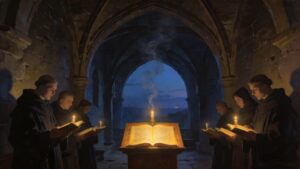

The Psalms are not divided in only one way.
In biblical studies, they may be grouped by genre: laments, hymns, thanksgiving Psalms, royal Psalms, wisdom Psalms, pilgrimage songs, and more. In liturgical settings, they may be organized by feast, season, or worship function. But in living devotional, folk-Christian, and practical traditions, the Psalms are often grouped in a different way: by spiritual purpose.
That means practitioners do not only ask what kind of Psalm a text is in literary terms. They also ask what kind of spiritual work it tends to support. Is it a Psalm of protection? A Psalm of cleansing? A Psalm of healing, justice, mercy, peace, restoration, ascent, or sacred protest?
This way of reading is not a rejection of biblical or liturgical categories. It is a practical framework layered on top of them. It reflects how the Psalms have actually been used across homes, prayer disciplines, folk traditions, devotional manuals, healing rites, household blessings, and more serious systems of sacred practice.
In other words, the Psalms are not only a book of worship. They are also a living spiritual map.
And when people ask how the Psalms are divided in serious practice, the most useful answer is usually this: they are often organized by domain, spiritual current, or area of influence.
The Psalms Are Not Divided in Only One Way
One of the biggest mistakes modern readers make is assuming there must be one universal master list.
There isn’t.
A Psalm can be read:
- as biblical poetry,
- as liturgical prayer,
- as personal devotion,
- as household blessing,
- as pastoral medicine,
- as folk-Christian protection work,
- as spiritual warfare,
- as contemplative ascent,
- or as part of a more operative magical tradition.
Because of that, the same Psalm may appear in more than one category depending on the lens being used.
A literary scholar may classify a Psalm by genre.
A priest may classify it by liturgical use.
A devotional Christian may classify it by emotional or pastoral need.
A folk practitioner may classify it by practical effect.
A Psalm worker may classify it by force, imagery, or spiritual direction.
All of these can be real without being identical.
This is why serious Psalm work benefits from humility. The goal is not to flatten the Psalter into a rigid codebook where every Psalm has one official label forever. The goal is to understand that the Psalms have always lived at the intersection of:
- text
- prayer
- imagery
- ritual memory
- spiritual function
That is also why “spiritual purpose” is often the most useful framework for living practice. It helps organize the Psalms according to what people are actually seeking:
- protection,
- cleansing,
- healing,
- peace,
- justice,
- prosperity,
- reconciliation,
- safe passage,
- household blessing,
- or deeper spiritual ascent.
Why “Spiritual Purpose” Is the Most Useful Living Framework
Most people do not begin by asking, “Which are the royal Psalms?”
They begin by asking:
- Which Psalms are used for protection?
- Which Psalms help with cleansing or uncrossing?
- Which Psalms are read for healing?
- Which Psalms calm fear at night?
- Which Psalms are used for justice or reversal?
- Which Psalms are used for blessing the home?
That is why spiritual purpose is such a useful organizing principle. It is:
- practical,
- intuitive,
- cross-tradition,
- and spiritually legible.
It also reflects how the Psalms behave in actual practice. A single Psalm can carry more than one current at the same time.
For example:
- Psalm 23 can be read as a Psalm of peace, protection, provision, and restoration.
- Psalm 51 can be read as a Psalm of repentance, cleansing, purification, and spiritual reset.
- Psalm 91 can be read as a Psalm of protection, household covering, night defense, and even safe travel.
- Psalm 133 can be read as a Psalm of unity, household blessing, reconciliation, and relational harmony.
This overlap is not confusion. It is part of the depth of the Psalms.
A Psalm is not a label. It is a living field of language. It has imagery, emotional tone, covenant force, and direction of movement. That is why one Psalm may serve:
- the frightened,
- the sick,
- the traveler,
- the grieving,
- the unjustly accused,
- or the one trying to restore peace in a troubled home.
Serious practitioners learn to respect that complexity instead of fighting it.
The Core Practical Domains of the Psalms
Across devotional, folk-Christian, and practical traditions, some domains appear again and again. Not every tradition assigns the exact same Psalms to the exact same need, but the broader currents are remarkably stable.
These are the core practical domains that form the most useful living taxonomy of the Psalms.
Psalms for Protection and Spiritual Defense
This is one of the most universal categories in all Psalm practice.
Protection Psalms are used not only against visible danger, but also against:
- dread,
- oppression,
- hostile intention,
- spiritual heaviness,
- unseen disturbance,
- and periods of vulnerability.
In many traditions, these Psalms are read when:
- entering uncertain situations,
- sleeping in troubled seasons,
- feeling spiritually exposed,
- leaving home,
- or trying to re-establish a boundary of safety around oneself or one’s household.
Common examples include:
- Psalm 91
- Psalm 27
- Psalm 121
- Psalm 46
What makes protection Psalms so recognizable is their imagery:
- refuge,
- wings,
- fortress,
- shield,
- watchfulness,
- divine nearness,
- and the refusal of fear.
These Psalms often do more than “stop danger.” They restore the inner sense of being covered.
Psalms for Cleansing, Uncrossing, and Purification
This is one of the most important categories in serious practical Psalm work.
Cleansing Psalms are often misunderstood as merely moral or emotional. In reality, many living traditions use them not only for repentance, but for:
- spiritual reset,
- release from heaviness,
- removal of harmful residue,
- uncrossing,
- purification after conflict,
- and the restoration of right order.
The most obvious example is Psalm 51, especially because of its washing and hyssop imagery. But the cleansing current also touches Psalms such as:
- Psalm 6
- Psalm 32
- Psalm 130
In many practical traditions, cleansing is not just about guilt. It is about clearing what clings:
- fear,
- grief,
- confusion,
- spiritual contamination,
- oppressive atmospheres,
- or the feeling of having drifted out of alignment.
This is why cleansing Psalms often sit close to:
- water,
- tears,
- confession,
- humility,
- herbs such as hyssop,
- and ritual acts of washing or release.
They are some of the most important Psalms in any serious foundational practice.
Psalms for Healing, Restoration, and Recovery
Healing Psalms are not only about bodily illness.
In the wider sacred vocabulary of the Psalms, healing can include:
- physical recovery,
- emotional repair,
- nervous settling,
- strength after grief,
- restoration after exhaustion,
- and the gradual return of life after depletion.
This is why healing Psalms are often as much about restoration as they are about cure.
Common examples include:
- Psalm 23
- Psalm 30
- Psalm 41
- Psalm 103
Some heal through direct language of mercy and recovery. Others heal through atmosphere:
- rest,
- trust,
- relief,
- return,
- lifted burden,
- renewed strength.
This category is especially important because many people first come to the Psalms when they are wounded, weakened, or trying to recover from something that has touched both body and soul.
Psalms for Prosperity, Provision, and Increase
This category must be handled carefully.
In serious Psalm practice, prosperity is usually not about greed, domination, or flashy spiritual consumerism. It is more often about:
- lawful provision,
- sufficiency,
- fruitful labor,
- stable increase,
- household blessing,
- favor in work,
- and provision without spiritual disorder.
That distinction matters.
Common examples include:
- Psalm 65
- Psalm 112
- Psalm 128
- sometimes Psalm 23 in its provision current
Prosperity Psalms often speak in the language of:
- abundance,
- fruitful land,
- full tables,
- work blessed,
- household increase,
- righteous flourishing,
- and the ability to enjoy the fruit of one’s labor.
Read correctly, these are not merely “money Psalms.” They are Psalms of ordered blessing.
Psalms for Peace, Sleep, and Relief from Fear
This is a distinct domain, even when it overlaps with protection.
Protection Psalms tend to build a boundary.
Peace Psalms tend to calm the inner field.
They are often used for:
- night fear,
- insomnia,
- agitation,
- panic,
- grief loops,
- emotional turbulence,
- and seasons when the soul cannot settle.
Common examples include:
- Psalm 4
- Psalm 23
- Psalm 91
- Psalm 131
These Psalms carry a quieter force. Their work is not always aggressive defense. Sometimes it is:
- stillness,
- trust,
- lowered vigilance,
- surrendered burden,
- and the restoration of interior quiet.
This is one of the most pastoral and deeply needed domains in the whole Psalter.
Psalms for Love, Reconciliation, and Restoring Harmony
Yes—this is a real domain, and it should not be ignored simply because it is sensitive.
Across living traditions, some Psalms are read not for coercion or domination, but for:
- reconciliation,
- restored tenderness,
- healing after conflict,
- relational peace,
- household harmony,
- and right union.
That distinction is essential.
The strongest love-oriented Psalm traditions tend to emphasize:
- favor,
- peace,
- tenderness,
- restored harmony,
- right affection,
- and covenant repair—
not obsession, control, or spiritual compulsion.
Common examples include:
- Psalm 45
- Psalm 133
- Psalm 127
- sometimes other Psalms used for relational peace and restored favor
This category can include:
- marriage,
- estranged partners,
- family healing,
- kinship repair,
- and the re-establishment of harmony where affection has become disordered.
Handled maturely, it is one of the most human and necessary areas of Psalm work.
Psalms for Justice, Enemies, and Spiritual Reversal
This is another major domain that is often misunderstood.
Not every Psalm used against enemies is a curse Psalm.
Many belong first to the language of:
- justice,
- vindication,
- lawful defense,
- exposure of wrongdoing,
- reversal of oppression,
- and the turning back of hostile intention.
That is a much more precise and spiritually responsible frame.
Common examples include:
- Psalm 35
- Psalm 37
- Psalm 94
- and sometimes Psalm 109, depending on the level of severity
These Psalms are often used when a person is:
- falsely accused,
- obstructed,
- harassed,
- mistreated,
- oppressed,
- or trying to stand before God in a situation where injustice must be answered.
In serious practice, justice Psalms are often less about aggression and more about alignment with divine judgment.
The Imprecatory Current: Judgment, Cursing, and Sacred Boundaries
This current cannot be erased from the Psalter, and serious traditions should not pretend otherwise.
The imprecatory Psalms contain:
- severe protest,
- calls for judgment,
- covenantal outrage,
- boundary language,
- and sometimes explicitly destructive speech.
They are not casual.
They are not emotional toys.
And they should not be treated like spiritual venting for everyday irritation.
Commonly discussed examples include:
- Psalm 69
- Psalm 109
- Psalm 137
- Psalm 58
These Psalms belong to a more dangerous and more solemn current of sacred speech. They are best understood as:
- formal protest before God,
- appeals to judgment,
- cries from the edge of violation,
- and severe boundary language in the face of evil or oppression.
Handled carelessly, this current becomes distortion.
Handled maturely, it reveals that the Psalter contains not only comfort, but also holy severity.
Psalms for Travel, Watchfulness, and Safe Passage
This is one of the most beautiful practical categories.
Travel Psalms are often as much about threshold-crossing as they are about transportation. They address:
- departure,
- vulnerability,
- roads,
- pilgrimage,
- uncertain transitions,
- and safe return.
Common examples include:
- Psalm 121
- Psalm 122
- Psalm 91
- sometimes Psalm 23
These Psalms are especially powerful because travel is not only geographic. Spiritually, travel also means:
- leaving one condition for another,
- crossing exposed spaces,
- moving through uncertainty,
- and trusting to arrive in peace.
This is why the travel domain often overlaps with:
- protection,
- ascent,
- watchfulness,
- and return.
Psalms for Home Blessing and Household Protection
This domain is related to protection, but it is not identical to it.
Household Psalms are not only about keeping danger out. They are also about establishing:
- peace,
- order,
- provision,
- harmony,
- blessing,
- stability,
- and right atmosphere under one roof.
That broader vision matters.
Common examples include:
- Psalm 91
- Psalm 127
- Psalm 128
- Psalm 133
Household work often asks different questions than individual protection:
- Is the home peaceful?
- Is there unity?
- Is there blessing in the work of the house?
- Is there emotional and spiritual order?
- Is the atmosphere heavy or alive?
That is why home blessing is one of the most stable and important practical domains in Psalm tradition.
Beyond Practical Need: Inner-State and Devotional Categories
Not all Psalm classification is based on outer need.
Some of the most important categories are not about solving a problem at all. They are about:
- posture,
- alignment,
- spiritual state,
- devotion,
- consecration,
- return,
- gratitude,
- and inner orientation.
These categories matter because they prevent Psalm practice from collapsing into pure crisis management.
The Psalms are not only for emergencies. They are also for formation.
Psalms of Repentance and Return
Some of the most influential devotional groupings in Christian tradition are the Penitential Psalms, especially those associated with repentance, humility, confession, cleansing, and return.
These currents are often linked to Psalms such as:
- Psalm 6
- Psalm 32
- Psalm 38
- Psalm 51
- Psalm 130
- Psalm 143
Whether one memorizes the technical list or not, the spiritual current is easy to recognize:
- brokenness,
- confession,
- sorrow,
- mercy,
- washing,
- return,
- and the longing to be made right again.
This category also overlaps naturally with cleansing work.
Psalms of Mercy, Favor, and Divine Compassion
Some Psalms are not primarily defensive or corrective. They are supplicatory in a softer key.
They ask for:
- mercy,
- favor,
- compassionate regard,
- divine kindness,
- patient hearing,
- and the softening of harsh conditions.
Examples often associated with this current include:
- Psalm 6
- Psalm 25
- Psalm 86
- Psalm 103
This category is especially important because it shapes the heart differently than warfare language does. It teaches:
- humility,
- petition,
- dependence,
- and the courage to ask for gentleness.
Psalms of Praise, Thanksgiving, and Spiritual Stabilization
This is one of the most neglected categories in practical Psalm work, and one of the most important.
Many people turn to the Psalms when they need help, but forget that praise and thanksgiving are also active spiritual currents.
These Psalms can:
- stabilize blessing,
- seal answered prayer,
- restore perspective,
- realign the heart after fear,
- and prevent spiritual practice from becoming purely transactional.
Examples include:
- Psalm 66
- Psalm 100
- Psalm 103
- Psalm 150
In many living traditions, praise is not just celebration after the fact. It is part of the work itself.
Psalms of Guidance, Wisdom, and Right Direction
Some Psalms are used not because the practitioner is under attack, but because they need:
- discernment,
- right timing,
- clarity,
- wise counsel,
- alignment,
- or a stable path.
This current is often associated with:
- Psalm 1
- Psalm 25
- Psalm 119
- sometimes Psalm 143 or Psalm 16
These Psalms are especially valuable in periods of:
- confusion,
- crossroads,
- decision-making,
- spiritual uncertainty,
- or the need to re-enter the right path.
They often work through:
- law,
- meditation,
- remembrance,
- instruction,
- and rightly ordered desire.
Psalms of Trust, Covenant, and Shelter
Some Psalms become foundational not because they address one emergency, but because they establish a baseline climate of spiritual life.
They build:
- trust,
- covenant memory,
- confidence in divine shelter,
- and the inner habit of resting under sacred order.
Examples include:
- Psalm 23
- Psalm 27
- Psalm 46
- Psalm 91
These Psalms often become daily or recurring anchors in serious practice because they do not only solve problems. They form the soul.
Special Sacred Groupings Beyond Everyday Need
Beyond need-based classification, some Psalm collections are recognized because of:
- superscriptions,
- liturgical history,
- spiritual reputation,
- devotional use,
- or thematic continuity.
These are not always the first groupings a beginner encounters, but they become increasingly important in deeper work.
The Penitential Psalms
This is one of the clearest traditional collections in Christian devotional life.
The Penitential Psalms are associated with:
- repentance,
- confession,
- humility,
- purification,
- contrition,
- and return to right relationship.
They are especially important because they show that Psalm classification has never been only about external needs. Some categories are about the condition of the soul itself.
The Imprecatory Psalms
The imprecatory current deserves separate recognition because it is not identical to ordinary justice work.
These Psalms intensify the language of:
- judgment,
- protest,
- curse,
- covenantal severity,
- and boundary.
They are best treated as a distinct and more dangerous current—not merely “enemy Psalms.”
The Michtam / Golden Psalms
The Michtam Psalms form a specialized and fascinating cluster.
Traditionally, the superscription appears on:
- Psalms 16, 56, 57, 58, 59, and 60
Different traditions interpret the word Michtam differently, and its exact meaning remains debated. But in some esoteric and practical readings, these Psalms are treated as a more refined cluster associated with:
- preserved integrity under pressure,
- hidden strength,
- sealed wisdom,
- interior endurance,
- and a kind of “golden” or concentrated spiritual current.
This is why some practitioners speak of them not merely as a literary subset, but as a specialized family of Psalms with a deeper transformative quality.
That does not need to be overstated to be meaningful. The important point is that the Psalter contains specialized internal clusters that reward deeper attention.
The Songs of Ascents (120–134)
The Songs of Ascents are one of the strongest examples of a canonical Psalm collection whose spiritual use naturally extends beyond literary structure.
Historically, they are associated with:
- ascent,
- pilgrimage,
- temple movement,
- upward travel,
- sacred approach.
In living practice, that often expands into:
- elevation,
- threshold-crossing,
- spiritual rising,
- safe passage,
- preparation for transition,
- and movement from one condition into another.
This makes them one of the most elegant bridges between:
- biblical structure,
- devotional use,
- and practical spiritual application.
Why Different Traditions Assign Different Psalms to the Same Need
This is one of the most important principles in serious Psalm work:
Different traditions do not always assign the same Psalm to the same need.
That does not automatically mean one is false and the other is true.
It often means they are using different interpretive methods.
Some Traditions Work by Theme
Many systems assign Psalms by broad imagery:
- enemies,
- shelter,
- washing,
- peace,
- harvest,
- household blessing,
- gates,
- ascent,
- judgment.
This is one of the oldest and most intuitive ways to work.
Some Traditions Work by Key Verses
Other traditions—especially more practical, talismanic, or folk systems—may focus on a single verse that carries a particular force.
A short phrase may become:
- a petition,
- a protective line,
- a justice formula,
- or a verse attached to a specific sacred operation.
This is especially important in traditions where a Psalm verse appears embedded in a seal, charm, pentacle, or fixed assignment.
Some Traditions Prefer the Whole Psalm
Even when a single verse is emphasized, many serious practitioners still prefer to work the entire Psalm, not only the extracted line.
That principle appears clearly in modern practical teaching around Solomonic pentacles: even when a specific verse is inscribed or highlighted, the whole Psalm is often treated as the fuller spiritual current behind it.
A verse may carry the spark, but the whole Psalm often carries the full current.
That is one of the healthiest principles in serious Psalm work.
Practical Traditions Allow Overlap
Finally, overlap is normal.
A Psalm may serve:
- protection and sleep,
- cleansing and repentance,
- justice and reversal,
- home blessing and peace,
- travel and ascent.
This is not inconsistency. It is the sign that the Psalms are not flat tools. They are layered sacred texts with multiple directions of force.
A Better Way to Read the Psalms by Area of Influence
If you want to work with the Psalms seriously, do not read them only by keyword.
Read them by spiritual current.
That means asking not only:
- “Does this Psalm mention enemies?”
- “Does this Psalm mention washing?”
- “Does this Psalm mention blessing?”
But also:
- What is the movement of the Psalm?
- What does it gather?
- What does it release?
- What does it defend?
- What does it restore?
- What does it expose?
- What does it bless?
- What does it elevate?
This changes everything.
Read for Spiritual Current, Not Just Keywords
A Psalm that mentions enemies is not automatically a curse Psalm.
A Psalm that mentions washing is not only about literal cleansing.
A Psalm that mentions a house may refer not only to a building, but to:
- family,
- lineage,
- household order,
- inheritance,
- or the atmosphere under one roof.
Surface words matter. But they are not enough.
Read for Imagery, Movement, and Emotional Field
The Psalms work through imagery.
Some of the most powerful recurring images include:
- wings,
- refuge,
- shepherding,
- still waters,
- washing,
- hyssop,
- oil poured out,
- enemies scattered,
- gates lifted,
- feet established,
- ascent,
- watchmen,
- house,
- table,
- dawn,
- mountain,
- tears turned to joy.
These images reveal the Psalm’s area of influence far more deeply than a simplistic label ever can.
Read for the Psalm’s Direction of Force
One of the most useful practical questions is:
What direction of force does this Psalm carry?
Does it:
- shield,
- cleanse,
- gather,
- restore,
- soften,
- expose,
- return,
- reconcile,
- elevate,
- establish,
- or judge?
This is often a better guide than looking for one exact modern category.
It is also how serious practitioners gradually become more discerning.
A Living Taxonomy, Not a Frozen Code
The Psalms are not a frozen codebook.
They are a living sacred body of:
- prayer,
- praise,
- protest,
- healing,
- blessing,
- judgment,
- mercy,
- ascent,
- and spiritual force.
Categories help us navigate them.
But categories do not exhaust them.
That is the right balance.
A serious taxonomy should:
- clarify,
- orient,
- deepen,
- and support discernment.
It should not imprison the Psalter inside a rigid system that mistakes labels for life.
Tradition gives patterns.
Prayer gives breath.
Practice gives understanding.
Where to Begin: Start with the Core Domains
If you want to build a serious Psalm practice, begin with the core domains first.
A strong order for most people is:
- Protection and Spiritual Defense
- Cleansing, Uncrossing, and Purification
- Healing, Restoration, and Recovery
- Peace, Sleep, and Relief from Fear
- Justice, Enemies, and Spiritual Reversal
- Home Blessing and Household Protection
- Prosperity, Provision, and Increase
- Love, Reconciliation, and Restoring Harmony
- Travel, Watchfulness, and Safe Passage
After that, go deeper into the more specialized currents:
- the Imprecatory Psalms,
- the Michtam / Golden Psalms,
- the Songs of Ascents,
- and eventually the Psalms embedded in the Pentacles of Solomon, where verse-level and full-Psalm traditions meet in a more concentrated form.
That is where the Psalter begins to reveal itself not only as a book of prayer—but as a layered spiritual architecture.
Frequently Asked Questions:
No. The Psalms can be grouped in several valid ways depending on the tradition and purpose. Biblical scholars often classify them by literary form, while devotional, folk-Christian, and practical traditions frequently organize them by spiritual purpose—such as protection, cleansing, healing, peace, justice, or household blessing.
For most practitioners, the most useful framework is by spiritual purpose or domain. This means identifying which Psalms are commonly associated with protection, purification, healing, prosperity, peace, reconciliation, justice, travel, or home blessing. It is one of the most practical and widely recognizable ways to navigate the Psalter.
Yes. A single Psalm can carry more than one spiritual current. For example, Psalm 23 may be used for peace, protection, provision, and restoration, while Psalm 91 is often associated with protection, night defense, and safe travel. Overlap is normal and reflects the layered nature of the Psalms.
Not exactly. Different traditions sometimes assign different Psalms to the same need. Some work by theme, some by key verses, and others prefer the entire Psalm. This does not necessarily mean the traditions contradict each other—it often means they are using different interpretive methods.
The most common practical categories include protection, cleansing, healing, prosperity, peace, reconciliation, justice, travel, and household blessing. Beyond these, there are also devotional categories such as repentance, mercy, praise, guidance, and trust, as well as specialized groupings like the Penitential Psalms, the Michtam / Golden Psalms, and the Songs of Ascents.
Not exactly. Practical categories group Psalms by spiritual need or domain, while collections like the Michtam Psalms and the Songs of Ascents are recognized as specialized sacred clusters with their own literary, devotional, and sometimes esoteric significance. They are best understood as deeper layers within the Psalter, not just ordinary “need lists.”