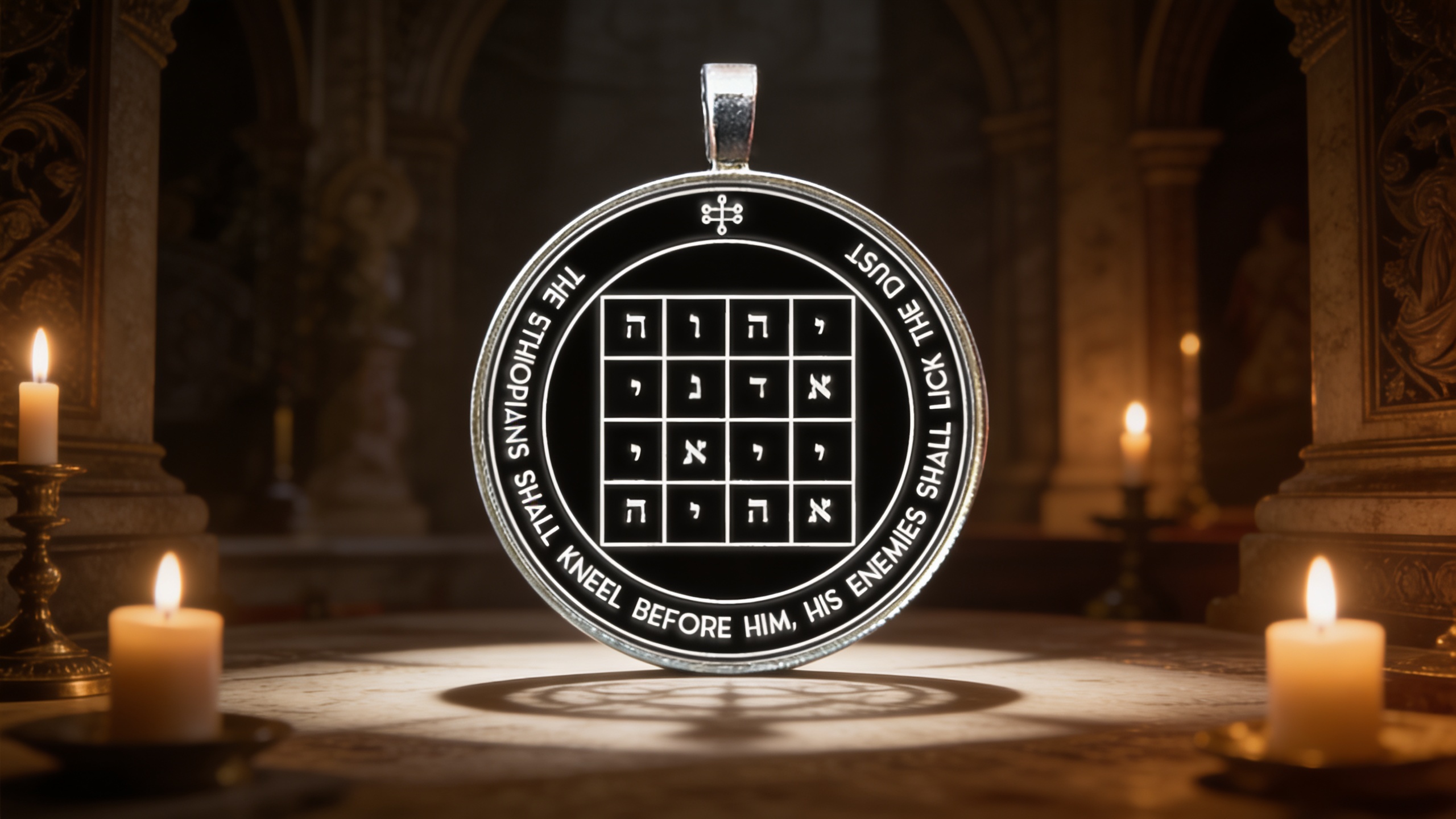
One of the most common fears in talismanic and occult practice is the fear of “ruining” a spiritual object.
People worry:
- “Did I damage the charge?”
- “Did negative energy contaminate it?”
- “Do I need to cleanse it constantly?”
- “Did I accidentally deactivate it?”
Unfortunately, internet occult culture often amplifies these fears into obsessive ritual anxiety.
And over time, some people become more focused on avoiding contamination than building a healthy relationship with the pentacle itself.
Many people become more afraid of “damaging” their pentacle than actually building a healthy relationship with it.
That is one of the biggest problems in modern ritual culture.
Because:
Healthy cleansing is usually about renewal and reconnection—not panic over invisible contamination.
That distinction changes everything.
Cleansing vs Fear-Based Purification
The word “cleansing” often becomes misunderstood.
Healthy cleansing is not constant emergency purification.
It is usually better understood as:
- symbolic renewal
- emotional reset
- ritual maintenance
- devotional reconnection
- intentional refocusing
The healthiest forms of cleansing reinforce clarity and continuity rather than fear and compulsive ritual behavior.
That principle matters enormously.
Because ritual maintenance should ideally create:
- steadiness
- familiarity
- emotional confidence
- symbolic continuity
Not obsession.
A pentacle is not necessarily “destroyed” because:
- someone touched it
- you missed a ritual day
- you became emotionally stressed
- daily life became chaotic
Healthy ritual relationships are far more resilient than internet fear culture often suggests.
What People Mean by “Charge”
The word “charge” is often treated like a mystical battery level.
But for many practitioners, the experience is more nuanced than that.
For many practitioners, a pentacle’s “charge” is closely connected to sustained ritual relationship and intentional engagement over time.
That may involve:
- familiarity
- emotional association
- symbolic meaning
- devotional continuity
- repeated intentional use
- ritual rhythm
In other words:
the relationship itself matters.
This is one reason why some pentacles begin feeling more meaningful over time—not because they become magical batteries, but because repeated engagement deepens emotional and symbolic connection.
Gentle Ways to Reconnect with a Pentacle
In most situations, the gentlest methods are usually the healthiest.
The gentlest methods are often the most sustainable and emotionally healthy.
Many forms of cleansing are really forms of reconnection.
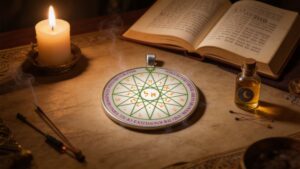
Physical Cleaning
Sometimes simple respectful maintenance is enough.
This may include:
- gently wiping the pentacle
- removing dust or oils
- careful handling
- respectful storage
Physical care matters.
Especially for metals and engraved surfaces.
Psalm Recitation
Many practitioners reconnect through:
- Psalms
- prayer
- devotional reading
- brief ritual focus
This often restores:
- emotional clarity
- symbolic continuity
- intentional focus
Without dramatic ritual complexity.
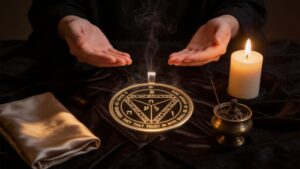
Candles and Incense
Some practitioners use:
- incense smoke
- candlelight
- altar placement
To create:
- ritual atmosphere
- symbolic renewal
- focused reconnection
Again:
not because the pentacle is “corrupted,” but because ritual rhythm matters.
Prayer or Petition Work
Simple intentional engagement can often feel more meaningful than elaborate cleansing procedures.
This may include:
- gratitude
- focused prayer
- renewed intention
- reflective ritual time
Sometimes calm reconnection is enough.
Altar Resting
Some practitioners occasionally place the pentacle:
- on an altar
- beside candles
- near devotional objects
As a symbolic pause or reset.
This often feels:
- calming
- grounding
- reconnective
Rather than corrective.
Smoke, Salt, Moonlight, and Water
Many popular cleansing methods circulate online.
Some are useful.
Some are misunderstood.
And some can physically damage the pentacle.
Physical preservation matters just as much as symbolic ritual maintenance.
That is extremely important.
Smoke
Smoke cleansing is often one of the safest methods.
Many practitioners use:
- incense
- ritual smoke
- devotional smoke offerings
To create symbolic renewal and ritual atmosphere.
Salt
Salt can damage:
- metals
- coatings
- engravings
Especially with prolonged contact.
So caution matters.
Water
Water depends heavily on:
- material type
- coatings
- engraving depth
- oxidation risk
Some pentacles should absolutely not be submerged.
Moonlight
Moonlight is often used symbolically for:
- reflection
- emotional reset
- atmospheric ritual continuity
This tends to function more symbolically and devotionally than mechanically.
When Cleansing Can Feel Meaningful
Cleansing often becomes most meaningful during transitions.
Cleansing often becomes most meaningful when it functions as intentional reconnection rather than emergency panic management.
Examples may include:
- emotionally difficult periods
- after long neglect
- before a new ritual operation
- after emotionally intense situations
- after long-term daily carry
- during devotional renewal
In these moments, cleansing often becomes:
- reflective
- grounding
- emotionally clarifying
Not fear-driven.
When Cleansing Becomes Unhealthy
This is one of the most important parts of the entire discussion.
Constant fear-based cleansing often weakens confidence and emotional stability more than it strengthens ritual engagement.
Compulsive cleansing can create:
- anxiety loops
- ritual insecurity
- emotional dependency
- fear of contamination
- obsessive checking behaviors
At that point, the cleansing stops functioning as healthy maintenance and becomes emotional distress management.
That is not sustainable.
Healthy ritual relationships should create:
- steadiness
- familiarity
- calmness
- emotional confidence
Not constant fear.
A Better Way to Think About “Recharging”
The word “recharging” can become misleading because it encourages the idea that pentacles behave like depleted batteries.
But for many practitioners:
Many pentacles feel strongest not after dramatic “recharging,” but after periods of calm, intentional, repeated engagement.
That may include:
- daily carry
- prayer
- Psalms
- devotional use
- ritual continuity
- symbolic familiarity
The relationship deepens gradually.
Not mechanically.
Mistakes That Damage the Relationship
Ironically, the greatest damage often comes not from ordinary life—but from fear itself.
Fear-based ritual behavior often damages the relationship with the pentacle more than ordinary daily life ever could.
Common mistakes include:
- panic cleansing
- harsh physical methods
- internet contamination paranoia
- obsessive resetting
- constant fear of “doing it wrong”
- compulsive ritual escalation
These patterns weaken:
- confidence
- continuity
- emotional steadiness
Which are often central to healthy talismanic work.
The Most Important Rule for Pentacle Cleansing
If you remember one thing, remember this:
Approach cleansing as calm ritual maintenance and intentional reconnection—not fear-driven emergency purification.
That single principle prevents enormous confusion and anxiety.
Conclusion
Healthy cleansing supports:
- continuity
- symbolic renewal
- emotional clarity
- devotional engagement
- intentional reconnection
- physical preservation
Without turning ritual life into fear management.
Because:
The healthiest pentacle relationships are usually built through steadiness, familiarity, and intentional reconnection—not constant fear of contamination.
Frequently Asked Questions:
Some practitioners choose to cleanse or reconnect with pentacles periodically as a form of symbolic renewal, emotional reset, devotional maintenance, or ritual refocusing.
Most healthy pentacle relationships are more resilient than internet occult culture often suggests. Occasional stress, missed rituals, or ordinary daily life do not automatically “destroy” a pentacle.
For many practitioners, “charge” refers less to a mechanical energy battery and more to the ongoing relationship built through ritual continuity, intentional engagement, symbolic meaning, and devotional focus.
Gentle methods are usually safest. Common approaches include physical cleaning, prayer, Psalms, incense smoke, candlelight, altar placement, and intentional reconnection rituals.
Yes. Salt can damage certain metals, coatings, and engravings, especially during prolonged contact or improper storage.
Potentially, yes. Water safety depends on the material, coating, engraving depth, and oxidation risk of the specific pentacle.
Many practitioners use moonlight symbolically for reflection, emotional reset, and ritual continuity rather than treating it as a mechanical energy source.
Cleansing often refers to symbolic renewal and emotional clarity, while “recharging” is commonly used to describe renewed ritual engagement, devotional continuity, or intentional refocusing.
Yes. Constant fear-based cleansing can create ritual anxiety, emotional dependency, compulsive behavior, and reduced confidence in the relationship with the pentacle.
Many practitioners find cleansing most meaningful during transitions, after long periods of neglect, before new ritual work, or during intentional devotional reconnection.
One of the biggest mistakes is approaching cleansing through fear, contamination paranoia, obsessive resetting, or compulsive ritual insecurity.
Yes. Many practitioners use Psalms, prayer, candles, and focused devotional ritual as calm methods of symbolic reconnection and intentional maintenance.