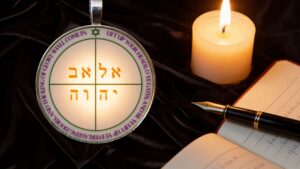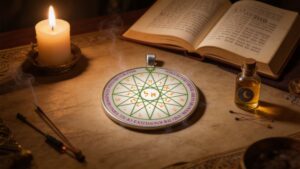
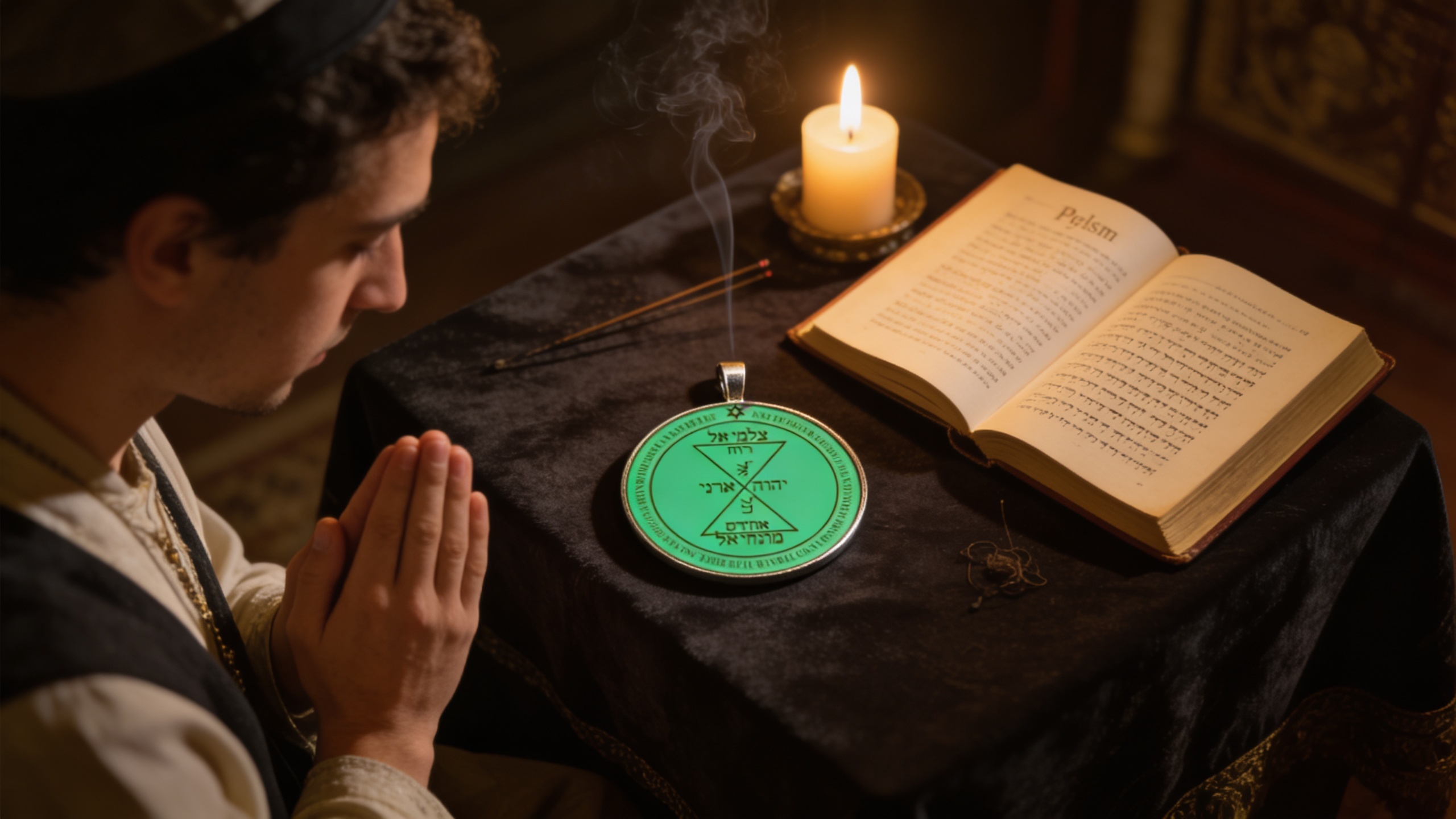
Many people become interested in Solomonic pentacles and immediately run into the same fear:
“Do I need to perform full ceremonial spirit evocation for this to work?”
That question stops many people before they even begin.
And the confusion is understandable.
Traditional grimoires contain:
- spirit conjurations
- ritual protocols
- ceremonial operations
- elaborate timing systems
- formal invocations
But there is another important reality that also needs to be understood:
Most people working with Solomonic pentacles today are not performing full grimoire-style evocation—and that does not automatically make the work meaningless.
That distinction matters enormously.
There is a major difference between:
- respectful ritual engagement
and - attempting full ceremonial manifestation work
And many practical forms of pentacle use historically existed alongside more elaborate ceremonial systems.
Most practical Solomonic pentacle work does not require full ceremonial spirit evocation to be meaningful, structured, or effective.
That is the foundation of this article.
What Is a Petition in Pentacle Work?
At its simplest level, a petition is:
a focused and intentional request made through ritual engagement with the pentacle.
That engagement may include:
- prayer
- psalm recitation
- focused intention
- symbolic offerings
- planetary timing
- candle work
- meditation
- written requests
The important point is this:
A petition creates intentional engagement with the pentacle instead of passive ownership.
That changes the relationship completely.
Instead of:
- collecting
- displaying
- or casually carrying the pentacle
…the practitioner begins actively working with it.
And that shift often matters far more than dramatic ritual complexity.
Is Full Ceremonial Evocation Required?
This is one of the biggest misconceptions surrounding Solomonic traditions.
Yes:
traditional grimoires absolutely contain:
- spirit conjurations
- ceremonial structures
- formal evocation methods
- ritual hierarchies
That is historically real.
But it is also true that many practitioners historically worked through:
- prayer
- devotional methods
- psalm work
- planetary timing
- symbolic ritual engagement
- talismanic carrying and use
Without attempting full ceremonial manifestation procedures.
There is a major difference between respectful ritual engagement and attempting full ceremonial spirit manifestation.
That distinction is extremely important.
Many people today:
- use pentacles devotionally
- pair them with psalms
- pray with them
- meditate with them
- carry them intentionally
- use candles and incense
- align them with planetary timing
Without attempting advanced ceremonial operations.
And for many practitioners, that approach is both more practical and more sustainable.
A Simple Petition Method for Solomonic Pentacles
One of the biggest mistakes beginners make is assuming the ritual must become increasingly elaborate to become meaningful.
That usually creates anxiety instead of consistency.
Consistency and clarity matter more than theatrical complexity.
A simple petition structure is often enough.
1. Prepare the Space
This does not require a ceremonial temple.
Simply create:
- cleanliness
- quiet
- focus
- intentionality
Even a small dedicated space can work well.
2. Place the Pentacle Respectfully
Place the pentacle where it can become the focal point of the work.
This helps create:
- intentional focus
- symbolic engagement
- ritual orientation
3. Light a Candle or Incense (Optional)
This is optional—but many practitioners find it helpful.
Candles and incense can:
- reinforce focus
- create ritual rhythm
- support emotional transition into the work
Not because they are mandatory.
But because repetition creates structure.
4. Read an Associated Psalm
Many practitioners pair pentacles with:
- Psalms
- prayers
- devotional readings
- planetary invocations
Historically, the Psalms have deep associations with:
- Solomonic traditions
- folk magic
- devotional magic
- planetary ritual systems
5. State the Petition Clearly
Keep the petition:
- grounded
- clear
- realistic
- specific
Avoid:
- desperation
- contradiction
- emotional chaos
- obsessive wording
Clear petitions create clearer engagement.
That matters more than dramatic language.
6. Sit Briefly in Reflection or Focus
This part is often neglected.
Take several moments for:
- stillness
- reflection
- focused emotional alignment
- contemplation of the intention
The goal is not performance.
It is engagement.
7. Close Respectfully
You do not need theatrical dismissals or elaborate closure formulas.
A respectful closing may simply involve:
- gratitude
- prayer
- quiet completion
- extinguishing the candle
- returning the pentacle respectfully
Simplicity is not weakness.
Why Psalms Matter in Petition Work
Psalms occupy a unique place in Solomonic and related traditions.
Historically, they became deeply connected to:
- planetary work
- folk talismanic practice
- devotional ritual
- practical magic traditions
For many practitioners, Psalms provide:
- emotional structure
- sacred language
- rhythmic focus
- devotional orientation
- ritual consistency
For many practitioners, the Psalms function as the living voice behind the symbolic operation.
That is one reason they remain so widely used.
Not merely as decoration.
But as active ritual language.
Candles, Incense, and Planetary Timing
Optional ritual structure can strengthen consistency and focus.
Common additions include:
- planetary days
- planetary hours
- incense
- candle colors
- altar work
- ritual oils
- offerings
But it is important not to become trapped in perfectionism.
Optional ritual structure can deepen focus and consistency without requiring extreme ceremonial complexity.
That distinction matters.
Because many people become so afraid of “doing it wrong” that they stop practicing entirely.
How to Form a Good Petition
One of the most overlooked skills in pentacle work is learning how to formulate requests clearly.
Good petitions tend to be:
- focused
- realistic
- actionable
- emotionally stable
- grounded in real movement
Weak petitions tend to become:
- vague
- emotionally chaotic
- desperate
- contradictory
- obsessive
For example:
Weak:
“Fix my entire life immediately.”
Stronger:
“Help strengthen clarity, opportunity, and steady movement in this specific situation.”
Clear petitions create clearer engagement.
And clearer engagement usually produces better consistency.
Mistakes That Weaken Petition Work
Many people unintentionally sabotage their own practice through unnecessary complexity.
Many people weaken their own practice by constantly escalating complexity instead of deepening consistency.
Common mistakes include:
- passive wishing
- obsession
- desperation
- ritual overcomplication
- fear of mistakes
- constantly changing methods
- lack of consistency
- treating ritual like performance instead of engagement
Pentacle work usually becomes stronger through:
- rhythm
- familiarity
- consistency
- grounded focus
Not endless escalation.
How Often Should You Petition?
There is no universal rule.
Some people work:
- daily
- weekly
- during planetary hours
- during active situations
- during transitional periods
The key is sustainability.
Regular engagement usually matters more than ritual excess.
A simple consistent practice is often far more valuable than occasional dramatic ritual.
The Most Important Rule for Petition Work
If you remember one thing, remember this:
Approach pentacle work with clarity, respect, consistency, and grounded intention—not fear or theatrical obsession.
That single principle prevents enormous confusion.
Conclusion
Pentacle petition work does not require:
- extreme ceremonial performance
- elaborate spirit manifestation
- theatrical ritual complexity
Meaningful engagement can involve:
- prayer
- psalms
- candles
- timing
- offerings
- focused intention
- devotional structure
Without full ceremonial evocation.
And for many practitioners, that approach becomes far more sustainable and personally meaningful over time.
For many practitioners, the most meaningful pentacle work begins not with spectacle, but with consistent, intentional engagement.
Frequently Asked Questions:
No. Many practitioners work with Solomonic pentacles through prayer, Psalms, candles, planetary timing, meditation, and focused petitions without attempting full ceremonial spirit evocation.
A petition is a focused and intentional request made through ritual engagement with a pentacle. It may include prayer, Psalms, candle work, written intentions, or devotional ritual structure.
A simple method often includes preparing the space, placing the pentacle respectfully, optionally lighting a candle or incense, reading a Psalm, stating the petition clearly, sitting briefly in focus or reflection, and closing respectfully.
Yes. Many people use pentacles in practical devotional or symbolic ways without advanced ceremonial training, especially through consistent prayer, ritual focus, and intentional engagement.
Psalms have long historical associations with Solomonic traditions, devotional magic, folk magic, and planetary ritual systems. Many practitioners use them to create emotional focus, sacred rhythm, and ritual structure.
No. Candles and incense are optional ritual supports. They can help create focus, rhythm, and consistency, but they are not universally required.
Strong petitions are usually clear, grounded, realistic, emotionally stable, and connected to practical movement or real-life situations.
Common problems include desperation, inconsistency, obsessive thinking, ritual overcomplication, constantly changing methods, and treating ritual like performance instead of meaningful engagement.
There is no universal rule. Some practitioners work daily, weekly, during planetary hours, or only during active situations. Consistency is usually more important than ritual excess.
Yes. Many practitioners align petitions with planetary days or planetary hours associated with the pentacle’s ruling planet.
Yes. Simple, consistent, intentional practice is often more sustainable and meaningful than occasional overly elaborate ritual.
One of the biggest mistakes is assuming the ritual must become increasingly complex instead of building consistency, clarity, focus, and meaningful engagement over time.