
Research is one of the most powerful tools for expanding knowledge.
Whether someone is conducting:
- academic research
- historical investigation
- professional analysis
- genealogical research
- market research
- authorship projects
- occult studies
the process often involves much more than simply collecting information.
Many researchers quickly discover that information is abundant.
Understanding is far rarer.
Common challenges include:
- information overload
- conflicting sources
- incomplete evidence
- poor organization
- analytical confusion
- lack of direction
- losing focus during long projects
These obstacles can slow progress even when large amounts of information are available.
Research is rarely about finding information alone. It is often about discovering meaning, identifying patterns, asking better questions, and understanding what the information actually reveals.
That distinction matters.
Because healthy research-oriented pentacle work should strengthen the habits and mental processes that support investigation.
Not replace critical thinking.
Healthy research-oriented pentacle work should support investigation, analysis, organization, and intellectual discovery rather than replace critical thinking.
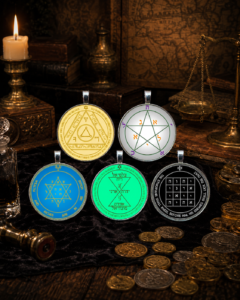
This combination is designed around exactly that principle.
What Research Actually Requires
Many people assume research is primarily the collection of facts.
In reality, effective research often depends on:
- curiosity
- persistence
- organization
- analysis
- understanding
- pattern recognition
Information alone rarely solves problems.
Meaning emerges when information is examined, compared, evaluated, and organized.
Good research is often driven by better questions rather than larger amounts of information.
The quality of inquiry frequently determines the quality of results.
Researchers who ask thoughtful questions often discover connections that others overlook.
The Best Solomonic Pentacles for Research Projects
This combination is designed to support:
- investigation
- analysis
- organization
- intellectual discovery
- understanding
- persistence
through complementary symbolic functions.
☿ The First Pentacle of Mercury
Investigation, Inquiry, and Information Gathering
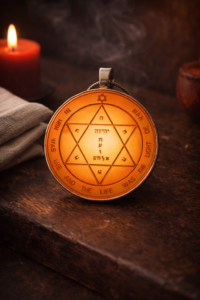
The First Pentacle of Mercury serves as the foundation of this combination.
It is commonly associated with:
- investigation
- learning
- inquiry
- communication
- information gathering
- intellectual activity
Research begins with curiosity and the willingness to investigate.
Mercury naturally governs many of the intellectual functions involved in research.
Including questioning, gathering information, comparing sources, and examining evidence.
♃ The Fourth Pentacle of Jupiter
Understanding, Synthesis, and Wisdom
Research becomes valuable when information develops into understanding.
The Fourth Pentacle of Jupiter supports:
- synthesis
- comprehension
- wisdom
- broader perspective
- intellectual integration
Information becomes valuable when it develops into understanding.
Jupiter helps support the process of transforming isolated facts into meaningful knowledge.
☀️ The First Pentacle of the Sun
Clarity, Insight, and Illumination
Many research challenges arise not from lack of information but from confusion.
The First Pentacle of the Sun supports:
- clarity
- awareness
- illumination
- insight
- intellectual focus
Clear thinking often reveals connections hidden by confusion.
Solar symbolism reinforces the ability to perceive information more clearly.
♄ The Third Pentacle of Saturn
Methodology, Discipline, and Persistence
Significant discoveries often require sustained effort.
The Third Pentacle of Saturn supports:
- discipline
- patience
- structure
- consistency
- methodical work
Many discoveries emerge through persistence rather than inspiration alone.
Saturn reinforces the habits that help researchers continue working through difficult problems.
🌙 The First Pentacle of the Moon
Adaptability, Pattern Recognition, and Responsiveness
Research rarely follows a perfectly predictable path.
Unexpected information frequently changes direction.
The First Pentacle of the Moon supports:
- adaptability
- responsiveness
- flexibility
- observation
- pattern recognition
Research often advances when seemingly unrelated information begins to form patterns.
The Moon helps support responsiveness to emerging discoveries.
Why This Combination Works So Well
Each pentacle contributes a different aspect of successful research.
Mercury supports:
- investigation
- inquiry
Jupiter supports:
- synthesis
- understanding
The Sun supports:
- clarity
- insight
Saturn supports:
- persistence
- methodology
The Moon supports:
- adaptability
- pattern recognition
This combination supports both the collection of information and the ability to transform information into understanding.
That balance is one of its greatest strengths.
Mercury and Investigation
Mercury reinforces:
- inquiry
- learning
- research
- communication
Research begins with curiosity and the willingness to investigate.
Without curiosity, investigation often stagnates.
Mercury helps maintain intellectual engagement.
Jupiter and Understanding
Jupiter strengthens:
- synthesis
- wisdom
- comprehension
- perspective
Information becomes valuable when it develops into understanding.
Research ultimately seeks meaning rather than accumulation alone.
The Sun and Intellectual Clarity
The Sun contributes:
- illumination
- awareness
- focus
- insight
Clear thinking often reveals connections hidden by confusion.
Many research breakthroughs occur when complexity becomes organized and understandable.
Saturn and Methodical Research
Saturn supports:
- discipline
- consistency
- patience
- structure
Many discoveries emerge through persistence rather than inspiration alone.
Long-term projects often succeed because researchers continue working after initial enthusiasm fades.
The Moon and Pattern Recognition
The Moon reinforces:
- adaptability
- responsiveness
- observation
- emerging connections
Research often advances when seemingly unrelated information begins to form patterns.
The ability to notice relationships between facts is frequently one of the most valuable research skills.
How to Work With the Combo
Healthy research-oriented ritual work should remain connected to practical investigation.
The healthiest research rituals reinforce curiosity, organization, critical thinking, and sustained investigation.
Practitioners often combine this combo with:
- note taking
- source management
- research journals
- project logs
- petitions
- Psalms
- analytical review sessions
The healthiest approach remains grounded in actual research.
The Biggest Mistake Researchers Make
One mistake appears repeatedly.
Collecting information without developing understanding.
More information does not automatically create better understanding.
Knowledge grows through analysis, synthesis, and interpretation.
Not accumulation alone.
The Most Important Rule About Research Pentacles
If you remember one thing, remember this:
Research-oriented pentacles work best when combined with curiosity, critical thinking, disciplined investigation, and organized analysis.
That principle keeps research work realistic, practical, and effective.
Conclusion
The strongest research-oriented pentacle combinations usually support:
- investigation
- analysis
- organization
- persistence
- clarity
- understanding
- pattern recognition
- intellectual discovery
through balanced symbolic alignment.
Not shortcuts.
Because:
The strongest research-oriented pentacle combinations are often the ones that quietly strengthen curiosity, analysis, persistence, organization, and intellectual discovery over time.
Frequently Asked Questions:
Many practitioners use Solomonic pentacles symbolically to support investigation, analysis, organization, intellectual curiosity, persistence, and the ability to work effectively with complex information.
No. Healthy research-oriented practice views pentacles as symbolic tools that support inquiry, critical thinking, organization, and disciplined investigation rather than substitutes for research itself.
The First Pentacle of Mercury is commonly associated with investigation, inquiry, learning, communication, information gathering, and intellectual activity, making it a natural foundation for research-oriented work.
The Fourth Pentacle of Jupiter is often associated with understanding, synthesis, wisdom, comprehension, and the ability to transform information into meaningful knowledge.
The First Pentacle of the Sun is commonly associated with clarity, awareness, illumination, insight, and intellectual focus, helping researchers organize and interpret information more effectively.
The Third Pentacle of Saturn is often associated with discipline, patience, consistency, structure, methodology, and the persistence required for long-term research projects.
The First Pentacle of the Moon is commonly associated with adaptability, responsiveness, observation, flexibility, and the ability to recognize emerging patterns and connections.
Many practitioners believe layered combinations work effectively because they reinforce multiple aspects of research simultaneously, including investigation, understanding, clarity, persistence, organization, and pattern recognition.
Many practitioners use research-oriented pentacles symbolically to reinforce organization, analytical thinking, persistence, comprehension, and sustained engagement with complex projects.
One of the most common mistakes is collecting large amounts of information without developing a framework for understanding, analysis, synthesis, or interpretation.
Healthy approaches usually involve note taking, source management, research journals, analytical reviews, project logs, petitions, Psalms, and disciplined investigation practices.
The healthiest research-oriented work usually strengthens curiosity, investigation, organization, analysis, persistence, and understanding rather than promising effortless discovery.