
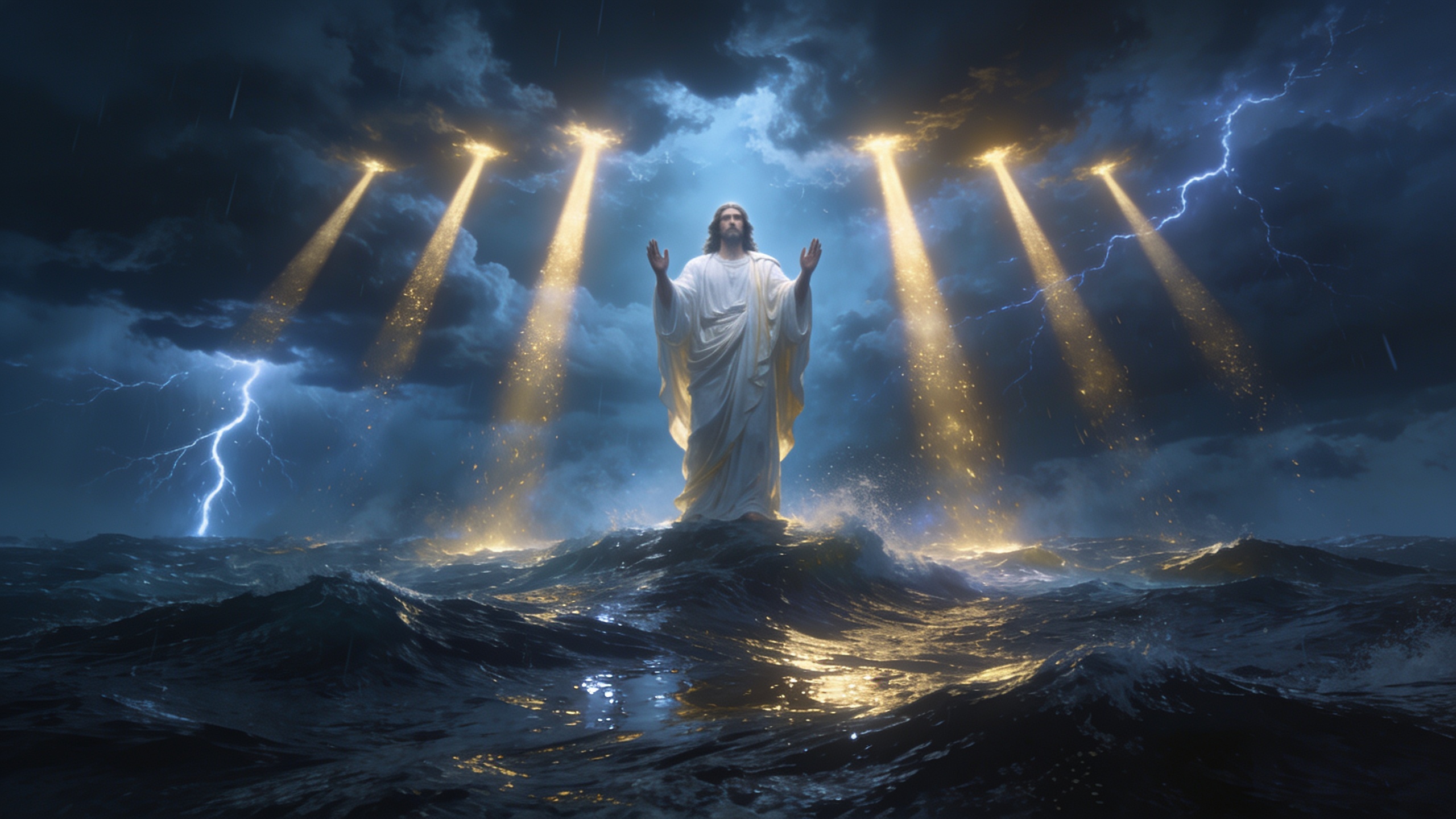
Psalm 29 is one of the most majestic, powerful, and mysterious Psalms in the entire Psalter.
Unlike many Psalms that focus primarily on:
- prayer
- guidance
- protection
- comfort
Psalm 29 focuses on:
power.
Not human power.
Not political power.
Not domination.
But:
sacred authority.
The Psalm presents a dramatic vision of a Voice moving through creation.
A Voice that:
- speaks over the waters
- shakes forests
- breaks cedars
- moves mountains
- commands storms
- transforms chaos into order
The imagery is overwhelming.
Thunder.
Lightning.
Floods.
Earthquakes.
Forests stripped bare.
The entire creation responding to a single Voice.
Yet the Psalm ends unexpectedly.
Not with destruction.
Not with conquest.
Not with fear.
But with:
strength and peace.
This paradox lies at the center of Psalm 29.
The Psalm teaches:
true power does not create chaos. True power brings order to chaos.
This is why Psalm 29 remains one of the greatest Psalms for:
- authority
- leadership
- confidence
- courage
- inner strength
- overcoming intimidation
- maintaining stability during turbulent times
The entire Psalm asks a profound question:
What happens when a force greater than chaos enters the storm?
Psalm 29 answers:
Order emerges.
Why Psalm 29 Follows Psalm 28
The progression from Psalm 28 to Psalm 29 is psychologically and spiritually elegant.
Psalm 28 focused on:
- support
- recovery
- emotional reinforcement
- renewed strength
The individual learned:
- how to receive help
- how to recover
- how to rebuild resilience
Then Psalm 29 begins.
Because recovery is not the final goal.
Recovery prepares a person for power.
The progression becomes:
Psalm 27:
Find courage.
Psalm 28:
Renew your strength.
Psalm 29:
Step into authority.
This authority is not domination.
It is:
- stability
- presence
- confidence
- command of oneself
Psalm 29 teaches:
strength becomes complete when it develops into grounded authority.
The Seven Voices of the Lord
One of the most important features of Psalm 29 is:
The Sevenfold Voice.
Throughout the Psalm the phrase:
“The voice of the Lord…”
appears repeatedly.
Traditionally:
- Jewish commentators
- Kabbalistic interpreters
- mystical traditions
have viewed these repetitions as highly significant.
Seven represents:
- completeness
- fullness
- perfection
- total manifestation
The Voice appears seven times because the Psalm is portraying:
complete authority.
Not partial authority.
Not temporary authority.
Complete authority.
Operationally, the Seven Voices symbolize:
Voice 1 — Awakening
The moment awareness appears.
Voice 2 — Clarity
Confusion begins to dissolve.
Voice 3 — Power
Strength becomes visible.
Voice 4 — Transformation
Old structures begin to break.
Voice 5 — Purification
What is unnecessary is removed.
Voice 6 — Alignment
Order replaces chaos.
Voice 7 — Peace
Power reaches completion.
This progression explains why the Psalm ends with peace rather than intensity.
Peace is the final expression of mastered power.
“The Voice of the Lord Is Upon the Waters”
This is one of the most famous images in Psalm 29.
The waters symbolize:
- chaos
- uncertainty
- instability
- emotional turbulence
- the unknown
Throughout ancient religious literature, the sea often represents forces beyond human control.
This symbolism remains psychologically relevant today.
Many people live surrounded by:
- uncertainty
- unpredictability
- change
These conditions create anxiety.
Psalm 29 introduces a powerful image:
A Voice standing above the waters.
The message is profound.
Chaos exists.
Yet chaos is not sovereign.
Uncertainty exists.
Yet uncertainty is not ultimate.
The Voice represents:
- order
- awareness
- command
- stability
The Psalm therefore teaches:
there is a principle of order greater than the forces of confusion.
This is one of the deepest teachings in the Psalm.
The Psychology of Authority
Modern people often misunderstand authority.
They associate authority with:
- control
- intimidation
- dominance
- force
Psalm 29 presents a different model.
Authority emerges from:
- stability
- presence
- clarity
- confidence
The Voice never panics.
The Voice never argues.
The Voice never struggles.
It simply speaks.
And reality responds.
Operationally this teaches:
true authority comes from alignment and certainty, not aggression.
This lesson applies directly to:
- leadership
- parenting
- teaching
- business
- personal development
The most powerful people are often not the loudest.
They are the most grounded.
The Storm Symbolism
Psalm 29 is built around a storm.
This storm represents:
- adversity
- crisis
- transformation
- challenge
- pressure
Most people focus entirely on the storm.
Psalm 29 focuses on:
what remains powerful within the storm.
This distinction changes everything.
Because strength is not measured during calm periods.
Strength is revealed when turbulence appears.
The Psalm repeatedly teaches:
power is not the absence of storms. Power is remaining stable within them.
This is why Psalm 29 has traditionally been used during:
- major life challenges
- uncertainty
- pressure
- conflict
- periods of intense change
The storm becomes the stage upon which authority is revealed.
The Cedars of Lebanon
Strength, Pride, and the Structures That Cannot Endure the Storm
One of the most dramatic moments in Psalm 29 occurs when:
“The voice of the Lord breaketh the cedars; yea, the Lord breaketh the cedars of Lebanon.”
To the ancient world, the Cedars of Lebanon represented:
- greatness
- prestige
- durability
- status
- worldly strength
They were among the most admired trees in existence.
Massive.
Ancient.
Impressive.
Seemingly indestructible.
Yet the Voice shatters them.
This symbolism is extraordinarily important.
Because the Psalm is teaching that not all strength is genuine strength.
Some structures appear powerful.
Yet collapse under pressure.
Some people appear confident.
Yet panic when challenged.
Some institutions appear permanent.
Yet disappear quickly.
Psalm 29 teaches:
anything built solely upon appearance, pride, or illusion eventually meets a force greater than itself.
The cedars symbolize:
- false certainty
- arrogance
- inflated ego
- borrowed authority
- fragile power disguised as strength
The Voice exposes these weaknesses.
This is not destruction for its own sake.
It is revelation.
The storm reveals what is truly strong.
The Difference Between Strength and Pride
One of the deepest lessons hidden in Psalm 29 is:
strength and pride are not the same thing.
Pride seeks:
- recognition
- superiority
- validation
- control
Strength seeks:
- stability
- competence
- mastery
- endurance
Pride needs witnesses.
Strength does not.
Pride becomes fragile when challenged.
Strength becomes visible when challenged.
This distinction explains the cedar symbolism.
The Voice destroys:
- illusion
while revealing:
- reality.
This is why Psalm 29 often feels humbling.
And empowering at the same time.
Power Versus Domination
Modern culture often confuses:
- power
with:
- domination.
Psalm 29 does not.
Domination seeks:
- submission
- control
- intimidation
Power seeks:
- order
- stability
- effectiveness
- presence
This distinction matters enormously.
The Voice in Psalm 29 never argues.
Never negotiates.
Never threatens.
It simply exists in complete authority.
And reality responds.
Operationally, Psalm 29 teaches:
the highest form of power is not controlling others but mastering yourself.
This lesson applies directly to:
- leadership
- business
- family life
- personal development
The strongest person in a room is often the one least controlled by:
- fear
- anger
- insecurity
- ego
Psalm 29 repeatedly strengthens this type of power.
Why Awe Creates Strength
One of the most overlooked dimensions of Psalm 29 is:
awe.
The Psalm overwhelms the imagination.
Thunder.
Floods.
Mountains.
Forests.
Lightning.
Vast waters.
Ancient commentators understood something important.
Awe changes people.
When individuals encounter something greater than themselves:
- ego shrinks
- perspective expands
- fear loses influence
This is psychologically profound.
Many modern anxieties become dominant because attention becomes trapped inside:
- personal worries
- immediate concerns
- temporary problems
Psalm 29 repeatedly expands attention beyond those limitations.
The result is often:
- confidence
- perspective
- stability
This is one reason the Psalm feels so powerful when recited.
The Flood Symbolism
Later in the Psalm we encounter another remarkable image:
“The Lord sitteth upon the flood.”
The flood represents:
- overwhelming circumstances
- chaos
- crisis
- forces beyond human control
The image is striking.
Most people are swept away by the flood.
The Psalm describes authority seated above it.
Not struggling.
Not drowning.
Not panicking.
Seated.
The symbolism is extraordinary.
It teaches:
true authority remains stable even when circumstances become unstable.
This is one of the strongest leadership lessons in the Psalter.
Why the Psalm Ends With Peace
The ending of Psalm 29 is one of the most important endings in the entire Book of Psalms.
After all the:
- thunder
- power
- shaking
- majesty
- overwhelming force
the Psalm concludes:
“The Lord will give strength unto his people; the Lord will bless his people with peace.”
This is not accidental.
It is the climax.
The entire Psalm has been moving toward this moment.
The lesson is:
true power ends in peace.
False power creates:
- chaos
- intimidation
- instability
True power creates:
- order
- confidence
- calm
- peace
This may be the deepest teaching of Psalm 29.
The strongest person is not the most aggressive.
The strongest person is often the most peaceful.
Because genuine strength no longer needs constant proof.
Traditional Uses of Psalm 29
Traditionally, Psalm 29 has been used for:
- authority
- leadership
- courage
- confidence
- overcoming intimidation
- protection during storms
- strength during adversity
- commanding difficult situations
- restoring confidence
- increasing personal presence
In many traditions it is considered one of the strongest Psalms for:
- developing authority
- strengthening leadership qualities
- overcoming fear of opposition
because the Psalm repeatedly reinforces:
- majesty
- stability
- command
- presence
rather than weakness or uncertainty.
The Core Psalm 29 Ritual
A Practical Method for Authority, Strength, and Presence
Psalm 29 works best when approached:
- confidently
- deliberately
- respectfully
Its atmosphere should feel:
- majestic
- stable
- empowering
rather than:
- aggressive.
What You Need
Required
- Psalm 29
- quiet space
- journal
Recommended
- white candle
- gold candle
Optional:
- cedar incense
- frankincense
These correspond strongly to the Psalm’s themes of:
- authority
- majesty
- strength
STEP 1 — Identify the Storm
Ask:
What challenge currently feels larger than me?
What situation intimidates me?
Where do I feel powerless?
Write the answers honestly.
This identifies the storm.
STEP 2 — Identify the Voice
Ask:
What truth am I avoiding?
What action requires authority?
What decision needs clarity?
Where must I stop reacting and start leading?
This identifies the Voice.
STEP 3 — Read Psalm 29 Slowly
Pause at every occurrence of:
“The voice of the Lord…”
Allow each repetition to feel distinct.
Notice the progression:
- power
- majesty
- transformation
- authority
- stability
- peace
This sequence forms the operational structure of Psalm 29.
STEP 4 — Take One Authoritative Action
After reading, ask:
What action would demonstrate leadership rather than fear?
Examples:
- making a decision
- setting a boundary
- addressing a problem directly
- accepting responsibility
- speaking clearly
Then do it.
Psalm 29 strengthens authority through action.
Not fantasy.
Psalm 29 for Leadership
This Psalm is exceptionally valuable for:
- entrepreneurs
- managers
- executives
- teachers
- community leaders
Leadership constantly involves:
- uncertainty
- pressure
- responsibility
Psalm 29 repeatedly develops:
- calm authority
- stability
- confidence
- presence
The Psalm teaches:
leadership begins when reaction gives way to authority.
Repetition Cycles and Authority Conditioning
Psalm 29 is cumulative.
Repeated recitation gradually reinforces:
- confidence
- leadership
- composure
- authority
- emotional stability
7-Day Authority Cycle
For:
- difficult decisions
- confidence
- leadership situations
21-Day Presence Cycle
For:
- overcoming intimidation
- strengthening authority
- improving self-command
40-Day Power and Peace Cycle
For:
- major life transitions
- leadership development
- deep confidence building
What Weakens Psalm 29 Work
The most common obstacles are:
Ego Inflation
Mistaking authority for superiority.
Domination
Trying to control others.
Fear Fixation
Focusing entirely on the storm.
Reactive Thinking
Responding emotionally rather than deliberately.
Psalm 29 strengthens:
- authority
- composure
- perspective
not:
- aggression.
Signs of Increasing Inner Authority
The first signs are often:
- improved composure
- reduced intimidation
- clearer decision-making
- stronger boundaries
- greater confidence
- increased presence
- calmer leadership
- less emotional reactivity
The first major sign is often:
realizing that the storm still exists, yet no longer determines your behavior.
This reflects genuine authority.
Final Insight
The Voice That Commands the Storm
Psalm 29 teaches one of the deepest principles in the entire Psalter:
- power exists
- chaos exists
- adversity exists
But:
- authority exists beyond them.
Its power does not come from denying storms.
Its power comes from revealing a force greater than the storm.
The Sevenfold Voice moves through:
- waters
- forests
- mountains
- floods
bringing:
- order
- clarity
- strength
- peace
And after the renewal of Psalm 28, Psalm 29 introduces the next stage:
not merely recovering strength, but embodying the kind of calm authority that remains steady when everything around it is shaking.
That is the true gift of Psalm 29.
Frequently Asked Questions:
Psalm 29 is traditionally used for:
- authority
- confidence
- leadership
- courage
- overcoming intimidation
- personal power
- strength during adversity
- emotional stability
- commanding difficult situations
- maintaining composure under pressure
It is especially associated with:
- developing calm authority during periods of uncertainty, conflict, or major responsibility.
Very strongly.
Psalm 29 is one of the clearest power-oriented Psalms in the entire Psalter.
Its recurring themes include:
- authority
- majesty
- strength
- command
- presence
- peace
The Psalm repeatedly teaches:
true power is not domination over others but mastery over fear, chaos, and reaction.
The Voice represents:
- authority
- order
- command
- clarity
- transformative power
Operationally:
the Voice symbolizes the capacity to bring:
- structure into chaos
- calm into fear
- direction into confusion
The Voice is not merely speech.
It represents:
effective authority.
The kind of authority that creates change.
One of the most important features of Psalm 29.
Traditionally, the sevenfold repetition symbolizes:
- completeness
- fullness
- perfected authority
- total manifestation of power
Many mystical and symbolic interpretations view the Seven Voices as stages of:
- awakening
- transformation
- purification
- alignment
- peace
The repetition emphasizes:
authority expressed completely.
The waters symbolize:
- chaos
- uncertainty
- instability
- emotional turbulence
- forces beyond human control
Throughout ancient spiritual literature, large waters often represent:
- the unknown
Psalm 29 presents the Voice above the waters.
The message is:
uncertainty exists, but uncertainty is not ultimate.
The storm represents:
- adversity
- crisis
- pressure
- challenge
- transformation
The Psalm does not deny the storm.
Instead it demonstrates that:
- strength
- authority
- stability
can exist within the storm.
This makes Psalm 29 highly relevant during difficult periods of life.
The cedars traditionally symbolize:
- worldly strength
- prestige
- status
- pride
- apparent permanence
The Voice breaks the cedars because the Psalm reveals a deeper truth:
not all strength is genuine strength.
Anything built upon:
- arrogance
- illusion
- false authority
eventually becomes unstable.
One of the deepest teachings of Psalm 29.
Domination
Seeks:
- control
- intimidation
- submission
Power
Creates:
- stability
- effectiveness
- confidence
- order
Psalm 29 repeatedly strengthens:
- genuine power
not:
- domination.
Very strongly.
Leadership often requires:
- difficult decisions
- confidence
- composure
- responsibility
- stability under pressure
Psalm 29 repeatedly develops:
- presence
- authority
- decisiveness
- emotional regulation
This makes it one of the strongest leadership Psalms in the Psalter.
Yes.
Especially when confidence has been weakened by:
- setbacks
- criticism
- intimidation
- fear
- uncertainty
The Psalm repeatedly strengthens:
- personal authority
- self-command
- composure
Its confidence is based on:
- stability
rather than:
- ego.
One of its deepest lessons is:
fear grows when chaos appears larger than authority.
Psalm 29 repeatedly reverses this relationship.
The storm remains.
But authority becomes larger than the storm.
This creates:
- courage
- composure
- resilience
without denying reality.
Very effectively.
The Psalm is particularly useful during:
- major decisions
- leadership challenges
- legal disputes
- business pressure
- personal crises
- uncertain transitions
Its imagery repeatedly reinforces:
- strength
- perspective
- authority
during adversity.
Authority in Psalm 29 is:
- calm
- stable
- effective
- grounded
The Voice never:
- panics
- argues
- reacts emotionally
Instead it simply acts from certainty.
The Psalm teaches:
true authority requires less force than insecurity.
This is one of the most important lessons in the Psalm.
After:
- thunder
- storms
- shaking mountains
- overwhelming power
the final gift is:
- peace
The teaching is profound:
the highest form of power is peace.
False power creates turmoil.
True power creates stability.
Very strongly.
Psalm 29 repeatedly develops:
- vocal confidence
- personal presence
- composure
- authority
This makes it valuable for:
- public speakers
- executives
- teachers
- managers
- entrepreneurs
The Psalm teaches:
presence is often more powerful than force.
Traditional-style repetition works very well with Psalm 29.
Recommended structures include:
7 Days
For:
- confidence
- courage
- difficult decisions
21 Days
For:
- leadership
- authority
- personal presence
40 Days
For:
- major responsibilities
- leadership development
- strengthening inner authority
Repeated recitation gradually reinforces:
- confidence
- stability
- composure
- resilience
The most common obstacles are:
- ego inflation
- domination mentality
- fear fixation
- emotional reactivity
- control obsession
- arrogance
Psalm 29 strengthens through:
- authority
- stability
- composure
- perspective
not:
- aggression.
Yes—if interpreted as:
- superiority
- domination
- authoritarian behavior
- grandiosity
- refusal to listen to others
Psalm 29 works best when grounded in:
- humility
- stability
- responsibility
- mature leadership
The Psalm develops authority, not ego.
Yes—and it pairs exceptionally well with:
Recovery and Authority
- Psalm 28 + Psalm 29
Courage and Authority
- Psalm 27 + Psalm 29
Leadership and Integrity
- Psalm 26 + Psalm 29
Authority and Victory
- Psalm 29 + Psalm 20
These combinations reinforce:
- confidence
- leadership
- resilience
- effective action
Usually:
- improved composure
- reduced intimidation
- greater confidence
- stronger decision-making
- increased presence
- calmer reactions
- better leadership
- stronger boundaries
The first major sign is often:
feeling less compelled to prove your strength because you have become more aware of it.
Because it introduces:
- authority
- majesty
- command
- power
- stability
- peace
after the recovery and support themes of Psalm 28.
Psalm 28 asks:
Can you receive support and rebuild strength?
Psalm 29 asks:
Now that strength has returned, can you develop the authority to remain steady when chaos appears?
This progression is psychologically profound.
The deepest lesson of Psalm 29 is:
true authority is not revealed when life is calm. It is revealed when the storm arrives and peace remains.