
Throughout history, people turned to the Psalms during periods of:
- oppression
- fear
- hostility
- persecution
- emotional heaviness
- spiritual exhaustion
- destructive environments
- relentless conflict
Not every oppressive condition was understood as:
- demonic possession
or - supernatural attack.
In many traditional systems, hostile influence could also mean:
- toxic human behavior
- emotional contamination
- manipulative environments
- envy
- psychological oppression
- destabilizing conflict
- homes filled with tension and fear
This distinction matters enormously.
Because practical deliverance work is not about:
- becoming obsessed with enemies
- seeing evil everywhere
- reinforcing paranoia
- living in constant spiritual panic
It is about:
- restoring boundaries
- rebuilding internal stability
- reducing oppressive pressure
- restoring emotional clarity
- creating protected psychological and spiritual space
The Psalms became powerful in these situations because they help restore:
- rhythm
- structure
- symbolic protection
- emotional orientation
- internal coherence
And under oppression, coherence itself becomes protective.
What Oppression Actually Feels Like
Oppression is often difficult to describe clearly.
People usually do not say:
“I feel spiritually oppressed.”
Instead they describe:
- heaviness
- exhaustion
- constant tension
- inability to relax
- emotional fragmentation
- dread
- hypervigilance
- feeling emotionally surrounded
- inability to rest mentally
- recurring conflict
- oppressive atmospheres
Over time, these conditions begin affecting:
- sleep
- concentration
- emotional regulation
- motivation
- perception
- nervous system stability
This is why oppressive states become so consuming.
The mind slowly begins expecting:
- conflict
- danger
- tension
- negativity
Traditional Psalm work attempts to interrupt that cycle by restoring:
- psychological boundaries
- emotional rhythm
- spiritual reassurance
- symbolic safety
The goal is not fear amplification.
The goal is:
rebuilding stability under pressure.
The Difference Between Fear, Conflict, and Hostile Influence
This section is extremely important because many people collapse these categories together.
That usually worsens fear.
Practical spiritual work requires grounding and discernment.
Fear
Fear is an internal emotional response.
It may be:
- temporary
- reactive
- emotionally amplified
Fear alone does not necessarily indicate:
- hostile influence
Sometimes the nervous system is simply overwhelmed.
Conflict
Conflict is part of ordinary human life.
People disagree.
Relationships become tense.
Environments become stressful.
Not every disagreement is:
- spiritual warfare
This distinction matters because obsessive spiritual interpretation can intensify:
- anxiety
- paranoia
- emotional instability
Hostile Influence
Traditional systems used this concept more broadly.
Hostile influence may include:
- emotionally destructive environments
- manipulative people
- oppressive relational dynamics
- repeated destabilizing pressure
- symbolic heaviness
- psychologically corrosive atmospheres
The key feature is:
erosion of internal stability.
Deliverance work attempts to restore:
- boundaries
- calmness
- clarity
- orientation
- protection
without feeding obsession.
Why Deliverance Work Must Begin with Stabilization
This may be the most important operational doctrine in the article.
People often approach deliverance work from:
- panic
- fear
- obsession
- emotional chaos
That usually weakens the work immediately.
Why?
Because fear fragments attention.
The nervous system becomes:
- hypervigilant
- reactive
- compulsive
- emotionally unstable
This creates:
- ritual obsession
- paranoia spirals
- emotional exhaustion
- constant threat perception
Traditional systems repeatedly emphasize:
- prayer rhythm
- repetition
- calmness
- steadiness
because stabilization must come before confrontation.
A stable mind creates stronger boundaries than panic ever will.
The Best Psalms for Deliverance and Protection
Different Psalms support different aspects of protection and deliverance.
Some strengthen:
- safety
- emotional reassurance
- boundaries
Others focus more heavily on:
- hostile opposition
- protection against malicious people
- breaking oppressive conditions
Understanding these distinctions creates much stronger practical results.
Psalm 91 — The Great Psalm of Protection
Psalm 91 is the foundation of traditional protection work across countless traditions.
For centuries it has been associated with:
- deliverance from danger
- spiritual protection
- fear reduction
- protection during oppression
- shielding from hostile influence
- safety during vulnerability
One reason Psalm 91 became so important is because its imagery repeatedly reinforces:
- refuge
- shelter
- covering
- preservation
- guarded space
Oppression creates:
- psychological exposure
Psalm 91 restores:
- symbolic protection.
This matters deeply during fear states.
Operationally, Psalm 91 works best when:
- repeated consistently
- read calmly
- integrated into structured routines
rather than used only during emotional panic.
Psalm 35 — Opposition, Conflict, and Defensive Strength
Psalm 35 is one of the strongest traditional Psalms for:
- hostile opposition
- aggressive conflict
- malicious attacks
- oppressive interpersonal situations
This Psalm should be approached carefully.
Its healthiest use is:
- defensive
not - obsessive revenge fixation.
Psalm 35 is especially useful when someone feels:
- emotionally cornered
- relentlessly attacked
- psychologically pressured
- trapped in destructive conflict
But there is an important warning:
People already overwhelmed by:
- rage
- obsession
- paranoia
should balance Psalm 35 with stabilizing Psalms such as:
- Psalm 23
- Psalm 91
Otherwise the nervous system can become trapped in:
- conflict addiction
- hypervigilance
- emotional escalation
Balance matters enormously.
Psalm 68 — Breaking Oppressive Momentum
Psalm 68 has long associations with:
- scattering hostile forces
- breaking oppressive conditions
- disrupting heavy atmospheres
- restoration through divine strength
Its emotional tone is:
- forceful
- clearing
- movement-oriented
This makes it useful when:
- emotional heaviness feels entrenched
- conflict becomes overwhelming
- oppressive atmosphere dominates daily life
Operationally, Psalm 68 works best during:
- cleansing cycles
- house blessing work
- uncrossing rituals
- recovery periods after intense conflict
It reinforces:
- movement replacing stagnation.
Psalm 140 — Protection from Harmful People
Psalm 140 is strongly connected to:
- malicious people
- manipulation
- harmful speech
- hostile intentions
- emotional persecution
This Psalm becomes especially useful in environments where:
- tension feels constant
- psychological pressure accumulates
- gossip or hostility becomes corrosive
One important feature of Psalm 140 is that it strengthens:
- boundaries
rather than:
- obsession with enemies.
That distinction matters psychologically.
Strong boundaries reduce:
- emotional contamination
- overexposure to hostility
- internal destabilization
Psalm 23 — Emotional Safety During Oppression
Psalm 23 may appear softer than warfare-oriented Psalms, but operationally it is one of the strongest stabilizing Psalms available.
Oppression weakens people partly by:
- exhausting emotional safety
Psalm 23 restores:
- orientation
- companionship
- calmness
- groundedness
- emotional continuity
This is why experienced practitioners often pair:
- Psalm 23
with - stronger deliverance Psalms
The nervous system needs:
- reassurance
not only: - confrontation.
Psalm 27 — Courage and Psychological Resistance
Psalm 27 is deeply associated with:
- courage
- confidence
- resilience
- fear resistance
This Psalm becomes extremely important when oppression causes:
- emotional collapse
- intimidation
- passivity
- psychological shrinking
Psalm 27 restores:
- upright emotional posture
It helps rebuild:
- confidence
- internal resistance
- forward movement
without escalating paranoia.
Why Deliverance Work Often Fails
Most deliverance work fails for practical—not mystical—reasons.
People become:
- obsessed
- fearful
- compulsive
- emotionally fragmented
- hyper-focused on enemies
Fear begins organizing the entire mind.
This weakens:
- boundaries
- clarity
- stability
- emotional pacing
Deliverance work becomes much stronger when:
- calm
- structured
- consistent
- psychologically grounded
The goal is not:
- living in warfare mentality
The goal is:
- restoring protected internal order.
The Core Deliverance Ritual
A Practical Psalm Method for Protection and Restoration
This method is intentionally structured and calm.
Oppression already creates:
- nervous system overload
- emotional fragmentation
- hypervigilance
- psychological exhaustion
Chaotic rituals usually worsen these conditions.
The purpose of this structure is:
- stabilization
- cleansing
- restoration of boundaries
- emotional grounding
- reduction of oppressive atmosphere
Not theatrical spiritual warfare.
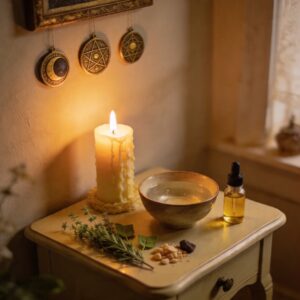
What You Need
Keep the environment simple and clean.
Required
- quiet space
- focused attention
- selected Psalms
Recommended
- white candle
- bowl or glass of water
- small amount of salt
- clean room or house environment
Optional:
- frankincense
- hyssop
- Florida Water
- protective oil
Deliverance work responds strongly to:
- consistency
- atmosphere
- repetition
- symbolic clarity
—not emotional intensity.
Candle Logic
White
Best for:
- cleansing
- protection
- restoration
- spiritual clarity
Blue
Best for:
- calming emotional heaviness
- nervous system stabilization
- peaceful atmosphere
Purple
Best for:
- authority
- spiritual strength
- boundary reinforcement
Candles are optional.
Their main role is:
- focus
- symbolic orientation
- ritual rhythm
STEP 1 — Clean the Physical Environment First
This step matters enormously.
Traditional cleansing systems repeatedly emphasize:
- physical order before spiritual order.
Clutter increases:
- overstimulation
- emotional heaviness
- nervous system tension
Before beginning:
- remove trash
- improve airflow
- reduce visual chaos
- organize the room calmly
This immediately improves:
- emotional pacing
- psychological clarity
- environmental safety perception
Deliverance begins with:
- reducing disorder.
STEP 2 — Establish Protective Intention
Light the candle.
Sit quietly.
Slow the pace of the mind before beginning.
Say calmly:
“May all harmful influence weaken.
May peace and clarity return.
May this space become protected, calm, and ordered.”
This matters because:
fear-driven ritual creates:
- instability
- obsession
- hypervigilance
Calm structure creates:
- stronger boundaries.
STEP 3 — Read the Psalms in Protective Sequence
Sequence matters because oppressive states fragment attention.
The Psalms should gradually:
- stabilize
- strengthen
- protect
- restore boundaries
Recommended sequence:
Psalm 23
First:
- restores emotional grounding
- reduces fear spirals
- creates symbolic safety
This prevents the work from becoming:
panic-driven.
Psalm 91
Second:
- reinforces protection
- restores shelter imagery
- strengthens internal security
Read slowly and steadily.
Fear weakens when:
rhythm returns.
Psalm 140
Third:
- reinforces boundaries against harmful people
- reduces emotional contamination
- strengthens psychological separation from hostility
Especially useful during:
- manipulative conflict
- oppressive environments
- repeated interpersonal tension
Psalm 68
Fourth:
- clears heavy atmosphere
- breaks oppressive momentum
- restores movement and strength
This Psalm works especially well during:
- cleansing cycles
- recovery from conflict
- emotional stagnation
Optional Additions
Psalm 35
For:
- intense hostility
- aggressive opposition
- emotional pressure from enemies
Use carefully and balance with stabilizing Psalms.
Psalm 27
For:
- courage
- rebuilding confidence
- resisting emotional intimidation
Psalm 34
For:
- emotional relief
- fear exhaustion
- restoration after prolonged stress
STEP 4 — Bless the Water and Boundaries
Place a small amount of salt into the water if desired.
Read:
- Psalm 91
or - Psalm 23
over the water slowly.
Then lightly touch or sprinkle:
- doorways
- windows
- room corners
- thresholds
This serves as:
- symbolic cleansing
- psychological boundary reinforcement
- environmental stabilization
The goal is:
restoring safety perception.
STEP 5 — Transition Into Calmness, Not Obsession
This step is critical.
After the ritual:
DO NOT:
- search fear-based spiritual content
- obsess over signs
- scan constantly for danger
- emotionally escalate yourself again
Instead:
- rest
- breathe
- reduce stimulation
- allow the nervous system to settle
Deliverance work becomes strongest when:
the nervous system relearns safety.
House Atmosphere and Spiritual Boundaries
Many oppressive states worsen because the environment itself becomes emotionally dysregulated.
Homes filled with:
- conflict
- noise
- clutter
- hostility
- fear
- emotional chaos
slowly train the nervous system into:
constant alertness.
This is why atmosphere work matters.
Practical spiritual protection includes:
- reducing emotional residue
- improving household rhythm
- restoring calm environments
- reducing overstimulation
Not every heavy atmosphere is supernatural.
Sometimes the nervous system simply no longer experiences the environment as safe.
Psalm work helps rebuild:
- symbolic order
- emotional containment
- protected atmosphere
Repetition Cycles and Consistency
Deliverance work responds strongly to:
- continuity
- repetition
- rhythm
- predictability
Traditional systems frequently emphasize:
- repeated prayer cycles
- ongoing stabilization
- steady protection work
rather than:
- emotional extremes
Recommended Structures
3-Day Clearing Cycle
Best for:
- temporary heaviness
- conflict buildup
- emotional overload
7-Day Stabilization Cycle
Best for:
- oppressive atmosphere
- repeated conflict
- hostile environments
- emotional exhaustion
21-Day Restoration Cycle
Best for:
- chronic instability
- prolonged oppression
- severe emotional fragmentation
- long-term recovery work
Consistency matters more than:
ritual intensity.
Why Boundaries Matter So Much
Oppression weakens boundaries.
People begin:
- overabsorbing negativity
- internalizing hostility
- emotionally collapsing into conflict
- losing internal separation from toxic environments
Protective Psalm work helps restore:
- psychological boundaries
- emotional pacing
- internal clarity
- symbolic protection
This is why many practitioners report:
improvement beginning with:
- emotional separation from heaviness.
Advanced Layering (Optional)
Advanced work should remain disciplined.
Do not:
- overload rituals
- create warfare obsession
- turn protection into constant fear maintenance
Layer strategically.
Layer 1 — Doorway Protection
Some traditions recite:
- Psalm 91
- Psalm 23
while blessing:
- entrances
- thresholds
- room transitions
Threshold symbolism reinforces:
- controlled access
- protected boundaries
Layer 2 — Cleansing Before Sleep
Nighttime cleansing works especially well because:
- hypervigilance increases at night
- fear amplification intensifies in darkness
Simple nightly repetition creates:
- nervous system predictability
- emotional slowing
- symbolic reassurance
Layer 3 — Written Protection Psalms
Some practitioners place:
- Psalm 91
- Psalm 23
near:
- the bed
- entrances
- prayer spaces
This reinforces:
- continuity of protection
- psychological reassurance
- ritual rhythm
What Worsens Oppression States
This section matters enormously.
Many people unintentionally intensify oppressive conditions psychologically.
1. Constant Fear Consumption
Obsessive exposure to:
- horror content
- fear-based spirituality
- “attack” videos
- paranoia-heavy material
conditions the nervous system into:
constant threat expectation.
2. Sleep Deprivation
Exhaustion amplifies:
- fear
- hypervigilance
- symbolic thinking
- emotional instability
Sleep restoration is protective.
3. Isolation
Oppression worsens in emotional isolation.
Especially when:
- panic loops remain uninterrupted
- fear goes unchallenged
- emotional grounding disappears
4. Ritual Obsession
Constant:
- cleansing
- uncrossing
- protection repetition
from panic usually worsens:
- hypervigilance
- anxiety
- compulsive fear patterns
Steady rhythm works better than:
desperate repetition.
Signs of Restored Protection and Deliverance
The first signs are usually subtle.
Not:
- dramatic supernatural manifestations
Instead:
- calmer atmosphere
- improved sleep
- emotional clarity
- reduced heaviness
- restored confidence
- reduced hypervigilance
- easier breathing emotionally
- stronger emotional boundaries
Often the first breakthrough is simply:
no longer feeling emotionally surrounded all the time.
That matters deeply.
Final Insight
Deliverance Restores Internal Order
Oppression fragments:
- attention
- emotional pacing
- nervous system stability
- psychological boundaries
The Psalms help restore:
- rhythm
- symbolic protection
- emotional structure
- steadiness
- internal separation from chaos
This is why practical deliverance work has endured across traditions for centuries.
Not because people stopped experiencing difficulty.
But because they slowly regained:
- stability
- clarity
- protection
- emotional coherence
under pressure.
Frequently Asked Questions:
Psalm 91 is traditionally considered the strongest Psalm for:
- protection
- deliverance
- spiritual safety
- oppressive environments
- fear during dangerous conditions
It is often combined with:
- Psalm 23 for emotional stabilization
- Psalm 68 for clearing oppressive heaviness
- Psalm 140 for protection from harmful people
This creates a balanced approach between:
- protection
- boundaries
- restoration
Traditional protective Psalms include:
- Psalm 91 → spiritual protection and safety
- Psalm 35 → hostile opposition and defensive strength
- Psalm 68 → breaking oppressive conditions
- Psalm 140 → protection from malicious people
- Psalm 23 → emotional reassurance and stability
- Psalm 27 → courage and resistance against fear
Different Psalms support different forms of pressure.
Traditionally, hostile influence may refer to:
- manipulative people
- emotionally destructive environments
- oppressive atmospheres
- repeated destabilizing pressure
- symbolic heaviness
- corrosive conflict
It does NOT automatically mean:
- demons everywhere
- possession
- supernatural attack
Practical Psalm work focuses on:
- restoring boundaries
- reducing fear
- rebuilding emotional stability
- creating protective structure
Oppressive conditions often create:
- hypervigilance
- emotional fragmentation
- chronic tension
- nervous system overload
- inability to rest mentally
Over time the body begins expecting:
- conflict
- danger
- negativity
This slowly weakens:
- emotional regulation
- sleep
- concentration
- psychological resilience
Psalm repetition helps restore:
- rhythm
- emotional pacing
- symbolic safety
- nervous system stabilization
Traditional structures commonly include:
- 3 days → temporary heaviness or conflict
- 7 days → oppressive atmosphere and stabilization
- 21 days → prolonged oppression and restoration work
Deliverance work responds strongly to:
- consistency
- rhythm
- repetition
rather than panic-driven intensity.
Yes.
Many traditions combine Psalms with:
- doorway blessing
- water cleansing
- candle prayer
- floor washes
- protective recitation
Common Psalms for house cleansing include:
- Psalm 23
- Psalm 68
- Psalm 91
The goal is:
- restoring calm atmosphere
- reducing emotional heaviness
- reinforcing symbolic protection
Traditional correspondences commonly include:
- White → cleansing and protection
- Blue → calming and emotional restoration
- Purple → spiritual strength and boundaries
Candles are optional.
Their primary purpose is:
- focus
- structure
- symbolic reinforcement
Yes—and that is important to avoid.
Protection work becomes unhealthy when someone:
- constantly searches for enemies
- performs rituals compulsively
- consumes fear-based spiritual content endlessly
- interprets everything as attack
- becomes emotionally dependent on cleansing rituals
Healthy Psalm work creates:
- calmness
- boundaries
- emotional steadiness
—not fear addiction.
The most common problems are:
- panic
- obsession
- sleep deprivation
- emotional isolation
- compulsive fear research
- ritual overload
- constant hypervigilance
Deliverance becomes stronger when:
- calmness increases
- rhythm stabilizes the nervous system
- emotional structure returns
Because fear fragments attention.
People in panic often become:
- emotionally reactive
- obsessive
- hypervigilant
- psychologically exhausted
Traditional systems repeatedly emphasize:
- rhythm
- repetition
- calmness
- grounding
Stabilization strengthens:
- boundaries
- clarity
- emotional resilience
before deeper protective work.
Usually:
- calmer atmosphere
- reduced heaviness
- improved sleep
- emotional clarity
- stronger boundaries
- less fear spiraling
- restored confidence
- reduced emotional exhaustion
The first major sign is often:
no longer feeling emotionally consumed by the environment.
Yes—but strategically.
Examples:
Protection + Calmness
- Psalm 91 + Psalm 23
Hostile People + Boundaries
- Psalm 140 + Psalm 27
Heavy Atmosphere + Clearing
- Psalm 68 + Psalm 91
Conflict + Stabilization
- Psalm 35 + Psalm 23
Avoid:
- compulsive stacking
- endless ritual escalation
- panic-driven combinations
Because repeated Psalm work creates:
- rhythm
- emotional containment
- symbolic protection
- nervous system predictability
- structured focus
Oppression creates fragmentation.
The Psalms help restore:
- internal order.
That is one reason these practices remained important across centuries of mystical and folk traditions.