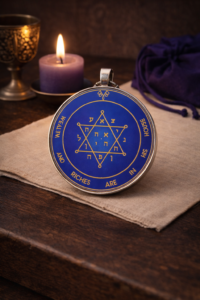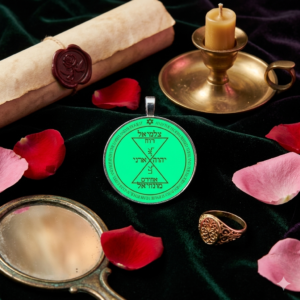
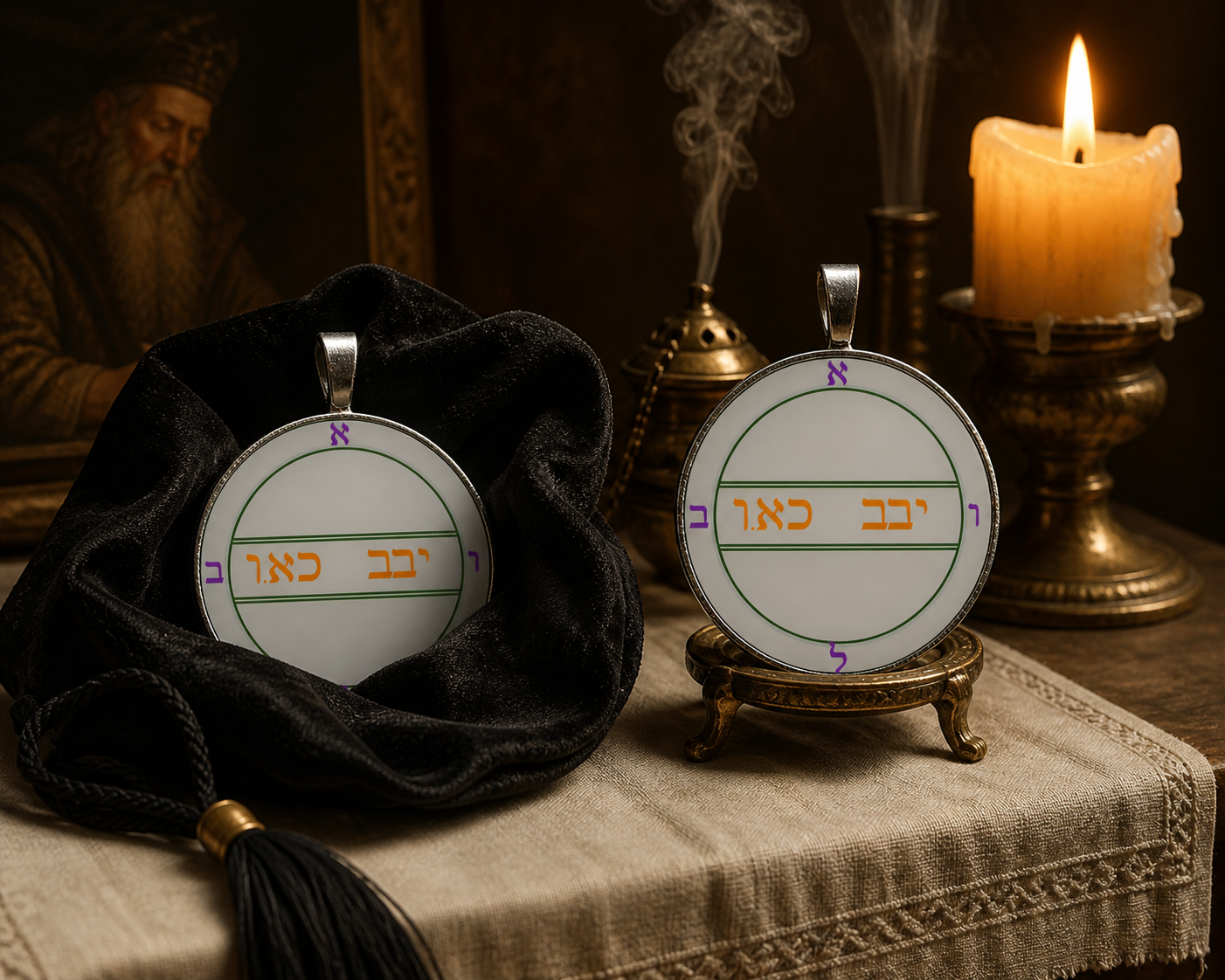
One of the most misunderstood aspects of working with a Solomonic pentacle is not how to consecrate it.
It’s how to handle its visibility.
Should it stay hidden in a pouch?
Should you wear it openly?
Is it better to keep it under your clothes?
Can you show it to others?
Does exposure weaken it—or does hiding it reduce its effectiveness?
These questions come up quickly once a pentacle moves from ritual object to daily tool.
And most people fall into one of two extremes:
- they hide it constantly and rarely engage it
- or they expose it constantly and turn it into a visible object rather than an operative one
Neither approach is correct.
A Solomonic pentacle is not meant to be permanently hidden or permanently displayed — its visibility should match its function.
That is the rule that resolves almost everything.
Why Visibility Matters at All
At first glance, it may seem like visibility shouldn’t matter.
After all, the pentacle is already consecrated. The work has already been done.
So why would it matter whether it is covered or exposed?
Because handling defines relationship.
And visibility is part of handling.
A pentacle is not just an object—it is a working instrument.
And how you position it in your environment affects:
- how you interact with it
- how others interact with it
- whether it stays contained or becomes social
- whether it remains focused or becomes diffuse
- whether it is used or merely seen
This is not about simplistic ideas like “energy leaking.”
It is about clarity of function.
A pentacle’s visibility is not about superstition — it is about how clearly its function is defined in a given moment.
Once you understand that, the question becomes much simpler:
Not “should it be hidden or shown?”
But:
“What is it doing right now?”
When a Solomonic Pentacle Should Be Covered
A covered pentacle is:
- in a pouch
- wrapped in cloth
- stored in a box
- worn under clothing
- not openly visible
Covering is not a sign of weakness.
It is a form of containment.
And it is often the most appropriate state outside of active work.
Best situations for keeping a pentacle covered
- when it is resting between uses
- during travel
- when stored
- when carried casually but not actively engaged
- when the environment is chaotic or distracting
- when you want to avoid attention
- when maintaining privacy and focus
- after a ritual session, while it “settles”
Covering helps maintain a clear boundary between:
- the pentacle as a sacred instrument
and - the pentacle as a visible object
It reduces distraction.
It prevents casual handling.
It keeps the relationship intentional rather than reactive.
Covering a pentacle does not weaken it — it protects its role as a focused instrument rather than a visible object.
When a Solomonic Pentacle Should Be Revealed
A revealed pentacle is:
- visible
- uncovered
- placed openly
- actively engaged
This is the state of work.
A pentacle should be revealed when you are actually interacting with it in a focused way.
Best situations for revealing a pentacle
- during altar work
- while praying or reciting Psalms
- when making a petition
- during incense or candle work
- during activation or reactivation
- during focused intention sessions
- when consciously engaging its office
In this state, the pentacle is not being “displayed.”
It is being used.
A pentacle should be revealed when it is being actively engaged — not simply displayed.
That distinction matters.
Because the moment exposure becomes passive or habitual, the function becomes unclear.
When a Solomonic Pentacle Should Be Worn
A worn pentacle is:
- on your body
- carried on a chain
- placed in a pocket or pouch
- brought into real-world situations
This is the state of action.
It is where the pentacle moves from ritual context into lived context.
Best situations for wearing a pentacle
- protection in unstable environments
- important meetings or negotiations
- attraction or relationship contexts
- confidence and presence
- travel
- business or financial situations
- emotionally charged interactions
- ongoing needs where presence matters
But here is the key distinction:
Worn does not mean displayed.
Under clothing (recommended default)
- more contained
- more focused
- less interference
- less social attention
- stronger sense of personal alignment
Over clothing (situational)
- more visible
- sometimes useful for presence or symbolic authority
- higher risk of becoming decorative or performative
A worn pentacle should function as an active tool in the world — not as a visible statement piece.
That is the difference between practice and aesthetics.
The Biggest Mistake: Random Visibility
The real problem is not covering or revealing.
The real problem is randomness.
When visibility has no clear purpose, the relationship becomes inconsistent.
Common patterns of random use
- taking it out, showing it, then hiding it again without reason
- wearing it visibly for attention rather than function
- exposing it constantly without engaging it
- hiding it all the time and never using it
- switching states without intention
This creates:
- confusion
- inconsistency
- weaker engagement
- loss of clarity
- reduced effectiveness in practice
The problem is not whether a pentacle is seen or unseen — the problem is when its visibility has no clear purpose.
That is what to avoid.
Should You Show Your Pentacle to Other People?
This question comes up often—and it deserves a balanced answer.
A single, respectful moment of showing a pentacle to someone is not inherently harmful.
But repeated casual exposure changes the dynamic.
When it may be acceptable
- in a controlled, respectful context
- when explaining your practice seriously
- occasionally, not habitually
When it becomes a problem
- passing it around out of curiosity
- letting others handle it casually
- using it as a conversation piece
- seeking validation or attention
- exposing it to mockery or dismissal
A pentacle should not become:
- a curiosity
- a collectible
- a display object
A pentacle should be used, not exhibited.
That line alone will prevent a lot of mistakes.
Covered vs Uncovered on the Altar
On the altar, the rule becomes even simpler.
Exposure should follow activity — not habit.
Uncovered on the altar
- during prayer
- during incense work
- during petition
- during focused sessions
Covered on the altar
- when resting
- between sessions
- when stored
- when not actively engaged
A pentacle lying exposed on an altar for no reason is not “more spiritual.”
It is just unclear use.
Wearing Mistakes That Weaken the Current
Wearing a pentacle is powerful—but it can also be misused.
Common mistakes
- wearing it purely as fashion
- displaying it constantly without purpose
- mixing it with random jewelry
- letting others touch it frequently
- never removing or resetting it
- forgetting why you are wearing it
Over time, this can shift the pentacle from:
- instrument
to - accessory
A pentacle worn without purpose gradually becomes indistinguishable from ordinary jewelry.
That is what you want to avoid.
The Best Simple Rule for Visibility
If you want one clean rule that works in almost every situation, use this:
**Covered for containment.
Revealed for work.
Worn for action.**
That is the entire system in one line.
How to Move Between States
The strength of your practice often depends on transitions, not just states.
Simple working flow
- covered → brought to altar → revealed → prayer
- revealed → aligned → worn → action
- worn → returned → covered → rest
Each transition should be intentional, even if simple.
You don’t need complexity.
You need clarity.
The strength of a pentacle often depends less on where it is — and more on how intentionally it is moved between states.
The One Rule That Solves Everything
If you remember only one thing, let it be this:
A Solomonic pentacle should never be hidden or revealed by habit — only by intention.
That single principle will prevent most misuse.
Conclusion
There is no rigid rule that says:
- always hide it
- always show it
- always wear it one way
- never let anyone see it
Those are simplifications.
What matters is function.
A pentacle should be:
- covered when it needs containment
- revealed when it is being worked
- worn when it is being applied
When those states are clear, the practice becomes stable.
When they are random, the practice becomes diluted.
When you control when a pentacle is hidden, revealed, or worn, you are not controlling superstition — you are controlling how clearly it operates.
That is the real skill.
Frequently Asked Questions:
A Solomonic pentacle can be both covered and uncovered depending on its use. It is typically covered when resting, stored, or not actively engaged, and uncovered during prayer, altar work, or focused use. The key is intentional handling, not a fixed rule.
Keeping a pentacle hidden is useful for containment, privacy, and focus, especially between uses or in chaotic environments. However, a pentacle should not remain hidden all the time. It should be revealed when actively used.
Yes, wearing a pentacle under clothing is often the best default. It keeps the pentacle contained, reduces distraction, and maintains a more focused and private relationship while still allowing it to function in real-world situations.
Yes, a pentacle can be worn openly, but this should be intentional. Wearing it visibly may be appropriate in certain contexts, but constant public display can turn it into a social or aesthetic object rather than a working instrument.
Showing a pentacle once in a respectful context does not usually weaken it. However, repeated casual exposure, letting others handle it, or using it as a display object can reduce its clarity and turn it into a social item rather than a focused tool.
Yes, keeping a pentacle in a pouch is a good practice when it is resting, stored, or carried but not actively used. A pouch helps protect it physically and maintains a clear sense of containment.
You should uncover your pentacle during active engagement, such as prayer, Psalm recitation, altar work, petition work, or intentional focus sessions. Exposure should match active use.
It is better to avoid random or unconscious handling. Taking a pentacle out without purpose can weaken the clarity of the relationship. It is more effective to handle it intentionally, even in brief moments.
No, a pentacle does not need to be worn at all times. It can be worn when needed, returned to a pouch or altar between uses, and re-engaged when appropriate. Constant wearing without purpose can reduce its clarity.
A pentacle can remain on the altar, but it should not stay exposed without purpose. It is better to uncover it during active work and cover or contain it when resting, so its state remains intentional.
The biggest mistake is random visibility—switching between hidden, revealed, and worn states without purpose. A pentacle should always be handled intentionally, not casually or habitually.
A simple rule is: cover it when resting, reveal it when working, and wear it when acting. This keeps the pentacle’s role clear and consistent.