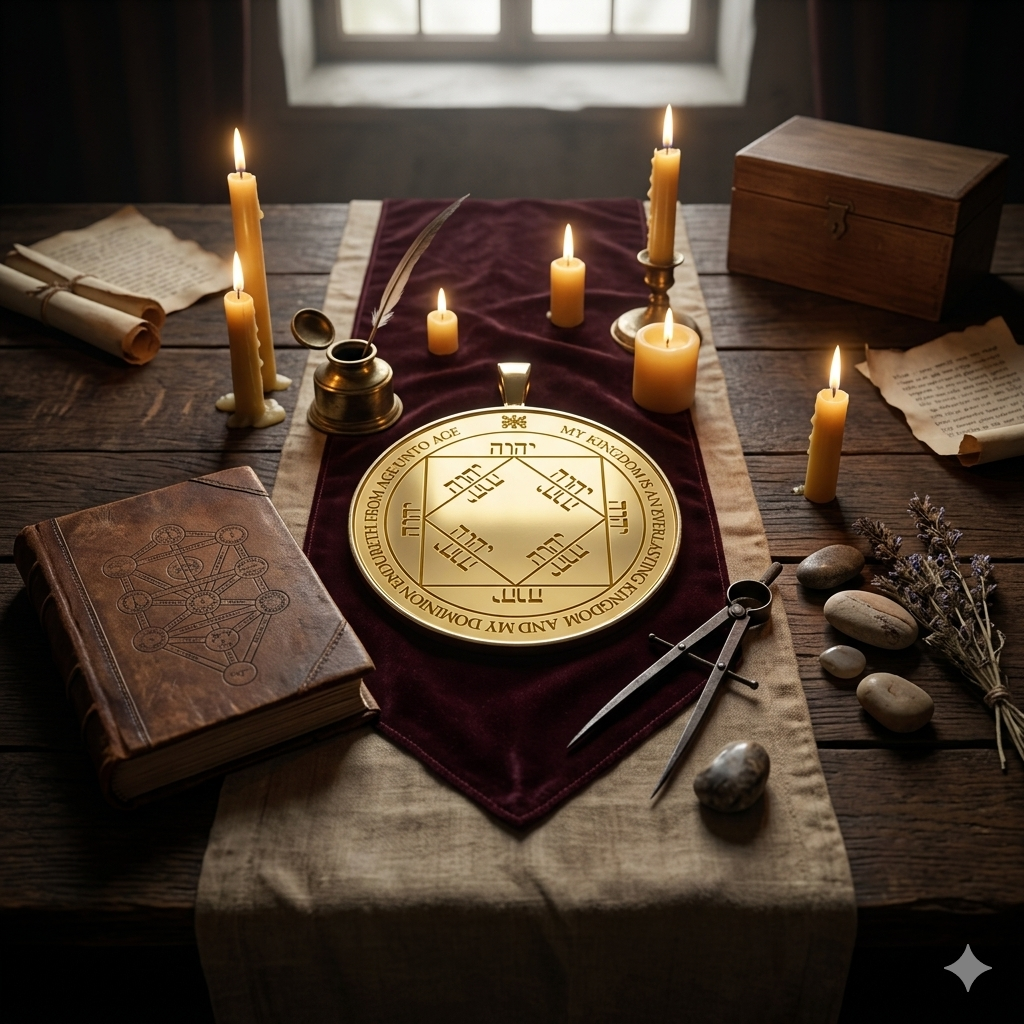
For many people, Solomonic pentacles carry an atmosphere of mystery.
They are associated with:
- ancient grimoires
- planetary magic
- sacred symbols
- ceremonial ritual
- divine names
- occult tradition
Because of this, many newcomers naturally wonder:
“Are Solomonic pentacles dangerous?”
The answer is usually far more nuanced than internet mythology suggests.
Most fears surrounding Solomonic pentacles come less from the objects themselves and more from exaggerated occult mythology, fear-based storytelling, unhealthy ritual behavior, or psychologically destabilizing approaches to magical practice.
That distinction matters enormously.
Because:
In practice, pentacle work is usually safest when approached calmly, symbolically, reflectively, and without fear-based obsession.
That calmness changes the entire experience.
Mystery, Reputation, and Occult Storytelling
Many fears surrounding Solomonic pentacles come from the atmosphere surrounding grimoires themselves.
People encounter:
- warnings
- dramatic language
- ceremonial complexity
- mysterious symbols
- stories about spirits
- “forbidden magic” narratives
Modern internet culture often amplifies this further through:
- horror framing
- fear marketing
- sensationalism
- occult elitism
- dramatic storytelling
Many fears surrounding pentacles are amplified by dramatic occult culture rather than grounded ritual experience.
That atmosphere can create anxiety before a person even begins working with a pentacle.
Especially when every ritual experience becomes interpreted through:
- fear
- expectation
- panic
- hypervigilance
Instead of calm symbolic engagement.
Healthy Ritual Understanding
One of the healthiest ways to approach pentacle work is to understand pentacles primarily as:
- symbolic ritual tools
- contemplative focal points
- devotional objects
- meditative structures
- symbolic anchors
- ritual supports for intention and reflection
Healthy pentacle work usually strengthens reflection, focus, symbolic meaning, and emotional steadiness rather than supernatural panic.
That distinction matters enormously.
Because symbolic ritual practice often works through:
- attention
- emotional resonance
- contemplation
- psychological focus
- symbolic engagement
- disciplined reflection
Rather than theatrical supernatural fear.
For many practitioners, pentacles become meaningful through:
- prayer
- meditation
- devotional repetition
- symbolic contemplation
- emotional grounding
Not through panic about invisible danger.
When Ritual Work Can Become Unhealthy
This is one of the most important sections in the entire subject.
The greatest risks in ritual practice often come from fear, obsession, emotional instability, and unhealthy interpretation patterns rather than from the pentacles themselves.
That distinction is critically important.
Because ritual behavior can become unhealthy when it reinforces:
- paranoia
- compulsive cleansing
- constant fear of attack
- obsession with signs
- magical grandiosity
- emotional dependency
- inability to feel safe without rituals
At that point, the problem is usually not the pentacle itself.
The problem becomes:
- interpretation patterns
- emotional instability
- obsessive behavior
- fear escalation
Healthy ritual work should strengthen:
- steadiness
- reflection
- symbolic understanding
- emotional balance
Not chronic panic.
The Importance of Calm and Stability
Emotionally grounded ritual behavior is one of the most important aspects of healthy practice.
Emotionally grounded ritual practice is usually far healthier than fear-driven or emotionally compulsive magical behavior.
That means approaching pentacle work with:
- calmness
- patience
- moderation
- reflection
- discernment
- symbolic understanding
- emotional self-awareness
Rather than:
- desperation
- panic
- obsession
- theatrical escalation
Healthy ritual work often feels:
- reflective
- calming
- focused
- emotionally steady
- contemplative
Not frantic.
Are Certain Pentacles “More Dangerous”?
Some pentacles are emotionally heavier than others because of their symbolism.
For example:
- Saturnian pentacles may feel intense because they involve boundaries, limitation, endurance, and serious transformation
- Martial pentacles may feel intense because they involve pressure, resistance, conflict, and force
- Revelation-oriented pentacles may feel psychologically powerful because they involve symbolism, dreams, and introspection
But:
Some pentacles may feel emotionally intense because of their symbolism and psychological resonance without being inherently harmful objects.
That distinction matters enormously.
The emotional atmosphere surrounding a pentacle may create:
- awe
- seriousness
- solemnity
- symbolic gravity
Without implying that the pentacle itself is “cursed” or dangerous.
Healthy Ritual Habits and Boundaries
Healthy pentacle practice usually develops gradually.
Healthy pentacle practice usually develops through steadiness, moderation, symbolic understanding, and emotional self-awareness rather than intensity escalation.
Helpful habits may include:
- slow learning
- journaling
- reflective prayer
- moderation
- emotional awareness
- grounded daily routines
- avoiding compulsive ritual repetition
- maintaining balance with ordinary life
For many practitioners, healthy ritual practice becomes most meaningful when integrated calmly into:
- reflection
- contemplation
- spiritual discipline
- symbolic study
Rather than emotional escalation.
When Ritual Work Stops Feeling Grounded
It is important to recognize when ritual behavior becomes emotionally unhealthy.
Healthy ritual practice should generally increase steadiness, reflection, and clarity rather than chronic fear or emotional destabilization.
Potential warning signs may include:
- inability to feel safe
- compulsive rituals
- paranoia
- constant fear of curses or attacks
- obsessive interpretation of signs
- emotional isolation
- sleep disruption from ritual anxiety
- detachment from reality
- panic when not performing rituals
At that point, stepping back, grounding emotionally, and restoring balance becomes more important than increasing ritual intensity.
Because:
healthy ritual practice should support life.
Not consume it.
Why Emotional Relationship Matters
For many practitioners, the deepest value of pentacle work emerges quietly.
Not through spectacle.
For many practitioners, the deepest value of pentacle work emerges through symbolic meaning, contemplative focus, emotional resonance, and disciplined reflection rather than fear-based supernaturalism.
That symbolic relationship may involve:
- prayer
- reflection
- emotional grounding
- meditation
- ritual atmosphere
- devotional focus
- contemplative study
The meaning often develops gradually through:
- consistency
- reflection
- symbolic familiarity
- emotional steadiness
Rather than dramatic experiences.
The Most Important Rule About Pentacle Safety
If you remember one thing, remember this:
Approach Solomonic pentacles with calmness, symbolic understanding, emotional grounding, and realistic expectations—not fear, obsession, or grandiose magical thinking.
That principle alone prevents many unhealthy ritual patterns.
Conclusion
Healthy pentacle practice often supports:
- grounding
- clarity
- reflection
- emotional steadiness
- symbolic engagement
- contemplative discipline
- psychological balance
- meaningful ritual structure
Without collapsing into:
- fear
- paranoia
- obsession
- grandiosity
- compulsive ritual escalation
Because:
The safest and most meaningful forms of pentacle work are often the quietest ones—grounded in reflection, emotional steadiness, symbolic understanding, and balanced ritual practice over time.
Frequently Asked Questions:
Most practitioners approach Solomonic pentacles as symbolic ritual tools rather than inherently dangerous objects. Problems are more likely to arise from fear, obsession, paranoia, emotional instability, or unhealthy ritual behavior than from the pentacles themselves.
Pentacles are generally used symbolically for reflection, prayer, focus, contemplation, and ritual structure. However, unhealthy emotional patterns, compulsive behavior, fear escalation, or psychological instability can make any ritual practice emotionally distressing.
Fear often comes from dramatic occult storytelling, internet mythology, horror framing, secrecy, grimoire language, and exaggerated ideas about “forbidden magic” rather than grounded ritual experience.
Saturnian pentacles may feel emotionally intense because they are associated with boundaries, endurance, restraint, hardship, and serious transformation, but intensity does not automatically mean danger.
Yes. Obsessive cleansing, paranoia, compulsive rituals, fear of attacks or curses, magical grandiosity, and constant sign interpretation can create emotional instability and unhealthy ritual dependency.
Potential warning signs include chronic fear, inability to feel safe without rituals, compulsive behavior, sleep disruption, paranoia, emotional isolation, obsessive sign interpretation, and detachment from ordinary life.
Healthy approaches usually involve calmness, moderation, emotional grounding, reflection, prayer, journaling, symbolic understanding, realistic expectations, and balanced integration with ordinary life.
Healthy ritual practice usually becomes more meaningful through steadiness, reflection, emotional balance, symbolic engagement, and disciplined focus rather than fear-driven intensity or panic.
Many practitioners use pentacles symbolically to reinforce contemplation, emotional steadiness, clarity, devotional focus, symbolic meaning, and disciplined ritual structure.
Healthy ritual practice generally supports grounding, reflection, emotional balance, and meaningful engagement with life, while obsession often creates panic, compulsive behavior, fear escalation, and psychological destabilization.
Most practitioners find pentacle work healthier when approached calmly and reflectively rather than with chronic fear about “doing everything perfectly” or triggering supernatural punishment.
The most important principle is to approach pentacles with calmness, emotional grounding, symbolic understanding, moderation, and realistic expectations rather than fear, obsession, or grandiose magical thinking.