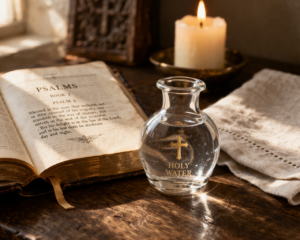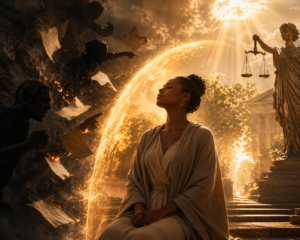

Few texts in human history have comforted as many people as Psalm 23.
For centuries it has been recited:
- during uncertainty
- during illness
- during grief
- during travel
- during major life transitions
- during moments of fear
Its words have become so familiar that many people stop noticing how profound they actually are.
Because Psalm 23 is not merely a comfort Psalm.
Nor is it simply a protection Psalm.
Nor is it only a funeral Psalm.
At its deepest level:
Psalm 23 is a Psalm about learning how to trust while moving through uncertainty.
This distinction matters enormously.
Many people assume peace becomes possible only after problems disappear.
Psalm 23 teaches something radically different.
The Psalm never promises:
- a life without difficulty
- a life without uncertainty
- a life without danger
- a life without adversity
Instead it teaches:
peace becomes possible when trust grows stronger than fear.
This is the hidden power of Psalm 23.
The Psalm repeatedly restores:
- safety
- guidance
- provision
- emotional stability
- confidence
- resilience
Its purpose is not to remove uncertainty.
Its purpose is to help consciousness move through uncertainty without becoming controlled by it.
Why Psalm 23 Follows Psalm 22
The progression from Psalm 22 to Psalm 23 is one of the most beautiful psychological movements in the entire Psalter.
Psalm 22 explored:
- abandonment
- suffering
- grief
- despair
- endurance
The individual struggled through darkness.
The individual survived.
Meaning remained alive.
Hope gradually returned.
Then Psalm 23 begins.
This progression is not accidental.
Psalm 22 teaches:
survive.
Psalm 23 teaches:
trust again.
This is a profound distinction.
Many people survive difficult experiences.
Yet afterward they remain trapped in:
- hypervigilance
- fear
- mistrust
- emotional tension
- expectation of future danger
The crisis ends.
The nervous system remains in crisis.
Modern psychology recognizes this pattern clearly.
People often continue reacting to life as though danger is still present long after the original threat has passed.
Psalm 23 addresses precisely this condition.
The Psalm gradually teaches consciousness:
- safety can return
- trust can return
- peace can return
This makes Psalm 23 one of the most psychologically restorative texts ever written.
“The Lord Is My Shepherd”
The Psychology of Guidance
The central image of Psalm 23 is:
the shepherd.
This symbolism is extraordinarily important.
A shepherd provides:
- guidance
- protection
- direction
- care
- provision
Without the shepherd image, Psalm 23 loses much of its meaning.
Operationally:
the shepherd represents:
trustworthy guidance during uncertainty.
This is highly relevant today.
Many modern struggles involve:
- information overload
- decision fatigue
- uncertainty
- overwhelm
- fear of making mistakes
People often feel lost.
Not physically.
Psychologically.
Emotionally.
Existentially.
They do not know:
- what to do
- where to go
- what decision to make
- which direction is best
Psalm 23 addresses this anxiety directly.
The shepherd symbolizes:
- guidance without panic
- direction without force
- protection without control
This creates a profound sense of stability.
Because one of the deepest human fears is:
being alone without guidance.
Psalm 23 repeatedly dissolves that fear.
The Psychology of Trust
Trust is one of the most misunderstood psychological forces.
Many people believe trust means:
- certainty
It does not.
Trust becomes necessary precisely because certainty is impossible.
If the future were fully known:
trust would be unnecessary.
Psalm 23 repeatedly acknowledges uncertainty.
Yet the Psalm chooses trust anyway.
This is psychologically mature.
Because life contains:
- unknowns
- risks
- changes
- transitions
The question becomes:
How do we move forward despite them?
Psalm 23 answers:
through trust rather than fear.
This trust is not passive.
It does not eliminate responsibility.
Instead it reduces:
- panic
- catastrophizing
- emotional overwhelm
allowing clearer action.
Green Pastures and Still Waters
Among the most beloved images in Scripture are:
- green pastures
- still waters
These images are far more than poetic decoration.
Operationally they symbolize:
restoration.
Modern life keeps many people trapped in:
- chronic stress
- constant stimulation
- emotional exhaustion
- survival mode
The nervous system rarely receives genuine rest.
Many individuals live as though every day were an emergency.
Eventually:
- anxiety increases
- resilience decreases
- emotional balance weakens
Psalm 23 responds directly to this condition.
The green pastures symbolize:
- nourishment
- replenishment
- recovery
The still waters symbolize:
- calmness
- regulation
- emotional balance
Together they represent something many people desperately need:
permission to stop struggling long enough to recover.
This is one of the deepest healing themes in Psalm 23.
Restoration of the Soul
One of the most powerful statements in the Psalm is:
“He restoreth my soul.”
This phrase deserves careful attention.
Because restoration is different from escape.
Psalm 23 does not teach:
- avoidance
It teaches:
- renewal.
The soul becomes depleted through:
- stress
- fear
- grief
- uncertainty
- disappointment
- exhaustion
Many people continue functioning externally while becoming internally depleted.
Psalm 23 recognizes this reality.
The Psalm repeatedly restores:
- vitality
- perspective
- emotional balance
- spiritual strength
The goal is not simply survival.
The goal is:
restoration after survival.
This makes Psalm 23 the natural successor to Psalm 22.
The Psychology of Safety After Crisis
One of the most important insights in Psalm 23 is rarely discussed.
Many people survive difficult periods.
Yet they never fully regain a sense of safety.
They remain:
- guarded
- suspicious
- fearful
- emotionally tense
Even when danger has passed.
Modern psychology often describes this as:
- hypervigilance
The individual constantly scans for threats.
Constantly anticipates problems.
Constantly expects disaster.
This state becomes exhausting.
Psalm 23 gradually retrains consciousness toward:
- safety
- trust
- stability
The Psalm repeatedly teaches:
not every moment requires defense.
This lesson is transformative.
Because healing often begins when the nervous system finally believes it no longer needs to remain at war.
Guidance Versus Control
One hidden lesson in Psalm 23 involves:
the difference between guidance and control.
Fear seeks:
- control.
Trust accepts:
- guidance.
Many people become anxious because they attempt to control:
- the future
- outcomes
- uncertainty
- other people
- uncontrollable events
Eventually this becomes impossible.
Psalm 23 offers another approach.
The Psalm repeatedly emphasizes:
- guidance
rather than:
- domination.
This distinction matters enormously.
Because peace often emerges when individuals stop demanding complete certainty and start trusting the next step.
Psalm 23 repeatedly encourages:
forward movement without total control.
That is one of the deepest forms of courage.
Why Psalm 23 Feels So Calming
Psalm 23 feels calming because it systematically reduces the psychological foundations of fear.
Fear often grows through:
- uncertainty
- isolation
- insecurity
- exhaustion
- lack of direction
Psalm 23 addresses every one of these.
It restores:
- guidance
- provision
- safety
- restoration
- companionship
- trust
This creates a profound emotional effect.
The Psalm does not remove every challenge.
Instead it changes the way challenges are experienced.
That is why Psalm 23 remains timeless.
The Valley of the Shadow of Death
The Psychology of Walking Through Fear
Perhaps the most famous line in Psalm 23 is:
“Yea, though I walk through the valley of the shadow of death, I will fear no evil.”
This verse is often misunderstood.
Most people focus on:
- death
- danger
- evil
But the most important word may actually be:
through.
The Psalm does not say:
- there is no valley
It does not say:
- danger never appears
It does not say:
- uncertainty disappears
Instead it teaches:
the valley is something you move through, not something you live inside forever.
This is one of the most psychologically mature teachings in the entire Psalter.
Fear often creates the illusion that:
- difficulties are permanent
- suffering is endless
- uncertainty will never end
Psalm 23 repeatedly challenges this perception.
The valley exists.
But movement exists too.
This distinction changes everything.
Because resilience is not:
- avoiding valleys
It is:
- continuing through them.
The Difference Between Fear and Danger
Another profound lesson appears here.
Fear and danger are not always identical.
Sometimes:
- danger is present
and: - fear is useful
But many times:
- danger is absent
while: - fear remains active
People often continue fearing:
- past events
- imagined disasters
- hypothetical futures
long after immediate threats have disappeared.
Psalm 23 helps restore perspective.
The Psalm repeatedly teaches:
fear should not become the permanent ruler of consciousness.
This is extraordinarily important.
Because chronic fear eventually creates:
- exhaustion
- hypervigilance
- anxiety
- emotional depletion
Psalm 23 restores:
- courage
- trust
- perspective
without denying reality.
“Thou Art With Me”
The Psychology of Presence
One subtle shift occurs in the valley section.
Earlier in the Psalm:
the Shepherd is discussed.
Here:
the language becomes personal.
This matters enormously.
During difficult periods people often need more than:
- solutions
They need:
- presence
Many forms of suffering become worse when experienced alone.
Human beings possess a deep need for:
- companionship
- support
- connection
- reassurance
Psalm 23 repeatedly restores this sense of presence.
Operationally:
support remains available even during uncertainty.
This is psychologically stabilizing.
Because loneliness amplifies fear.
Presence reduces it.
Rod and Staff Symbolism
The Psalm states:
“Thy rod and thy staff they comfort me.”
This image is often overlooked.
Historically:
the rod represented:
- protection
- boundaries
- correction
The staff represented:
- guidance
- direction
- support
Together they symbolize:
structure.
This is important psychologically.
Many people seek comfort through:
- escape
Psalm 23 often offers comfort through:
- structure.
Healthy structure provides:
- predictability
- safety
- stability
- guidance
The nervous system often calms when trustworthy structure exists.
This is why routines, boundaries, and clear direction are frequently therapeutic.
Psalm 23 recognizes this reality centuries before modern psychology.
A Table Before Mine Enemies
Another famous image appears:
“Thou preparest a table before me in the presence of mine enemies.”
This symbolism is extraordinary.
Notice what the Psalm does not say.
It does not say:
- enemies vanish
It does not say:
- opposition disappears
It does not say:
- conflict ends immediately
Instead:
provision remains available despite opposition.
This is a powerful lesson.
Many people postpone peace until circumstances become perfect.
Psalm 23 teaches:
nourishment remains possible even when life remains imperfect.
This changes everything.
Because waiting for perfect conditions often means waiting forever.
Psalm 23 repeatedly teaches:
- peace amid difficulty
rather than: - peace after difficulty.
The Psychology of Abundance
The Psalm also contains powerful abundance imagery.
Importantly:
this abundance is not primarily about wealth.
It is about:
- enoughness
- provision
- support
- emotional security
Many modern people suffer from:
- scarcity thinking
Scarcity thinking constantly asks:
- What if there isn’t enough?
- What if I lose everything?
- What if the future becomes worse?
Psalm 23 repeatedly counters this mentality.
The Psalm restores:
- trust in provision
- trust in support
- trust in resilience
This creates a healthier psychological relationship with uncertainty.
Surely Goodness and Mercy Shall Follow Me
Toward its conclusion the Psalm introduces one of its most beautiful ideas:
goodness and mercy shall follow me.
Operationally:
this symbolizes:
- trust in future possibility
- confidence in continued support
- optimism without denial
This is important.
Because people recovering from difficult periods often expect:
- future suffering
before it arrives.
Psalm 23 gently challenges this habit.
The Psalm teaches:
the future may contain support as well as difficulty.
This balanced optimism is psychologically powerful.
The Core Psalm 23 Ritual
A Practical Method for Trust, Safety, and Emotional Stability
Psalm 23 works best when approached:
- calmly
- consistently
- reflectively
- without urgency
Not:
- fearfully
- obsessively
- desperately
This matters enormously.
The Psalm restores:
- trust
- emotional safety
- resilience
- guidance
- nervous-system regulation
Its atmosphere should always feel:
- peaceful
- grounding
- restorative
What You Need
Required
- Psalm 23
- quiet space
- uninterrupted attention
Recommended
- white candle
- blue candle
- glass of water
- journal
Optional:
- lavender
- chamomile tea
- calming instrumental music
Psalm 23 responds strongly to:
- consistency
- calmness
- trust
rather than:
- urgency.
STEP 1 — Identify the Fear
Before reading ask:
What uncertainty am I facing?
What fear occupies my attention most?
What situation feels beyond my control?
What future outcome am I trying to force?
This transforms vague anxiety into:
- conscious awareness.
STEP 2 — Slow the Nervous System
Take several slow breaths.
Allow the body to relax.
Say quietly:
“I do not need certainty to take the next step.
I do not need complete control to move forward.
I choose trust over fear.”
This aligns beautifully with Psalm 23.
STEP 3 — Read Psalm 23 Slowly
Pause especially at:
- “The Lord is my shepherd”
- “green pastures”
- “still waters”
- “restoreth my soul”
- “fear no evil”
- “thou art with me”
- “goodness and mercy”
Notice the movement:
- fear
- guidance
- restoration
- trust
- peace
This progression is the heart of Psalm 23.
STEP 4 — Write One Trusted Next Step
Ask:
What is the next wise action available to me?
Not:
How do I solve everything?
Psalm 23 repeatedly teaches:
- next-step trust
rather than:
- total control.
Psalm 23 for Anxiety
Psalm 23 is one of the strongest Psalms for anxiety.
Anxiety often creates:
- catastrophic thinking
- future obsession
- uncertainty intolerance
- hypervigilance
Psalm 23 repeatedly restores:
- calmness
- perspective
- trust
- emotional regulation
This is why it remains one of the most widely used Psalms in the world.
Psalm 23 for Life Transitions
The Psalm works beautifully during:
- career changes
- relocation
- retirement
- relationship changes
- new beginnings
Transitions often create:
- uncertainty
Psalm 23 repeatedly strengthens:
- guidance
- stability
- trust in movement
through uncertainty.
Repetition Cycles and Trust Conditioning
Psalm 23 is cumulative.
Repeated recitation gradually reinforces:
- calmness
- trust
- emotional stability
- reduced fear
- improved resilience
Recommended Structures
7-Day Peace Cycle
- anxiety reduction
- emotional stabilization
21-Day Trust Cycle
- rebuilding confidence
- reducing fear conditioning
40-Day Deep Restoration Cycle
- long-term stress recovery
- emotional healing
- resilience development
What Weakens Psalm 23 Work
The most common problems are:
Control Obsession
Trying to control everything.
Psalm 23 teaches:
- guidance
not:
- total control.
Hypervigilance
Constant threat scanning.
Psalm 23 restores:
- safety.
Catastrophic Thinking
Assuming worst-case outcomes.
Psalm 23 restores:
- perspective.
Refusal to Rest
Ignoring recovery needs.
Psalm 23 repeatedly emphasizes:
- restoration.
Signs of Increasing Peace and Trust
Usually:
- calmer thoughts
- better sleep
- reduced anxiety
- improved patience
- greater emotional stability
- increased resilience
- less future obsession
- stronger trust
Often the first major sign is:
no longer feeling compelled to solve every uncertainty immediately.
Final Insight
Peace Exists Even in the Valley
Psalm 23 teaches one of the deepest truths in the entire Psalter:
- uncertainty exists
- difficulty exists
- valleys exist
Yet:
- guidance exists
- provision exists
- restoration exists
- trust exists
Its power does not come from promising a life without challenges.
It comes from teaching that:
fear loses much of its power when trust becomes stronger than uncertainty.
And after the darkness of Psalm 22, this becomes the great gift of Psalm 23:
not the absence of the valley, but the confidence that you do not walk through it alone.
Frequently Asked Questions:
Psalm 23 is traditionally used for:
- peace
- protection
- guidance
- comfort
- emotional healing
- overcoming fear
- safe travel
- restful sleep
- trust during uncertainty
- recovery from stress and anxiety
It is especially associated with:
- restoring inner peace when life feels uncertain, overwhelming, or frightening.
Psalm 23 speaks directly to several universal human needs:
- safety
- guidance
- belonging
- provision
- protection
- trust
Unlike many texts that focus on changing circumstances, Psalm 23 focuses on changing the relationship to circumstances.
Its central message is:
peace becomes possible when trust becomes stronger than fear.
This makes the Psalm timeless.
Operationally, the shepherd symbolizes:
- guidance
- protection
- care
- direction
- trustworthy leadership
Psychologically:
the shepherd represents:
reliable guidance during uncertainty.
The image reassures the reader that confusion, transition, and vulnerability do not have to be faced alone.
Green pastures symbolize:
- nourishment
- restoration
- recovery
- abundance
- emotional replenishment
Operationally:
they represent the places, experiences, and conditions that allow exhausted people to recover.
Psalm 23 teaches that restoration is not weakness.
Restoration is necessary for resilience.
Still waters symbolize:
- calmness
- peace
- emotional regulation
- nervous-system recovery
- stability
Many people live in a state of constant internal agitation.
The still waters remind the reader that healing often requires:
- slowing down
- resting
- becoming emotionally settled
before moving forward again.
Operationally:
it refers to renewal after depletion.
The soul becomes exhausted through:
- chronic stress
- grief
- anxiety
- fear
- disappointment
- prolonged struggle
Psalm 23 teaches that:
restoration is possible even after significant emotional exhaustion.
This is one of the Psalm’s most healing messages.
The valley symbolizes:
- fear
- uncertainty
- crisis
- vulnerability
- difficult life periods
Importantly:
the Psalm does not promise that valleys disappear.
Instead it teaches:
you move through them.
This distinction is psychologically profound.
The goal is not avoiding every difficult experience.
The goal is developing enough trust and resilience to continue moving despite difficulty.
Partly—but not exclusively.
The valley imagery certainly includes mortality.
However, operationally it also refers to:
- emotional darkness
- major transitions
- uncertainty
- fear
- periods of intense vulnerability
This broader interpretation explains why Psalm 23 remains relevant in so many life situations.
Very strongly.
This is one of its most important modern applications.
Anxiety often creates:
- catastrophic thinking
- future obsession
- hypervigilance
- loss of emotional safety
Psalm 23 repeatedly restores:
- calmness
- trust
- perspective
- emotional stability
Many people use it as a daily anxiety-regulation practice.
Yes.
Psalm 23 is one of the strongest Psalms for:
- chronic stress
- overwhelm
- emotional fatigue
- burnout recovery
because it repeatedly emphasizes:
- restoration
- peace
- guidance
- safety
rather than constant struggle.
Traditionally:
Rod
Represents:
- protection
- correction
- boundaries
- safety
Staff
Represents:
- support
- guidance
- direction
Together they symbolize:
structure that protects and guides.
Psychologically this reflects the importance of healthy boundaries and trustworthy guidance.
One of the deepest teachings in the Psalm.
The verse does not suggest:
- conflict disappears
Instead it suggests:
- nourishment remains available despite conflict.
Operationally:
peace is possible even when life is imperfect.
This is a remarkably mature psychological principle.
Not in the modern prosperity-gospel sense.
The Psalm contains imagery of:
- provision
- abundance
- enoughness
But its focus is:
- trust
- care
- support
- sufficiency
rather than:
- wealth accumulation
The Psalm teaches:
fear decreases when people trust that genuine needs can be met.
Traditionally, yes.
Many people recite Psalm 23 before bed because it encourages:
- relaxation
- emotional safety
- calmness
- reduced fear
The Psalm’s imagery naturally supports:
- rest
- recovery
- nervous-system regulation
making it ideal for evening practice.
Very strongly.
Psalm 23 is especially valuable during:
- relocation
- career changes
- retirement
- relationship transitions
- new beginnings
- uncertain futures
The Psalm repeatedly reinforces:
- guidance
- trust
- stability
while moving through change.
Because it systematically addresses many of the roots of fear:
- uncertainty
- isolation
- insecurity
- exhaustion
- lack of direction
The Psalm repeatedly replaces them with:
- guidance
- presence
- restoration
- provision
- trust
This creates a powerful calming effect.
Traditional-style repetition works very well with Psalm 23.
Recommended structures include:
7 Days
For:
- stress
- anxiety
- emotional stabilization
21 Days
For:
- trust building
- reducing fear conditioning
- emotional resilience
40 Days
For:
- deep restoration
- recovery after hardship
- long-term peace practices
Repeated recitation gradually reinforces:
- calmness
- trust
- emotional balance
The most common obstacles are:
- chronic fear
- hypervigilance
- catastrophic thinking
- control obsession
- refusal to rest
- constant future fixation
Psalm 23 strengthens through:
- trust
- guidance
- restoration
- perspective
not:
- total certainty.
Only if interpreted as:
- passive dependence
- avoidance of responsibility
- magical protection beliefs
- refusal to face reality
Psalm 23 works best when understood as:
- trust plus action
- peace plus responsibility
- guidance plus participation
The Psalm encourages resilience, not passivity.
Yes—and it pairs exceptionally well with:
Survival and Recovery
- Psalm 22 + Psalm 23
Trust and Courage
- Psalm 23 + Psalm 27
Trust and Protection
- Psalm 23 + Psalm 91
Trust and Gratitude
- Psalm 23 + Psalm 103
These combinations create powerful themes of:
- resilience
- guidance
- peace
- emotional stability
Usually:
- calmer thinking
- reduced anxiety
- improved sleep
- less catastrophic thinking
- stronger emotional stability
- increased patience
- reduced urgency
- greater trust in the future
The first major sign is often:
no longer feeling that uncertainty automatically means danger.
Because it introduces:
- trust psychology
- emotional safety
- restoration
- guidance
- provision
- resilience
after the darkness of Psalm 22.
Psalm 22 teaches:
survive.
Psalm 23 teaches:
trust again.
This progression is one of the most beautiful psychological movements in the entire Psalter.
The deepest lesson of Psalm 23 is:
peace does not require the absence of uncertainty; peace emerges when trust becomes stronger than fear.