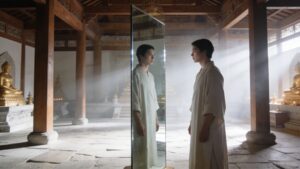

Psalm 25 is one of the great wisdom Psalms of the Psalter.
Unlike Psalms focused primarily on:
- protection
- prosperity
- victory
- deliverance
Psalm 25 focuses on something even more fundamental:
making wise choices before problems become crises.
This makes the Psalm extraordinarily practical.
Many of life’s greatest difficulties are not caused by:
- bad luck
- enemies
- circumstances
but by:
- poor judgment
- impulsive decisions
- ignored warnings
- misplaced trust
- lack of self-awareness
Psalm 25 addresses these issues directly.
The Psalm repeatedly asks for:
- guidance
- wisdom
- instruction
- understanding
- discernment
Yet it does so in a way that remains deeply mature.
The Psalm does not seek:
- shortcuts
- certainty
- magical answers
Instead it seeks:
- better judgment.
This distinction is important.
Because wisdom rarely arrives as:
a voice telling us exactly what to do.
More often wisdom appears as:
- clearer perception
- better questions
- improved judgment
- increased patience
- reduced impulsiveness
This is the hidden power of Psalm 25.
The Psalm repeatedly strengthens:
- teachability
- humility
- discernment
- reflection
- wise decision-making
Its purpose is not to remove all uncertainty.
Its purpose is to help us navigate uncertainty more intelligently.
Why Psalm 25 Follows Psalm 24
The transition from Psalm 24 to Psalm 25 is psychologically brilliant.
Psalm 24 focused on:
- readiness
- integrity
- responsibility
- opportunity
The gates opened.
The opportunity appeared.
The responsibility expanded.
Then Psalm 25 begins.
This progression matters enormously.
Because obtaining opportunity is only part of the challenge.
The next challenge becomes:
how to use opportunity wisely.
Many people spend years preparing for success.
Then lose that success through:
- poor decisions
- arrogance
- impulsiveness
- lack of judgment
Psalm 25 addresses precisely this problem.
The movement becomes:
Psalm 23:
Trust.
Psalm 24:
Become ready.
Psalm 25:
Choose wisely.
This progression reflects real life.
Because responsibility creates decisions.
And decisions create consequences.
Psalm 25 teaches how to navigate that reality with wisdom rather than impulse.
“Show Me Thy Paths”
The Psychology of Guidance
One of the central themes of Psalm 25 is:
“Show me thy paths.”
This is among the most powerful symbols in the entire Psalm.
The path represents:
- direction
- choices
- trajectory
- long-term outcomes
This symbolism is psychologically profound.
Because life is rarely changed by a single dramatic decision.
More often:
life changes through repeated movement along a path.
A path consists of:
- habits
- decisions
- priorities
- relationships
- actions
Over time these create results.
Psalm 25 therefore asks an important question:
Which path am I walking?
This matters because many paths appear attractive initially.
Yet lead toward:
- regret
- frustration
- wasted effort
- unnecessary suffering
Other paths may appear slower.
Yet eventually lead toward:
- wisdom
- stability
- fulfillment
- growth
Psalm 25 repeatedly strengthens our ability to recognize this difference.
The Hidden Cost of Poor Direction
Many people assume that major mistakes begin with major errors.
Often they do not.
Most significant mistakes begin with:
- small compromises
- ignored warnings
- unchecked assumptions
- repeated poor choices
These gradually create larger consequences.
Psalm 25 understands this dynamic.
The Psalm repeatedly seeks:
- guidance before damage occurs.
This is one reason it remains so valuable.
Because prevention is often easier than repair.
Wisdom frequently means:
recognizing a poor path while there is still time to change direction.
Psalm 25 repeatedly strengthens this capacity.
The Psychology of Teachability
One of the deepest themes in Psalm 25 is:
teachability.
This quality is often underestimated.
Many people value:
- intelligence
- expertise
- confidence
Yet wisdom often depends upon something else.
The willingness to learn.
Teachability means:
- remaining open
- remaining curious
- remaining willing to adjust
It does not mean:
- lacking opinions
- lacking intelligence
- lacking confidence
Instead it means:
recognizing that learning never truly ends.
This mindset dramatically improves decision-making.
Because teachable people notice:
- mistakes
- blind spots
- weaknesses
- opportunities for growth
more quickly than those who believe they already know enough.
Psalm 25 repeatedly cultivates this attitude.
Humility Versus Certainty
Modern culture often rewards certainty.
People admire those who appear:
- confident
- decisive
- sure
Yet certainty has a hidden danger.
When certainty becomes excessive it can create:
- blind spots
- overconfidence
- poor judgment
- resistance to correction
Psalm 25 repeatedly emphasizes humility instead.
This is not weakness.
It is wisdom.
Because humility creates room for learning.
The humble person asks:
- What might I be missing?
- What haven’t I considered?
- What can I still learn?
These questions often produce better decisions than certainty alone.
The Psalm repeatedly teaches:
wisdom grows where curiosity survives.
This is one of its deepest lessons.
Why Humility Improves Decision-Making
Modern psychology confirms something Psalm 25 understood centuries ago.
Overconfidence frequently reduces accuracy.
People who believe they already know everything often stop learning.
They stop questioning.
They stop evaluating alternatives.
This creates avoidable mistakes.
Humility does the opposite.
Humility encourages:
- reflection
- patience
- observation
- learning
These qualities improve judgment.
Psalm 25 repeatedly strengthens them.
Not because humility makes a person smaller.
But because humility makes a person wiser.
The Difference Between Knowledge and Wisdom
One of the most important distinctions in Psalm 25 is the difference between:
- knowledge
and:
- wisdom.
Knowledge answers:
What do I know?
Wisdom answers:
What should I do?
A person may possess enormous knowledge and still make poor decisions.
Why?
Because information alone does not guarantee judgment.
Wisdom requires:
- timing
- perspective
- discernment
- self-awareness
Psalm 25 repeatedly seeks these qualities.
This is why the Psalm feels so practical.
It is less concerned with:
- collecting facts
and more concerned with:
- applying understanding.
Operationally:
wisdom becomes:
knowledge guided by judgment and experience.
The Wisdom of Slowing Down
One hidden lesson of Psalm 25 is:
the value of slowing down before deciding.
Impulsive decisions often feel:
- exciting
- urgent
- emotionally convincing
Wise decisions often feel:
- calm
- deliberate
- measured
This difference matters enormously.
Many regrettable choices occur because people confuse:
- urgency
with:
- importance.
Psalm 25 repeatedly encourages:
- reflection before action.
This allows judgment to improve.
The Psalm teaches:
clarity often appears after patience, not before it.
Why Psalm 25 Feels So Mature
Psalm 25 feels mature because it acknowledges something many people resist:
No one knows everything.
No one sees every consequence.
No one is free from blind spots.
Rather than creating anxiety, the Psalm transforms this reality into wisdom.
It encourages:
- learning
- reflection
- teachability
- guidance
- discernment
This creates a powerful psychological effect.
Because the individual no longer needs to pretend certainty.
Instead they can focus on becoming wiser.
That shift changes everything.
Forgiveness, Regret, and Learning From Mistakes
One of the most human themes in Psalm 25 involves:
learning from the past without becoming trapped by it.
The Psalm repeatedly acknowledges:
- mistakes
- failures
- limitations
- human imperfection
This is important.
Because many people relate to past mistakes in unhealthy ways.
Some deny them completely.
Others become imprisoned by them.
Psalm 25 chooses a wiser path.
The Psalm neither:
- ignores mistakes
nor:
- worships mistakes.
Instead it transforms them into:
- lessons
- wisdom
- self-awareness
- maturity
This is psychologically profound.
Because regret often becomes destructive when it serves no purpose.
Healthy regret teaches.
Unhealthy regret punishes.
Psalm 25 repeatedly encourages:
learning rather than self-condemnation.
This distinction changes everything.
The Difference Between Guilt and Wisdom
Many people assume guilt automatically produces growth.
Often it does not.
Excessive guilt frequently creates:
- shame
- paralysis
- avoidance
- self-sabotage
Wisdom produces something different.
Wisdom asks:
What happened?
What can I learn?
What would I do differently?
How can I improve?
Psalm 25 repeatedly shifts attention toward these questions.
The goal is not:
- endless self-criticism
The goal is:
- improved judgment.
This makes the Psalm remarkably mature.
Because growth becomes possible only when mistakes become teachers rather than permanent identities.
Discernment and Decision-Making
One of the deepest practical applications of Psalm 25 is:
discernment.
Discernment is often misunderstood.
Many people imagine discernment as:
- intuition alone
Psalm 25 presents a more balanced approach.
Operationally:
discernment involves:
- observation
- reflection
- patience
- self-awareness
- wisdom
- experience
Discernment asks:
What appears attractive but carries hidden costs?
What appears difficult but carries long-term benefits?
What decision aligns with my values?
What decision serves my future self?
These questions reduce impulsiveness.
Psalm 25 repeatedly strengthens this process.
The Danger of Emotional Decision-Making
Another hidden lesson of Psalm 25 is:
emotions are important but incomplete.
Strong emotions often create urgency.
People feel:
- excited
- angry
- afraid
- attracted
- frustrated
and immediately want to act.
Psalm 25 repeatedly encourages:
- pause
- reflection
- perspective
This matters enormously.
Because many regrettable decisions occur when temporary emotions receive permanent authority.
The Psalm teaches:
wisdom listens to emotions without becoming controlled by them.
This is one of the most practical lessons in the entire Psalm.
The Long-Term View
One characteristic of wisdom is:
thinking beyond the present moment.
Impulsiveness asks:
What do I want now?
Wisdom asks:
What result will this create later?
Psalm 25 repeatedly strengthens long-term thinking.
This is valuable because many problems originate when people prioritize:
- immediate relief
over:
- lasting benefit
The Psalm repeatedly encourages:
- patience
- foresight
- perspective
These qualities improve nearly every area of life.
The Core Psalm 25 Ritual
A Practical Method for Wisdom, Discernment, and Life Direction
Psalm 25 works best when approached:
- calmly
- thoughtfully
- honestly
- without urgency
Not:
- desperately
- impulsively
- obsessively
This matters enormously.
The Psalm strengthens:
- discernment
- self-awareness
- patience
- clarity
- wise decision-making
Its atmosphere should feel:
- reflective
- mature
- grounded
rather than:
- emotionally reactive.
What You Need
Required
- Psalm 25
- quiet environment
- journal
Recommended
- white candle
- notebook
- list of important questions or decisions
Optional:
- frankincense
- sandalwood
- tea or water
Psalm 25 responds strongly to:
- reflection
- patience
- honesty
rather than:
- urgency.
STEP 1 — Define the Decision
Ask:
What decision am I facing?
What uncertainty requires clarity?
What path am I trying to evaluate?
What outcome concerns me most?
Be specific.
Vague questions produce vague answers.
Psalm 25 functions best when attention becomes focused.
STEP 2 — Examine Assumptions
Ask honestly:
What assumptions am I making?
What might I be overlooking?
What do I want to be true?
What evidence challenges my current view?
This step is critical.
Because wisdom often begins when assumptions become visible.
STEP 3 — Read Psalm 25 Slowly
Pause especially at:
- “Show me thy ways”
- “Teach me”
- “Lead me”
- “Remember not”
- “The meek”
- “His way”
Notice the progression:
- uncertainty
- humility
- learning
- discernment
- guidance
- wisdom
This progression forms the operational structure of Psalm 25.
STEP 4 — Write the Wise Option
After reading ask:
Which choice reflects wisdom rather than impulse?
Which option aligns with my values?
Which path would my future self thank me for choosing?
Write the answer.
This transforms insight into action.
Psalm 25 for Relationships
Psalm 25 is particularly valuable when evaluating:
- romantic relationships
- friendships
- partnerships
- family dynamics
Relationships often become confusing because emotions are involved.
The Psalm repeatedly restores:
- perspective
- discernment
- patience
This helps separate:
- attraction
from:
- compatibility
and:
- emotion
from:
- wisdom.
Psalm 25 for Career Decisions
Many people face questions such as:
- Should I change careers?
- Should I accept this opportunity?
- Should I start a business?
- Should I pursue further education?
Psalm 25 does not provide magical answers.
Instead it improves:
- judgment
which often produces better answers.
This distinction is extremely important.
Psalm 25 for Life Direction
Perhaps the strongest application of Psalm 25 involves:
choosing a direction.
Many people become trapped because they seek:
- certainty
before:
- action
Psalm 25 repeatedly teaches:
- wisdom
rather than:
- certainty.
This creates movement.
Because life often becomes clearer while walking the path rather than before entering it.
Repetition Cycles and Wisdom Conditioning
Psalm 25 is cumulative.
Repeated recitation gradually reinforces:
- patience
- discernment
- humility
- self-awareness
- judgment
Recommended Structures
7-Day Clarity Cycle
Best for:
- evaluating choices
- gaining perspective
- reducing confusion
21-Day Wisdom Cycle
Best for:
- improving judgment
- strengthening discernment
- reducing impulsiveness
40-Day Major Decision Cycle
Best for:
- career transitions
- relationship decisions
- business choices
- life-direction questions
What Weakens Psalm 25 Work
The most common obstacles are:
Pride
Believing there is nothing left to learn.
Psalm 25 repeatedly restores:
- teachability.
Impulsiveness
Acting before reflection.
The Psalm strengthens:
- patience.
Certainty Addiction
Demanding complete certainty before action.
The Psalm strengthens:
- wisdom.
Not:
- omniscience.
Refusal to Learn
Repeating the same mistakes while ignoring lessons.
Psalm 25 repeatedly encourages:
- growth through reflection.
Signs of Increasing Wisdom
The first signs are usually subtle.
Not:
- dramatic revelations
Instead:
- better questions
- improved patience
- stronger discernment
- fewer impulsive decisions
- reduced regret
- greater self-awareness
- clearer priorities
- improved judgment
Often the first major sign is:
becoming less concerned with being right and more concerned with learning what is true.
This reflects genuine wisdom.
Final Insight
Wisdom Begins With Humility
Psalm 25 teaches one of the deepest principles in the entire Psalter:
- knowledge matters
- experience matters
- intelligence matters
But:
- humility matters more
because humility allows learning to continue.
Its power does not come from promising certainty.
It comes from teaching that:
the best decisions are rarely made by people who believe they already know everything, but by those willing to keep learning, questioning, reflecting, and growing.
And after the readiness of Psalm 24, Psalm 25 introduces the next stage:
not merely becoming ready for opportunity, but becoming wise enough to use opportunity well.
That is the true gift of Psalm 25.
Frequently Asked Questions:
Psalm 25 is traditionally used for:
- wisdom
- guidance
- discernment
- important decisions
- life direction
- avoiding mistakes
- gaining clarity
- learning from experience
- personal growth
- improving judgment
It is especially associated with:
- seeking guidance before making choices that could significantly affect the future.
Very strongly.
Psalm 25 is one of the clearest wisdom-oriented Psalms in the Psalter.
Its recurring themes include:
- learning
- guidance
- humility
- instruction
- discernment
- understanding
The Psalm repeatedly teaches:
wisdom grows when a person remains teachable.
The paths symbolize:
- choices
- life direction
- habits
- priorities
- long-term consequences
Operationally:
the verse asks:
Which direction leads toward growth, fulfillment, and wisdom rather than regret and unnecessary suffering?
Psalm 25 repeatedly strengthens awareness of the paths we are already walking.
Yes.
This is one of its strongest traditional and modern applications.
Psalm 25 is commonly used when facing:
- career decisions
- relationship choices
- business opportunities
- educational paths
- life transitions
Importantly:
the Psalm does not promise certainty.
Instead it strengthens:
- discernment
- judgment
- perspective
which often leads to better decisions.
The central lesson is:
wisdom begins with humility.
Many people seek:
- answers
Psalm 25 teaches the value of seeking:
- understanding
The Psalm repeatedly suggests that growth becomes possible when people remain willing to learn.
Teachability means:
- openness to learning
- willingness to reconsider assumptions
- ability to receive correction
- intellectual humility
It does not mean:
- weakness
- lack of confidence
- dependence
Operationally:
teachability allows wisdom to grow faster because fewer blind spots remain protected by ego.
Because pride often blocks learning.
People who believe they already know everything rarely improve their judgment.
Humility creates room for:
- reflection
- observation
- correction
- growth
Psalm 25 repeatedly teaches:
humility is not thinking less of yourself; it is remaining open to learning.
One of the deepest themes in Psalm 25.
Knowledge
Answers:
- What do I know?
Wisdom
Answers:
- What should I do?
Knowledge provides information.
Wisdom provides direction.
Psalm 25 focuses primarily on:
- application
- judgment
- discernment
rather than information alone.
Yes.
One of the Psalm’s practical strengths is helping people:
- slow down
- reflect
- evaluate consequences
- question assumptions
Many costly mistakes occur because people act:
- impulsively
- emotionally
- overconfidently
Psalm 25 repeatedly strengthens:
- patience
- perspective
- thoughtful decision-making
Psalm 25 treats regret as:
- a teacher
not:
- a prison.
The Psalm acknowledges:
- mistakes
- shortcomings
- past errors
but repeatedly moves toward:
- learning
- growth
- wisdom
The lesson is:
mistakes become valuable when they increase understanding rather than destroy self-respect.
Very strongly.
Relationships often involve:
- emotional complexity
- uncertainty
- conflicting desires
Psalm 25 helps strengthen:
- discernment
- patience
- clarity
- self-awareness
This can improve decisions involving:
- romantic relationships
- friendships
- partnerships
- family dynamics
Yes.
Many people use Psalm 25 during:
- career transitions
- promotions
- business decisions
- educational choices
The Psalm strengthens:
- judgment
- long-term thinking
- discernment
rather than:
- impulsive action.
One of the Psalm’s deepest teachings is that:
guidance often arrives through wisdom rather than certainty.
Many people seek:
- guaranteed answers
Psalm 25 instead develops:
- better judgment
which often proves more valuable.
Very strongly.
Periods of confusion often involve:
- too many options
- conflicting information
- emotional uncertainty
Psalm 25 repeatedly restores:
- perspective
- patience
- reflection
This helps reduce mental noise and improve clarity.
Traditional-style repetition works very well with Psalm 25.
Recommended structures include:
7 Days
For:
- gaining perspective
- evaluating options
- reducing confusion
21 Days
For:
- wisdom development
- discernment
- patience
- better judgment
40 Days
For:
- major life decisions
- career changes
- relationship questions
- significant transitions
Repeated recitation gradually reinforces:
- humility
- reflection
- wise decision-making
The most common obstacles are:
- pride
- stubbornness
- impulsiveness
- certainty addiction
- refusal to learn
- emotional reactivity
Psalm 25 strengthens through:
- reflection
- patience
- teachability
- discernment
not:
- overconfidence.
Yes—if interpreted as:
- refusing personal responsibility
- waiting passively for answers
- abandoning critical thinking
- outsourcing judgment completely
Psalm 25 works best when understood as:
- guidance plus responsibility
- wisdom plus action
- reflection plus decision-making
The Psalm encourages mature judgment, not dependency.
Yes—and it pairs exceptionally well with:
Integrity and Wisdom
- Psalm 24 + Psalm 25
Wisdom and Trust
- Psalm 23 + Psalm 25
Guidance and Discernment
- Psalm 25 + Psalm 32
Wisdom and Understanding
- Psalm 25 + Psalm 119
These combinations reinforce:
- learning
- reflection
- maturity
- wise choices
Usually:
- improved patience
- better questions
- stronger discernment
- reduced impulsiveness
- clearer thinking
- greater self-awareness
- less regret
- better long-term decisions
The first major sign is often:
becoming more interested in understanding reality than proving yourself right.
Because it introduces:
- wisdom
- teachability
- discernment
- humility
- guidance
- mature judgment
after the responsibility and readiness themes of Psalm 24.
Psalm 24 asks:
Are you ready for opportunity?
Psalm 25 asks:
Are you wise enough to use opportunity well?
This progression is psychologically profound.
The deepest lesson of Psalm 25 is:
the quality of a person’s life is often shaped less by the opportunities they receive and more by the wisdom with which they respond to those opportunities.