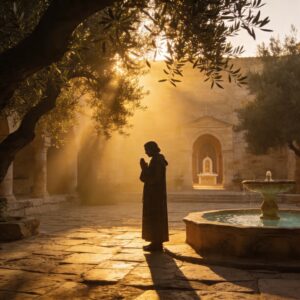

Psalm 1 is not loud.
It contains:
- no dramatic miracles
- no battles
- no cries for vengeance
- no supernatural spectacle
And yet it may be one of the most important Psalms in the entire Psalter.
Why?
Because Psalm 1 establishes the fundamental spiritual logic behind all the others.
It introduces:
- two paths
- two directions of consciousness
- two influence systems
- two long-term outcomes
At its core, Psalm 1 is about:
what repeatedly shapes a human being over time.
This is why it opens the Book of Psalms.
Before:
- protection
- warfare
- healing
- prosperity
- deliverance
comes:
- alignment
The Psalm asks a deeply practical question:
What are you allowing to shape your mind, habits, emotions, and destiny every day?
That question alone makes Psalm 1 extraordinarily modern.
Why Psalm 1 Opens the Entire Book of Psalms
Psalm 1 functions like an initiation.
It prepares the reader for everything that follows.
The Psalm immediately establishes several foundational themes:
- influence matters
- repetition matters
- attention matters
- environment matters
- association matters
- direction matters
This is important because the Psalms are not merely:
- emotional poems
They are also:
- consciousness-shaping texts
Psalm 1 teaches that destiny is rarely created instantly.
Instead, life gradually forms through:
- repeated exposure
- repeated thought
- repeated behavior
- repeated emotional orientation
This is why the Psalm begins not with:
- prayer
or - miracles
but with:
- association
“Blessed is the man that walketh not in the counsel of the ungodly…”
The very first concern is:
influence.
That is psychologically profound.
The Psychology of Influence and Association
This may be the deepest practical layer of Psalm 1.
Many people read “the wicked” in simplistic moral terms.
But operationally, the Psalm is describing something far broader:
- destructive influence systems
In practical modern life, “wicked influence” may include:
- manipulative environments
- compulsive negativity
- addiction culture
- emotional chaos
- constant outrage
- cynicism
- self-destructive social circles
- attention-consuming media environments
Psalm 1 describes influence as:
- contagious
This is extremely important psychologically.
Human beings absorb atmosphere constantly.
Over time:
- environments shape perception
- repetition shapes emotion
- association shapes behavior
- attention shapes identity
This is why the Psalm progresses carefully:
walketh
standeth
sitteth
This progression matters enormously.
It describes:
- gradual immersion
First:
- exposure
Then:
- participation
Then:
- identification
In other words:
people slowly become what they repeatedly normalize.
That is one reason Psalm 1 functions as a hidden protection Psalm.
It protects not through:
- warfare
but through:
- discernment
- refusal of corruption
- conscious separation from destructive influence
“Meditates Day and Night” — Repetition and Identity Formation
The Psalm contrasts destructive influence with:
continual meditation.
This is not merely religious obligation.
It is a statement about:
- conditioning
Whatever occupies consciousness repeatedly begins shaping:
- perception
- emotional reflexes
- nervous system patterns
- identity structure
Modern psychology recognizes similar principles through:
- habit formation
- cognitive conditioning
- attentional training
- neuroplasticity
Psalm 1 understood this symbolically long ago.
The phrase:
“day and night”
suggests:
- continuity
- rhythm
- sustained orientation
The Psalm is teaching:
what you repeatedly contemplate eventually becomes part of you.
This is one reason repeated Psalm work can become so powerful operationally.
Not because of instant magic.
But because repetition slowly reorganizes:
- emotional focus
- mental atmosphere
- internal direction
The nervous system gradually begins orienting toward:
- stability
instead of: - fragmentation
The Tree Planted by Waters
Symbolism of Rooted Prosperity
The central image of Psalm 1 is one of the most beautiful in the entire Psalter:
the tree planted by rivers of water.
This symbolism is extraordinarily rich.
The tree represents:
- stability
- continuity
- nourishment
- rootedness
- resilience
- organic growth
Importantly:
the tree is not frantic.
It is not:
- chasing
- forcing
- panicking
It grows because:
- its roots remain connected to a sustaining source
This is a completely different vision of prosperity than modern obsession-driven culture.
Psalm 1 prosperity is:
- sustainable
- rooted
- gradual
- integrated
The Psalm explicitly contrasts:
- rootedness
with: - chaff blown by the wind
This distinction matters deeply psychologically.
People disconnected from:
- structure
- discipline
- alignment
- grounding
often become emotionally wind-driven.
They are carried constantly by:
- trends
- outrage
- fear
- impulse
- social pressure
- emotional instability
The rooted tree symbolizes the opposite:
- continuity under changing conditions
This is why Psalm 1 became associated traditionally with:
- wisdom
- long-term success
- stability
- protection from corruption
- prosperous beginnings
- educational discipline
- spiritual grounding
Psalm 1 as a Prosperity Psalm
Psalm 1 is absolutely a prosperity Psalm.
But not in the modern “instant manifestation” sense.
The prosperity here is:
- ordered growth
- fruitful timing
- stability
- healthy continuity
- resilience
- disciplined flourishing
The Psalm says:
“whatsoever he doeth shall prosper.”
Operationally, this does NOT mean:
- automatic wealth
- guaranteed luxury
- instant success
It means:
alignment creates conditions for sustainable growth.
That is very different.
People living in chronic fragmentation often sabotage:
- opportunity
- focus
- consistency
- discipline
- long-term vision
Psalm 1 attempts to restore:
- alignment between mind, environment, and direction
This creates:
- more coherent action
- better discernment
- improved emotional pacing
- stronger long-term decision making
Over time:
that becomes a form of prosperity.
Psalm 1 as a Hidden Protection Psalm
Most people do not initially think of Psalm 1 as:
- protective
But it absolutely is.
It protects through:
- discernment
- non-participation
- boundary formation
- selective association
This is psychologically sophisticated.
Many destructive situations begin through:
- gradual normalization
Not immediate catastrophe.
People slowly absorb:
- chaos
- addiction
- manipulation
- negativity
- corruption
- emotional instability
Psalm 1 interrupts this process early.
It teaches:
- conscious refusal
before: - deep entanglement occurs.
This makes it especially powerful for:
- recovering from toxic environments
- rebuilding discipline
- escaping destructive social patterns
- restoring emotional clarity
- protecting mental atmosphere
In this sense, Psalm 1 is:
preventative spiritual protection.
Traditional Uses of Psalm 1
Across devotional and folk traditions, Psalm 1 has been associated with:
- wisdom
- successful beginnings
- study and learning
- discernment
- protection from bad influence
- prosperous ventures
- disciplined living
- righteous judgment
- guidance during major decisions
Some traditions recommend Psalm 1:
- before beginning new work
- before educational pursuits
- during major life transitions
- while rebuilding discipline after chaos
Because the Psalm emphasizes:
- alignment before expansion
This is operationally important.
Many people seek:
- prosperity
before: - structure
Psalm 1 reverses that logic.
It teaches:
structure produces sustainable fruitfulness.
Why Psalm 1 Feels Quietly Powerful
Psalm 1 rarely produces:
- dramatic emotional intensity
Instead it works slowly through:
- repetition
- contemplation
- environmental awareness
- disciplined attention
This is one reason some people initially underestimate it.
But over time, Psalm 1 can radically reshape:
- judgment
- focus
- associations
- emotional atmosphere
- behavioral patterns
because it operates at the level of:
- orientation
rather than:
- emergency intervention.
The Core Psalm 1 Ritual
A Practical Method for Alignment, Discernment, and Rooted Growth
Psalm 1 works best through:
- consistency
- repetition
- reflection
- disciplined rhythm
This is not a Psalm for:
- emotional spectacle
- desperation rituals
- instant manifestation obsession
It is a Psalm for:
- orientation
- stability
- discernment
- gradual restructuring of life direction
Operationally, Psalm 1 is strongest when approached:
- calmly
- regularly
- intentionally
Its power compounds over time.
What You Need
Keep the environment simple and uncluttered.
Required
- quiet space
- focused attention
- Psalm 1
Recommended
- white or green candle
- glass of water
- notebook or journal
- morning practice
Optional:
- olive oil
- cedar incense
- rosemary
- basil
Psalm 1 responds strongly to:
- routine
- contemplation
- mental clarity
- emotional steadiness
—not emotional intensity.
Candle Logic
White
Best for:
- clarity
- wisdom
- spiritual orientation
- purification of focus
Green
Best for:
- rooted prosperity
- steady growth
- fruitful development
- stability in material matters
Candles are optional.
Their role is:
- focus
- symbolic orientation
- ritual continuity
STEP 1 — Identify the Influences Shaping Your Life
This step matters enormously.
Psalm 1 begins with:
- influence awareness
Before reading, ask honestly:
What repeatedly enters my mind?
What atmospheres dominate my attention?
Which people increase chaos in my life?
Which habits weaken clarity and discipline?
What forms of negativity have become normalized?
This is not about:
- judging others obsessively
It is about:
- recognizing influence ecology
Many people unconsciously live inside:
- emotional contamination systems
Psalm 1 begins restoring:
- conscious discernment.
STEP 2 — Establish Intentional Alignment
Light the candle.
Sit quietly.
Slow the pace of the mind.
Say calmly:
“May clarity replace confusion.
May discipline replace fragmentation.
May I grow toward wisdom, stability, and right alignment.”
This step matters psychologically because:
the nervous system responds strongly to:
- intentional structure
- repeated orientation
- symbolic consistency
The goal is:
- rootedness
not emotional stimulation.
STEP 3 — Read Psalm 1 Slowly and Reflectively
Do not rush the Psalm.
Psalm 1 is contemplative by nature.
Pause at important symbolic phrases:
- “walketh not”
- “meditate day and night”
- “tree planted by rivers”
- “bringeth forth fruit”
- “the ungodly are like the chaff”
Notice the contrast structure throughout the Psalm:
- rooted vs scattered
- stable vs wind-driven
- aligned vs fragmented
This contrast is the operational core of the entire Psalm.
Read slowly enough for:
- symbolic imagery
to affect: - emotional orientation
This matters more than speed or quantity.
STEP 4 — Use Water Symbolically
Water symbolism is extremely important in Psalm 1 because:
- the righteous tree survives through continual nourishment
Place hands near the glass of water.
Read:
“And he shall be like a tree planted by the rivers of water…”
Then slowly drink the water.
The purpose is not superstition.
It is:
- symbolic internalization
- psychological reinforcement
- embodied alignment ritual
This strengthens the feeling of:
- nourishment
- continuity
- rootedness
STEP 5 — End with Practical Realignment
Psalm 1 is incomplete without:
- behavioral adjustment
After prayer, take one small practical action toward:
- order
- clarity
- discipline
- healthier association
- reduced chaos
Examples:
- organizing workspace
- reducing toxic media exposure
- journaling honestly
- restructuring morning routine
- distancing from destructive environments
Psalm 1 becomes strongest when:
- symbolic alignment
and - practical alignment
work together.
Psalm 1 as Morning Alignment Practice
Morning practice works exceptionally well with Psalm 1.
Why?
Because the Psalm concerns:
- orientation before immersion
The morning is psychologically powerful because:
the mind has not yet been flooded by:
- distraction
- emotional noise
- social pressure
- informational overload
Reading Psalm 1 early helps establish:
- attentional direction
before chaos enters the day.
Over time this creates:
- emotional steadiness
- increased discernment
- stronger decision pacing
- reduced fragmentation
Psalm 1 for Protection from Destructive Influence
Psalm 1 is deeply protective.
But its protection mechanism is subtle.
It protects through:
- non-participation
- discernment
- selective association
- conscious refusal of corruption
This becomes extremely practical in modern life.
Many people become destabilized through repeated exposure to:
- outrage cycles
- manipulative social dynamics
- addiction environments
- emotionally chaotic communities
- doom-scrolling
- chronic negativity
Psalm 1 helps rebuild:
- mental boundaries
- attentional discipline
- environmental discernment
This is one reason it works beautifully during:
- recovery periods
- rebuilding after chaos
- emotional detoxification
- restoring focus
Repetition Cycles and Long-Term Alignment
Psalm 1 is cumulative by nature.
Its effects deepen through:
- repetition
- consistency
- reflection
- gradual identity restructuring
Recommended Structures
7-Day Alignment Cycle
Best for:
- resetting focus
- improving discipline
- restoring clarity
Read:
- morning and evening
while journaling influences affecting daily life.
21-Day Rootedness Cycle
Best for:
- rebuilding habits
- escaping destructive environments
- emotional stabilization
- long-term life restructuring
This cycle works especially well when combined with:
- reduced overstimulation
- structured routines
- intentional environmental changes
40-Day Wisdom Discipline Cycle
Best for:
- major transitions
- spiritual discipline
- identity rebuilding
- educational or vocational focus
This becomes less:
- “ritual”
and more: - consciousness training
through Psalmic repetition.
Advanced Layering (Optional)
Advanced work should remain:
- disciplined
- calm
- contemplative
Avoid:
- obsession
- perfectionism
- ritual overload
Psalm 1 strengthens through:
- continuity
not:
- dramatic escalation.
Layer 1 — Journaling After Recitation
Write briefly after each reading:
- what influences weakened you today
- what strengthened clarity
- where fragmentation appeared
- where rootedness appeared
This transforms the Psalm into:
- active consciousness work
rather than passive reading.
Layer 2 — Environmental Cleansing
Some practitioners combine Psalm 1 work with:
- decluttering
- removing chaotic stimuli
- reducing noise
- reorganizing living spaces
This aligns external atmosphere with:
- internal restructuring
The symbolism becomes very powerful psychologically.
Layer 3 — Study and Wisdom Work
Psalm 1 traditionally pairs extremely well with:
- study
- education
- disciplined learning
- business planning
- strategic reflection
Especially when someone seeks:
- long-term success
instead of: - impulsive gain.
What Weakens Psalm 1 Work
This section matters enormously.
Many people unknowingly sabotage alignment constantly.
1. Chronic Overstimulation
Constant:
- scrolling
- noise
- outrage exposure
- fragmented attention
destroys:
- contemplative depth
- emotional steadiness
- discernment
Psalm 1 requires:
- enough stillness for reflection.
2. Toxic Association
Repeated exposure to:
- manipulative
- chaotic
- destructive environments
slowly reshapes:
- emotional expectations
- nervous system orientation
- behavioral norms
This is exactly what Psalm 1 warns about.
3. Inconsistent Rhythm
Psalm 1 strengthens through:
- repetition
not:
- occasional emotional intensity
Scattered practice weakens cumulative formation.
4. Prosperity Obsession
People seeking:
- instant wealth
- magical shortcuts
- emotional highs
often miss the Psalm’s real teaching:
- rootedness before fruitfulness
The tree grows because:
its roots remain connected consistently.
Signs of Rooted Alignment
The first signs are usually subtle.
Not:
- sudden miracles
Instead:
- calmer judgment
- reduced attraction to chaos
- stronger focus
- healthier associations
- improved discipline
- emotional steadiness
- increased clarity
- more sustainable productivity
Often the first real sign is:
becoming less emotionally wind-driven.
That matters deeply.
Final Insight
Destiny Is Built Through Repeated Alignment
Psalm 1 teaches one of the deepest truths in the entire Psalter:
what repeatedly shapes attention eventually shapes life.
People become formed gradually through:
- environment
- repetition
- association
- contemplation
- emotional orientation
This is why the Psalm begins with:
- influence
and ends with: - destiny
The rooted tree symbolizes:
- continuity under changing conditions
- nourishment through connection
- disciplined growth
- sustainable fruitfulness
Not frantic success.
Not chaotic intensity.
But:
- steady alignment over time.
And in a fragmented world, that may be one of the greatest forms of protection and prosperity possible.
Frequently Asked Questions:
Psalm 1 is traditionally used for:
- wisdom
- discernment
- successful beginnings
- spiritual alignment
- rooted prosperity
- protection from destructive influence
- disciplined living
It is often approached as:
- an initiation Psalm
- a foundation Psalm
- a guidance Psalm
because it establishes the core themes of:
- influence
- repetition
- direction
- long-term formation
found throughout the entire Psalter.
Yes—but not in the modern “instant manifestation” sense.
Psalm 1 teaches:
- rooted prosperity
- sustainable growth
- fruitful timing
- long-term stability
The prosperity of Psalm 1 comes through:
- alignment
- discipline
- wise association
- emotional steadiness
- consistent orientation
rather than:
- impulsive gain
or - magical shortcuts.
Because the Psalm understands that:
- environments shape behavior
- repetition shapes identity
- association shapes consciousness
The famous progression:
walketh → standeth → sitteth
describes gradual immersion into:
- destructive patterns
- toxic atmospheres
- unhealthy influence systems
Psalm 1 is teaching:
what you repeatedly normalize eventually shapes your life.
Practically, it refers to:
- sustained contemplation
- repeated orientation
- continuous alignment
This does not necessarily mean:
constant nonstop recitation.
It means:
allowing wisdom and disciplined reflection to repeatedly shape:
- thought
- behavior
- emotional direction
- decision-making
Operationally, repeated Psalm work creates:
- attentional conditioning
- emotional rhythm
- identity reinforcement
over time.
The tree symbolizes:
- rootedness
- nourishment
- resilience
- continuity
- sustainable growth
Unlike:
- emotionally wind-driven living
the rooted tree remains connected to:
- a stable sustaining source
This is why Psalm 1 became associated with:
- stability
- prosperity
- endurance
- disciplined flourishing
The tree grows gradually—not frantically.
Yes—very much so.
But it protects differently than warfare Psalms.
Psalm 1 protects through:
- discernment
- selective association
- refusal of corruption
- emotional boundaries
- conscious influence management
It functions as:
preventative protection.
Instead of fighting chaos after immersion,
it teaches:
- avoiding deep entanglement in destructive systems altogether.
Morning practice works especially well.
Why?
Because Psalm 1 is about:
- orientation before immersion
Reading it early helps establish:
- clarity
- direction
- attentional discipline
before the mind becomes flooded by:
- distraction
- negativity
- emotional fragmentation
Some practitioners also repeat it:
- morning and evening
for alignment cycles.
Absolutely.
This is one of its strongest modern applications.
Psalm 1 helps strengthen:
- consistency
- discernment
- attention management
- emotional pacing
- long-term thinking
It works especially well for:
- students
- business owners
- creators
- people rebuilding structure after chaos
- anyone recovering from fragmented routines
Traditional-style repetition structures work very well with Psalm 1.
Recommended cycles include:
- 7 days → focus reset and clarity
- 21 days → rebuilding habits and rootedness
- 40 days → deep discipline and life restructuring
Because Psalm 1 is cumulative, consistency matters more than intensity.
The most common problems are:
- chronic overstimulation
- toxic association
- doom-scrolling
- emotional fragmentation
- inconsistent practice
- chaos addiction
- instant gratification obsession
Psalm 1 strengthens through:
- repetition
- rhythm
- contemplation
- environmental discernment
not:
- emotional spectacle.
Yes.
It is especially useful during:
- career changes
- rebuilding after chaos
- educational pursuits
- recovery from destructive environments
- spiritual recommitment
- new beginnings
Because the Psalm focuses heavily on:
- direction
- rootedness
- wise association
- long-term fruitfulness
it becomes extremely powerful during transitional periods.
Because it operates through:
- gradual restructuring
- contemplation
- orientation
- repeated alignment
rather than:
- emotional intensity
- emergency intervention
- dramatic warfare imagery
Its effects are often:
- subtle at first
but - extremely deep over time.
Yes—and it pairs exceptionally well with many Psalms because it establishes:
- foundation
- orientation
- clarity
Examples:
Wisdom + Protection
- Psalm 1 + Psalm 91
Discipline + Courage
- Psalm 1 + Psalm 27
Alignment + Prosperity
- Psalm 1 + Psalm 23
Clarity + Emotional Stability
- Psalm 1 + Psalm 37
Usually:
- calmer judgment
- less attraction toward chaos
- improved focus
- healthier associations
- emotional steadiness
- stronger routines
- clearer priorities
- sustainable productivity
The first major sign is often:
no longer feeling emotionally scattered all the time.
Because it introduces the foundational spiritual mechanics behind the entire Psalter:
- influence
- repetition
- alignment
- discernment
- destiny through orientation
Before:
- miracles
- warfare
- deliverance
- prosperity
comes:
- the condition of consciousness itself.
Psalm 1 teaches that:
- what repeatedly shapes the inner life eventually shapes external life as well.