Psalm 48 is a song about permanence.
Unlike many Psalms that focus on personal struggles, victories, or prayers for deliverance, this Psalm lifts the reader’s eyes toward something larger than individual experience.
It invites us to contemplate what endures.
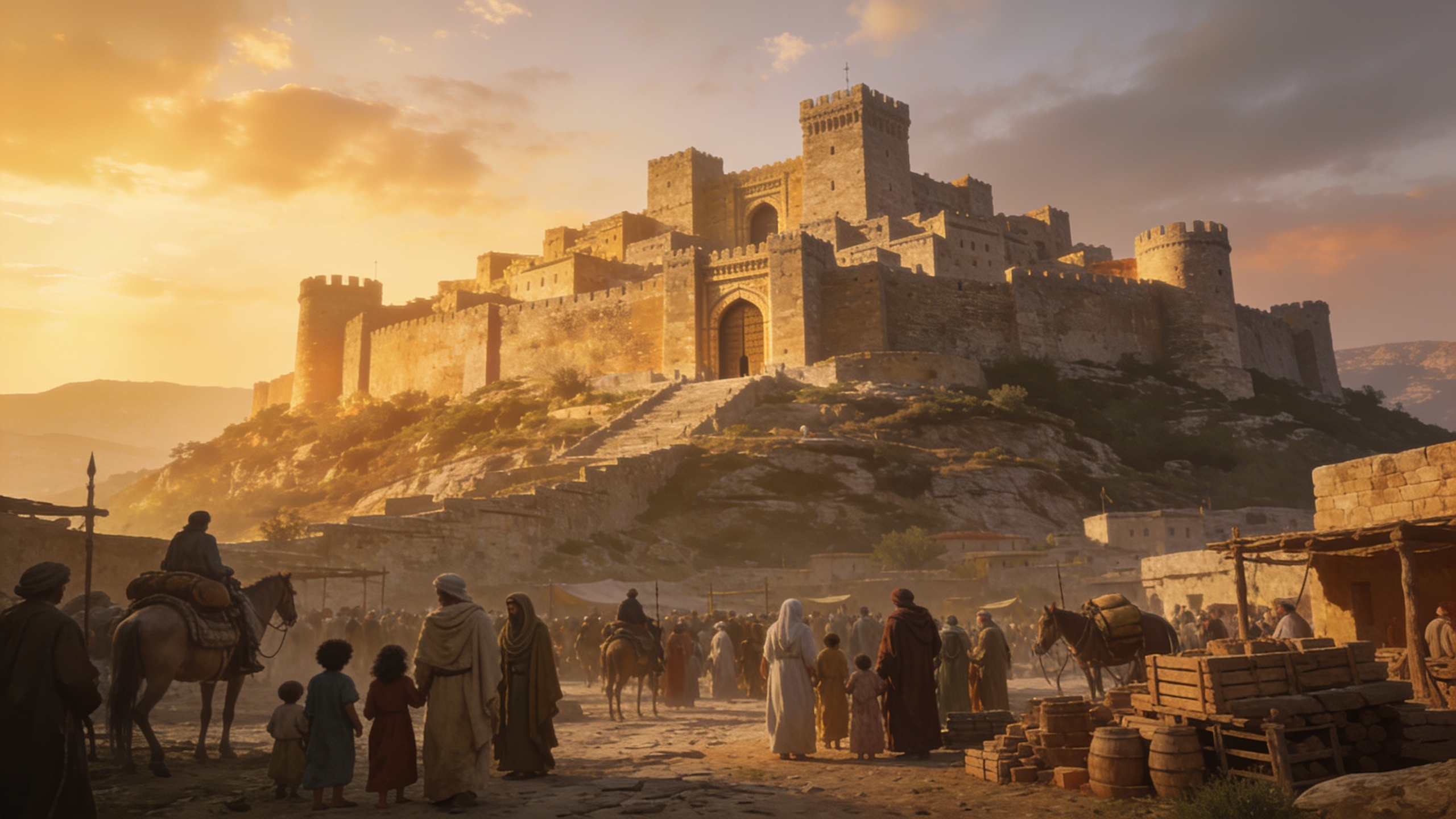
Its central image is Zion—the City of God.
To ancient Israel, Zion was more than a fortified hill or the location of the Temple.
It represented the visible sign of God’s faithful presence among His people.
It was a place where worship, justice, memory, and identity converged.
Yet Psalm 48 speaks far beyond one geographical location.
Across centuries of Jewish and Christian interpretation, Zion gradually became a symbol of every life, family, community, and institution founded upon enduring truth.
This is why Psalm 48 remains deeply relevant today.
Every generation builds something.
Some build careers.
Others build families.
Some establish businesses.
Others create schools, churches, charities, books, or communities.
The Psalm asks a question that modern culture rarely pauses to consider:
Will what you are building remain a blessing after you are gone?
This is the hidden heart of Psalm 48.
It reminds us that genuine success is not measured only by what we accomplish during our lifetime, but by what continues to strengthen others long after our own work is finished.
Why Zion Represents More Than a City
At first glance, Psalm 48 appears to be a celebration of Jerusalem.
The Psalm praises its beauty, its towers, its palaces, and its walls.
Historically, this made perfect sense.
Jerusalem stood at the spiritual heart of Israel.
It was the location of the Temple and the visible center of the nation’s covenant with God.
Yet biblical symbolism often transforms physical realities into enduring spiritual truths.
In Psalm 48, Zion gradually becomes more than a city.
It becomes a pattern.
A stable center.
A place where life is rightly ordered because it is built upon enduring foundations.
Throughout Scripture, cities often symbolize more than architecture.
They represent cultures.
Values.
Communities.
Ways of living together.
When Psalm 48 celebrates Zion, it is celebrating a community whose strength comes not merely from stone walls, but from its relationship with God.
This distinction is essential.
Many civilizations have possessed magnificent buildings while collapsing morally from within.
Strong walls cannot compensate for weak character.
Prosperity cannot replace integrity.
Technology cannot substitute for wisdom.
Psalm 48 quietly reminds us that every enduring civilization begins with invisible foundations before visible achievements appear.
The same principle applies personally.
Every individual also possesses an inner “city.”
Our convictions.
Our habits.
Our priorities.
Our relationships.
Our spiritual life.
These form the invisible architecture upon which every visible achievement depends.
The Psalm therefore invites readers to ask:
What is the foundation upon which I am building my life?
Because no structure remains stronger than the principles supporting it.
The Psychology of Lasting Legacy
Modern society often rewards immediate results.
Quick success.
Rapid growth.
Instant recognition.
Psalm 48 moves in the opposite direction.
Its perspective is measured not in weeks or years but in generations.
Psychologists have long observed that as people mature, many begin asking deeper questions than those that motivated them in youth.
Early adulthood often asks:
“What can I achieve?”
Later maturity increasingly asks:
“What will remain because I lived?”
Developmental psychologist Erik Erikson described this transition through the concept of generativity—the desire to invest in people, institutions, and values that will continue benefiting future generations.
Psalm 48 beautifully reflects this mature perspective.
The Psalm does not encourage readers to admire the city simply because it is impressive.
Instead, it urges them to observe its strength carefully so that its story can be told to those who come after them.
Legacy begins with transmission.
Knowledge.
Faith.
Character.
Wisdom.
Traditions worth preserving.
People sometimes imagine legacy requires extraordinary accomplishments.
Psalm 48 suggests otherwise.
Most lasting legacies are surprisingly ordinary.
Parents who consistently love their children.
Teachers who patiently shape young minds.
Business owners who build ethical organizations.
Neighbors who strengthen their communities.
Friends whose kindness quietly changes lives.
These acts rarely attract headlines.
Yet over decades they create foundations strong enough for others to build upon.
The Psalm teaches:
true greatness is measured less by personal achievement than by the lasting good entrusted to future generations.
Strong Foundations Matter More Than Impressive Results
Psalm 48 repeatedly celebrates the city’s permanence.
Its towers.
Its walls.
Its palaces.
These images naturally attract attention.
Yet the Psalm’s admiration is directed toward something deeper than architecture.
Strong buildings exist because they rest upon strong foundations.
The same principle governs every meaningful area of life.
Healthy families are rarely built upon dramatic moments.
They grow through ordinary habits repeated faithfully over many years.
Honest conversations.
Shared meals.
Forgiveness.
Reliability.
Mutual respect.
Likewise, successful organizations seldom endure because of one brilliant decision.
They survive because thousands of wise decisions gradually create cultures of trust.
Character develops in exactly the same way.
Integrity is not formed during moments of public recognition.
It is formed privately, often long before anyone notices.
Every honest choice strengthens the foundation.
Every compromise weakens it.
Psalm 48 encourages readers to admire what supports visible success rather than becoming fascinated only by the success itself.
Modern culture often reverses this order.
People admire outcomes.
The Psalm admires foundations.
This distinction changes how we evaluate our own lives.
Instead of asking:
“How impressive do my achievements appear?”
Psalm 48 encourages a better question:
“How strong are the principles that support everything I am building?”
Because achievements built upon weak foundations eventually collapse under their own weight.
Strong foundations, by contrast, quietly produce stability that may continue blessing others for generations.
The Difference Between Achievement and Legacy
Achievement and legacy are closely related.
But they are not the same.
Achievement answers the question:
“What did I accomplish?”
Legacy asks:
“Who continues to benefit because I lived?”
Achievement is often personal.
Legacy is almost always relational.
Achievements may end with retirement.
Legacy continues through the lives we influence.
Achievements may fill a résumé.
Legacy shapes families.
Communities.
Institutions.
Future leaders.
Psalm 48 consistently directs attention away from temporary recognition and toward enduring influence.
The city’s greatness is not measured by a single generation’s accomplishments.
Its greatness lies in its ability to remain a source of stability across generations.
This perspective transforms success itself.
A business becomes more than profit.
It becomes a place where people flourish.
A family becomes more than shared genetics.
It becomes a place where values are transmitted.
A profession becomes more than income.
It becomes an opportunity to contribute lasting good.
The Psalm reminds us that many of history’s greatest builders never witnessed the full fruit of their labor.
They planted trees beneath whose shade they would never sit.
They established schools they would never attend.
They raised children who would shape a future they would never personally experience.
Their significance rested not in immediate reward, but in faithful investment.
Psalm 48 invites every reader to adopt this same long horizon.
To build not merely for today, but for those who will come tomorrow.
Stewardship Is Thinking Beyond Yourself
One of the recurring images in Psalm 48 is careful attention to the city itself.
The Psalm encourages people to walk around Zion.
To count its towers.
To examine its walls.
To observe its citadels.
This is more than admiration.
It is stewardship.
Stewardship begins with paying attention.
People cannot care well for what they refuse to notice.
A neglected garden gradually fills with weeds.
A neglected friendship slowly weakens.
A neglected organization loses its purpose.
A neglected spiritual life quietly drifts toward emptiness.
Psalm 48 encourages deliberate observation because wise stewardship requires awareness before action.
The invitation to inspect the city is also deeply symbolic.
Every person has “walls” requiring maintenance.
Relationships.
Character.
Health.
Faith.
Work.
Family traditions.
Communities.
These cannot be strengthened accidentally.
They require intentional care.
Stewardship therefore means accepting responsibility not only for what serves us today, but also for what others will inherit tomorrow.
This mindset changes daily decisions.
Instead of asking only, “What benefits me now?”, we begin asking, “What kind of foundation am I leaving for those who follow?”
Psalm 48 reminds us that lasting legacies are rarely created through dramatic moments. More often, they are built through the quiet, faithful maintenance of the responsibilities already entrusted to us.
Why Communities Need Shared Memory
Toward the end of Psalm 48, the reader encounters one of its most remarkable instructions:
“Walk about Zion, go around her, count her towers, consider well her ramparts, view her citadels, that you may tell of them to the next generation.”
At first glance, this appears to be little more than an invitation to admire a beautiful city.
In reality, it is an invitation to preserve memory.
Communities do not survive because they possess impressive buildings.
They survive because they remember who they are.
Every lasting civilization is sustained by stories, values, and traditions passed faithfully from one generation to the next.
When that memory fades, identity begins to weaken.
Eventually, even prosperous societies lose the principles that once made them strong.
Psalm 48 understands this danger.
Its solution is not nostalgia.
It is intentional remembrance.
Healthy communities regularly revisit the foundations upon which they were built.
They remember sacrifices.
Acts of courage.
Moments of faithfulness.
Lessons learned through hardship.
These memories become a shared inheritance.
The same principle applies within families.
Children benefit when they know their family’s history.
Not because every story is perfect, but because those stories teach resilience, gratitude, perseverance, and hope.
Businesses also develop healthier cultures when employees understand why the organization exists beyond generating profit.
Purpose creates identity.
Identity creates continuity.
Psalm 48 teaches:
a community that remembers its foundations is far more likely to preserve them.
Walking Around the Walls: Seeing What You Have Already Built
The Psalm’s invitation to walk around Zion offers a surprisingly practical exercise for modern life.
Instead of rushing constantly toward future goals, the Psalm encourages deliberate reflection.
Walk around the walls.
Observe them carefully.
Notice what has already been built.
Many people become discouraged because they measure themselves only by what remains unfinished.
Psalm 48 encourages a healthier balance.
Take inventory.
What relationships have grown stronger?
What habits have become more consistent?
What challenges have already been overcome?
What wisdom has been gained through experience?
This kind of reflection builds gratitude without encouraging complacency.
It reminds us that meaningful progress is often gradual.
Just as cities are constructed stone by stone, character develops decision by decision.
Families become stronger conversation by conversation.
Businesses mature customer by customer.
Communities flourish act by act.
The walls of Zion remind us that enduring structures are never built overnight.
Examining our own “walls” also reveals areas needing attention.
Perhaps one relationship requires repair.
Perhaps a neglected responsibility deserves renewed focus.
Perhaps an important value has slowly drifted into the background.
Reflection becomes an act of stewardship.
Psalm 48 teaches that wise builders regularly inspect what they are building—not to criticize endlessly, but to preserve what is good and strengthen what is weak.
Building Families That Endure
Among all human institutions, the family remains one of the most enduring forms of legacy.
Homes are built with bricks and timber.
Families are built with trust.
Psalm 48 reminds us that visible structures matter far less than invisible foundations.
Children learn far more from the daily atmosphere of a home than from occasional speeches about values.
Patience.
Honesty.
Forgiveness.
Faithfulness.
Generosity.
Respect.
These become the unseen walls protecting future generations.
Every family develops traditions.
Some happen intentionally.
Others emerge naturally over time.
Shared meals.
Celebrations.
Prayers.
Conversations.
Acts of service.
Simple routines repeated year after year gradually create a sense of belonging that often remains throughout life.
Psalm 48 encourages families to become places where identity is intentionally nurtured rather than accidentally inherited.
This does not require perfection.
Every family experiences conflict.
Every household faces seasons of uncertainty.
The strength of a family is measured less by the absence of problems than by its commitment to rebuilding trust whenever it has been damaged.
Like the walls of Zion, healthy families require ongoing care.
They are maintained through countless ordinary choices that quietly accumulate into lasting security.
Building Businesses That Outlive Their Founders
Many organizations disappear shortly after their founders leave.
Others continue flourishing for generations.
The difference rarely lies in products alone.
It lies in foundations.
Businesses built solely around the personality of one individual often struggle to survive transition.
Organizations built around enduring principles prove far more resilient.
Psalm 48 offers a valuable perspective for entrepreneurs and organizational leaders.
Strong institutions preserve more than financial success.
They preserve purpose.
Integrity.
Culture.
Responsibility.
Trust.
These qualities become the invisible architecture supporting long-term stability.
Reputation deserves particular attention.
A good reputation cannot be purchased quickly.
It grows through consistent honesty, fair treatment of others, reliable service, and ethical decision-making over many years.
Once established, it becomes one of an organization’s greatest assets.
Likewise, leadership succession reflects the Psalm’s emphasis on generational thinking.
Wise leaders prepare others to continue the mission.
They mentor future leaders.
Document important knowledge.
Develop healthy systems.
Share responsibility.
In doing so, they ensure the organization no longer depends exclusively upon themselves.
Psalm 48 reminds builders that true success is not creating something impressive for today.
It is creating something strong enough to continue serving others tomorrow.
Traditional Uses of Psalm 48
Across Jewish and Christian devotional traditions, Psalm 48 has often been associated with protection, stability, and the preservation of homes, cities, and communities.
Because the Psalm celebrates God’s presence within Zion, many traditional practitioners have recited it while praying for the safety of households, the peace of communities, and the long-term flourishing of places entrusted to their care.
In practical traditions, it has also been connected with strengthening institutions, preserving family unity, protecting property, and seeking divine guidance when building projects intended to endure.
Within the V3+ framework, however, these traditional uses are understood in a broader sense.
The Psalm is not simply about safeguarding physical structures.
It is about protecting the values, relationships, and responsibilities that give those structures lasting meaning.
A secure home is more than strong walls.
A thriving business is more than financial stability.
A healthy community is more than shared geography.
Psalm 48 reminds us that every enduring structure must first be built upon enduring principles.
The Core Psalm 48 Ritual
A Practice for Building Strong Foundations and Long-Term Vision
Psalm 48 is best approached slowly.
Unlike Psalms that emphasize urgent deliverance or immediate courage, this Psalm invites deliberate reflection and patient planning.
Its purpose is to cultivate the mindset of a faithful builder rather than that of a quick achiever.
Create an atmosphere that feels:
- peaceful
- orderly
- reflective
- hopeful
rather than hurried or emotionally intense.
What You Need
Required
- Psalm 48
- journal
- quiet place for uninterrupted reflection
Recommended
- white candle
- notebook dedicated to long-term goals or family vision
Optional:
- frankincense incense
- cedarwood incense
These traditionally symbolize permanence, wisdom, stability, and faithful stewardship.
STEP 1 — Reflect on What You Are Building
Before reading the Psalm, ask yourself:
What am I building that could still benefit others ten or twenty years from now?
Which responsibilities have been entrusted to me that deserve greater care?
What values do I hope future generations will inherit from my life?
Allow these questions to broaden your perspective beyond immediate concerns.
STEP 2 — Read Psalm 48 Slowly
Read the Psalm aloud without rushing.
Pay particular attention to its descriptions of Zion, its walls, its towers, and the invitation to remember and teach future generations.
As you read, imagine not merely a city of stone, but the invisible structures of your own life—your character, relationships, work, and commitments.
Ask yourself which foundations feel strong and which require renewed attention.
STEP 3 — Identify One Foundation to Strengthen
Choose one area that deserves intentional investment during the coming week.
It might be:
- a family relationship
- a neglected friendship
- a long-term business system
- a spiritual discipline
- a financial habit
- a community responsibility
The goal is not dramatic change but steady reinforcement of what already matters most.
STEP 4 — Commit to One Lasting Action
End by asking:
What small action today could strengthen something that will still matter years from now?
Psalm 48 reminds us that enduring legacies are rarely built through extraordinary moments.
They are built through ordinary acts of faithful stewardship repeated over time.
Psalm 48 for Parents, Leaders, and Builders
Psalm 48 speaks to anyone entrusted with the responsibility of building something that extends beyond themselves.
Some people build homes.
Others build companies.
Some educate children.
Others mentor future leaders, write books, establish charities, or strengthen local communities.
Although these callings differ greatly, they share one common characteristic.
They all require long-term thinking.
Parents understand this perhaps better than anyone.
Children do not become wise adults because of one important conversation.
Character develops through years of consistent love, guidance, correction, forgiveness, and example.
Every ordinary day contributes another stone to the foundation.
Psalm 48 reminds parents that their greatest legacy is rarely financial.
It is the atmosphere they create within their home.
Likewise, teachers and mentors often discover that the most important lessons they teach are remembered decades later.
Words spoken with patience.
Encouragement offered during difficult seasons.
Standards consistently upheld.
These invisible investments frequently shape lives long after the original moment has passed.
Business leaders face a similar responsibility.
The healthiest organizations eventually become places where people flourish rather than merely places where transactions occur.
Employees develop.
Customers are treated honestly.
Communities benefit.
Ethical standards remain consistent even when shortcuts appear profitable.
Psalm 48 encourages every builder to think beyond immediate outcomes.
The greatest structures are not necessarily the largest.
They are the ones that continue producing good long after their original builders have finished their work.
Repetition Cycles for Long-Term Vision
Psalm 48 is particularly suited for repeated reading during seasons devoted to planning, strengthening foundations, or cultivating patience.
Unlike Psalms focused upon urgent deliverance, its rhythm encourages steady progress rather than immediate results.
Each reading reinforces:
- patience
- perseverance
- responsibility
- wisdom
- faithful stewardship
- long-term vision
- generational thinking
Its purpose is to shape habits capable of sustaining meaningful work over many years.
The Psalm teaches:
enduring legacies are built through ordinary faithfulness practiced consistently over time.
7-Day Foundation Cycle
Best for:
- evaluating priorities
- strengthening family life
- reviewing long-term goals
- restoring neglected responsibilities
Read Psalm 48 each morning.
After reading, ask:
Which foundation deserves my attention today?
Spend a few minutes identifying one practical action that reinforces rather than merely expands what you are building.
21-Day Legacy Cycle
Best for:
- business planning
- family vision
- ministry development
- educational projects
- community leadership
Keep a journal throughout the cycle.
Record:
- decisions that strengthen long-term stability
- improvements in important relationships
- systems becoming more reliable
- lessons learned through patience
- opportunities to serve future generations
By the end of three weeks, many readers discover they are thinking less about quick victories and more about sustainable growth.
40-Day Stewardship Cycle
Best for:
- launching significant projects
- preparing succession plans
- rebuilding after setbacks
- creating lasting institutions
Each day ask yourself:
If someone inherited my work tomorrow, would I leave them strong foundations or unnecessary burdens?
This question captures the heart of Psalm 48.
Faithful stewardship always prepares the future rather than merely surviving the present.
What Weakens Psalm 48 Work
Several attitudes quietly undermine everything Psalm 48 seeks to cultivate.
Impatience
Modern culture celebrates speed.
Psalm 48 celebrates endurance.
Many worthwhile projects require years before their full value becomes visible.
Impatience often tempts people to abandon meaningful work simply because immediate results fail to appear.
The Psalm reminds us that strong foundations are laid slowly.
Neglect
Buildings deteriorate when they are ignored.
Relationships do the same.
Character also requires maintenance.
Families.
Communities.
Organizations.
Faith.
Every valuable structure gradually weakens without consistent care.
Psalm 48 encourages regular attention because preservation is itself an act of wisdom.
Short-Term Thinking
Quick gains often produce long-term losses.
Organizations sacrifice reputation for immediate profit.
Families sacrifice time together for endless busyness.
Individuals sacrifice integrity for temporary advantage.
Psalm 48 consistently favors decisions whose benefits continue long after the present moment.
The Psalm teaches:
wise builders think beyond today’s reward.
Pride
People sometimes become more interested in receiving credit than in completing the work itself.
This quietly shifts attention away from stewardship toward personal recognition.
Psalm 48 offers a healthier vision.
The city matters more than the builder.
Future generations matter more than present applause.
The mission matters more than personal reputation.
Forgetting Why You Began
Many worthwhile projects gradually lose their original purpose.
Businesses become obsessed with growth instead of service.
Organizations become preoccupied with maintenance instead of mission.
Families become so busy managing schedules that they neglect relationships.
Psalm 48 repeatedly calls readers back to the foundation.
Healthy structures remain healthy because they regularly remember why they were built.
Signs That You Are Building Something That Will Last
The fruits of Psalm 48 often appear quietly.
Unlike dramatic success, enduring legacy usually grows almost unnoticed.
Some encouraging signs include:
- relationships becoming more stable
- greater trust within your family or team
- healthier daily routines
- wiser long-term decisions
- increased patience
- stronger organizational culture
- people beginning to carry responsibility alongside you
- values naturally passing to younger generations
Interestingly, many of these developments occur before visible recognition arrives.
Strong foundations often remain hidden beneath the surface.
Yet they quietly support everything built upon them.
Psalm 48 reminds us that invisible progress frequently proves more important than visible success.
When foundations become stronger, future growth becomes possible without sacrificing stability.
Final Insight
The Greatest Monuments Are Built in People
Psalm 48 begins by celebrating a city.
It ends by pointing beyond architecture altogether.
Its greatest concern is not stone walls.
It is faithful remembrance.
The towers of Zion matter because they testify to God’s enduring faithfulness.
The walls matter because they protect a community shaped by covenant.
The city matters because it preserves a way of life worth passing to future generations.
The same principle remains true today.
Many people dream of building impressive things.
Far fewer devote equal attention to building trustworthy people.
Yet people always remain the greatest legacy.
Children formed with wisdom.
Students encouraged toward truth.
Employees treated with dignity.
Friends strengthened through faithfulness.
Communities shaped by justice.
These are the living monuments that continue long after physical achievements fade.
Psalm 48 gently reminds us that the most important structures we build cannot always be photographed or measured.
They exist within character.
Within relationships.
Within communities shaped by integrity and love.
The enduring beauty of Zion ultimately reflects the enduring beauty of a people who chose to preserve truth, worship, wisdom, and faithful stewardship across generations.
The deepest lesson of Psalm 48 is therefore this:
Every lasting legacy begins with ordinary acts of faithful stewardship. When we care well for the people, values, and responsibilities entrusted to us today, we quietly help build foundations upon which future generations may stand with confidence, gratitude, and hope.
Frequently Asked Questions:
Psalm 48 is traditionally associated with protection, stability, the preservation of homes and communities, and gratitude for God’s faithful presence. Today, many people also pray it while building long-term projects, strengthening families, developing organizations, or seeking wisdom to create something that will continue benefiting others for many years.
Although Zion originally referred to Jerusalem, Psalm 48 presents it as a symbol of spiritual stability, faithful community, and enduring foundations. It represents any life, family, institution, or community built upon truth, wisdom, integrity, and God’s guidance rather than temporary success or external appearances.
Historically, the Psalm celebrates Jerusalem and God’s presence within Zion, but its message extends far beyond one city. Throughout Jewish and Christian tradition, Zion has become a universal symbol of God’s dwelling among His people and of every community founded upon righteousness, covenant, and faithful stewardship.
Psalm 48 encourages readers to think beyond immediate achievement and consider what they are leaving behind for future generations. It teaches that true legacy is created through patient investment in people, values, relationships, and institutions that continue producing good long after one’s own work has ended.
Yes. Psalm 48 is especially meaningful for families because it emphasizes strong foundations, shared memory, faithful stewardship, and passing enduring values from one generation to the next. It reminds parents and caregivers that the atmosphere they create each day often becomes their greatest legacy.
Many people pray Psalm 48 when seeking wisdom to build ethical, stable, and enduring organizations. Rather than focusing only on financial success, the Psalm encourages leaders to establish businesses and institutions grounded in integrity, trust, responsible leadership, and long-term service to others.
The walls and towers symbolize strength, protection, and permanence, but they also serve as reminders to examine carefully the foundations upon which communities are built. Spiritually, they encourage readers to evaluate the health of their own character, relationships, families, and responsibilities so these may remain strong for future generations.
There is no required number of days for praying Psalm 48. Some people choose a seven-day cycle when reviewing priorities, a twenty-one-day cycle while strengthening long-term projects or family life, or a forty-day cycle during major seasons of planning, rebuilding, or leadership. The greatest value comes from consistently applying the Psalm’s principles of stewardship, patience, and faithful investment in what truly endures.